
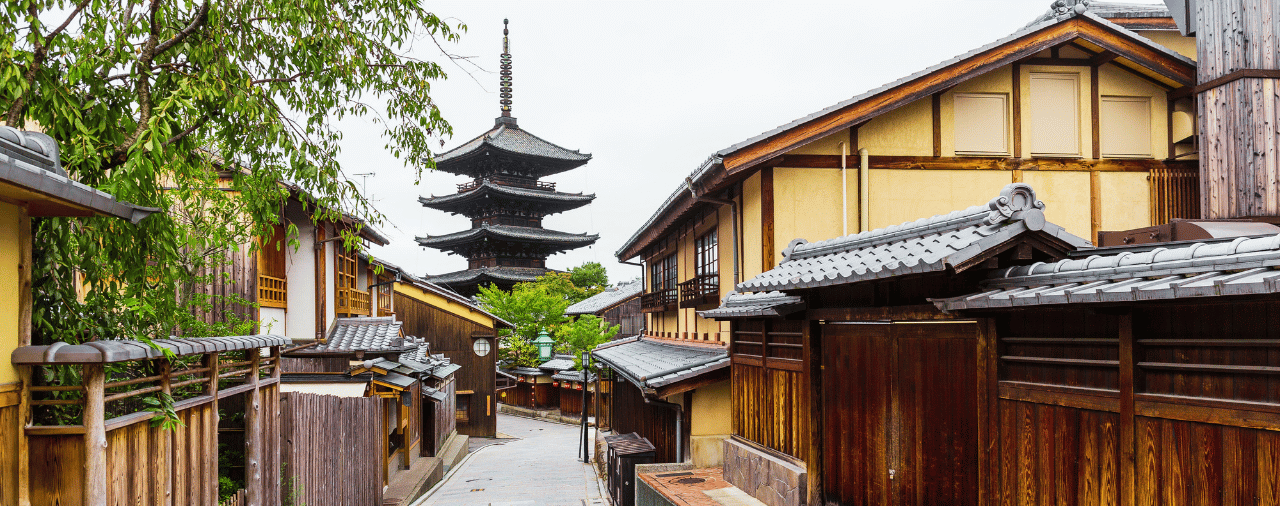
Three days in Kyoto works best when you stop treating the city as a checklist. Choose one main area each day, use trains for the longer journeys, and leave enough time for the walk after you leave the station. A short rail ride does not necessarily mean a short sightseeing day.
This Kyoto itinerary groups Higashiyama, Arashiyama and Fushimi Inari into separate days. Keep the same accommodation throughout, carry a small day bag, and choose your afternoon activities according to the weather and your energy. It is designed for three full sightseeing days; arrival and departure days are extra.
You will use JR and Keihan services in the suggested routes from Kyoto Station. Staying elsewhere may change the most convenient railway. You do not need a nationwide JR Pass just to follow this plan.
The three-day Kyoto route at a glance
| Day | Main area | Rail access from Kyoto Station | Suggested plan | Shorter option |
|---|---|---|---|---|
| 1 | Eastern Kyoto | JR Nara Line to Tofukuji; change to Keihan for Kiyomizu-Gojo | Kiyomizu-dera, Higashiyama lanes and an optional Gion walk | One temple and lunch, then return |
| 2 | Western Kyoto | JR Sagano Line to Saga-Arashiyama | Bamboo grove area, riverside and one chosen visit | Bamboo grove and a seated lunch; omit the scenic train |
| 3 | Southern Kyoto, then a flexible afternoon | JR Nara Line to Inari; return toward Kyoto | Fushimi Inari’s lower shrine area; optional Kyoto Railway Museum later | Short shrine visit followed by a free afternoon |
Allow more than the timetable suggests. Add hotel-to-station walking, platform access, waiting and the walk at the far end. Keep lunch and one substantial break in the plan. The shorter options are complete days, not failed versions of the itinerary.
Where to base yourself
For this particular plan, accommodation within an easy walk of Kyoto Station simplifies the JR journeys and your arrival or onward travel. Check the exact hotel entrance and exit route: a hotel described as near the station can still involve an awkward crossing or a long walk through the building.
Browse hotels within walking distance of Kyoto Station on Trip.com →
Affiliate link: I may earn a commission if you book through this link, at no extra cost to you.
Shijo and the Kawaramachi area can suit visitors who value central dining and evening walks. From there, Keihan or Hankyu may be more convenient for some outings than returning to Kyoto Station first. Choose routes from your actual accommodation rather than paying for extra travel to follow a sample itinerary literally.
Keep one base for all three days. If you want three genuinely full days with a relaxed arrival and departure, four nights is a straightforward arrangement. Two nights can work only if your transport schedule leaves sufficient time at both ends.
Day 1: Kiyomizu-dera and eastern Kyoto
Use the train, but budget for the uphill walk
From Kyoto Station, take the JR Nara Line to Tofukuji, then change to Keihan and travel to Kiyomizu-Gojo. Kyoto’s official tourism guide recommends this rail approach as an alternative to road congestion. It lists roughly a 25-minute walk from Kiyomizu-Gojo to Kiyomizu-dera. This is not a station-side temple visit. See the official Higashiyama access guidance.
Start with the temple while your legs are fresh, then explore a manageable section of the surrounding historic lanes. Leave room for people moving in both directions, and avoid stopping across narrow paths for photographs. Check signs before entering side streets, particularly where access is private.
Choose your afternoon instead of adding everything
After lunch, continue toward Gion only if the walking still feels enjoyable. An unhurried afternoon in the same area is usually more useful than crossing the city for another landmark. If your main interest is photography, give yourself time to wait safely rather than creating a tightly timed route between viewpoints.
For a shorter day, make Kiyomizu-dera the only major visit and return after lunch. Travellers with a stroller, joint pain or limited walking stamina should assess the slopes and steps beforehand. Rail access avoids a congested bus journey, but it does not remove the uphill approach. A taxi for part of the journey can be worth considering; access and traffic conditions still matter.
Day 2: Arashiyama without a cross-city detour
Choose the right Arashiyama station
From Kyoto Station, take the JR Sagano Line to Saga-Arashiyama. Kyoto’s official guide lists about 11 minutes by rapid service; allow longer for other services and for reaching the platform. Hankyu and Randen have different Arashiyama stations, so use the full station name when checking your route. The official Arashiyama access page explains the alternatives.
Spend the morning around the bamboo grove and nearby streets, then choose a garden or temple visit if it fits your interests. Have lunch before deciding whether to continue toward the river and Togetsukyo Bridge. You do not need to visit every attraction in the district for this to be a worthwhile day.
Keep the afternoon in western Kyoto. Adding Fushimi Inari or Kiyomizu-dera today turns a coherent area visit into a transport-heavy day. If the area feels too crowded, shorten your walk, take a break away from the busiest photo spots, or return to your hotel early.
Optional: add the Sagano Romantic Train
If the train itself is a priority, build the day around your chosen departure rather than squeezing it between several visits. This is a separate sightseeing experience, not the ordinary JR service to Saga-Arashiyama. Confirm the operating date, seats, fare and return route on the official Sagano Scenic Railway website before booking.
The railway’s ticket page describes one-way tickets and an online seat-selection process. Its standard individual fare did not appear as a readable number during this check, so no potentially stale fare is quoted here. Do not substitute its group fare for the individual ticket price.
Read our Kansai sightseeing trains guide for a fuller introduction. If you would rather spend the day walking and resting, omit the scenic train entirely.
Day 3: Fushimi Inari, with space left over
Take the JR Nara Line to Inari
From Kyoto Station, use a JR Nara Line service that stops at Inari and check the departure display before boarding. The shrine’s official access page places the entrance beside JR Inari Station. It also lists Keihan Fushimi-inari Station about five minutes away on foot, which may suit a hotel closer to the Keihan line.
Visit the lower shrine area and walk through part of the torii-lined route, then decide whether to continue. Reaching the summit is not a requirement. Be realistic about stairs, heat, rain and how much walking remains in your trip. A short visit can be a better choice than starting a longer climb simply because you are already there.
Choose a free afternoon or one indoor visit
Return toward Kyoto for lunch and keep the afternoon open. This is useful time for laundry, shopping for something you actually need, or revisiting a neighbourhood without luggage. Do not fill the spare time automatically: a trip with three sightseeing days benefits from some flexibility.
Rail enthusiasts and families may prefer the Kyoto Railway Museum. From Kyoto Station, use the JR Sagano Line to Umekoji-Kyotonishi; the museum lists an approximately two-minute walk. Checked October 20, 2026, adult admission is ¥1,500, with separate student and child categories. It normally closes Wednesdays, with calendar exceptions. Confirm the official access, admission and calendar information before setting the day.
The museum is an alternative afternoon, not an obligatory extra after a long shrine hike. If the closure calendar does not fit, swap the order of the three days or keep the afternoon free.
Tickets and passes: choose after the route
For a few local journeys each day, start by comparing ordinary point-to-point fares. An accepted IC card can make payment simpler, but it is not an unlimited-travel pass and does not automatically make every journey cheaper. Check the cost of the routes you will actually take, including non-JR services.
If you already have a valid rail pass for a wider trip, check each journey against that pass’s current coverage. Do not assume a JR product includes Keihan, every city bus or a separately booked sightseeing train. This itinerary does not require reserving ordinary local-train seats; the optional sightseeing train has its own ticket process.
Current pass warning: JR West says sales of the legacy Kansai Area Pass ended September 30, 2026. Do not plan a new purchase using an older price table. Consult JR West’s current notice and verify any alternative product separately. The end of one product does not mean every similarly named Kansai ticket has ended.
Keep the practical details simple
- Leave suitcases behind. Confirm hotel storage before check-in or after check-out. Do not assume a station locker of the right size will be available.
- Save the station names. Keep Saga-Arashiyama, Inari, Kiyomizu-Gojo and your hotel station in a note, with a map available offline.
- Plan the walk home. A day can feel easy until the final station exit. Include that last walk when deciding whether to add another visit.
- Use laundry to reduce packing. Check machine availability, drying time and whether your hotel offers facilities rather than assuming every property does.
- Keep a weather swap. Move the museum option to a wet day if its opening calendar permits. Wet weather does not automatically make crowded indoor attractions quiet.
Travelling with children? Our family train travel guide covers the broader fare, luggage and seating questions. For your airport journey, see Kansai Airport to Osaka and Kyoto; keep airport transport separate from your three sightseeing days.
Is three days enough for Kyoto?
Three full days can give you a satisfying first visit, with one eastern district day, one Arashiyama day and a flexible Fushimi Inari day. It is not enough to see every celebrated temple, add several out-of-city trips and maintain an unhurried pace.
If a place you care about is missing, replace something rather than appending it. The most useful Kyoto itinerary is the one you still enjoy on the final afternoon. For the wider journey, browse our Japan train itineraries.
Route and source check: October 20, 2026. Times are approximate station-to-station or walking estimates from official sources, not guaranteed door-to-door journey times. Confirm operating calendars, ticket conditions and fares for your travel date.