
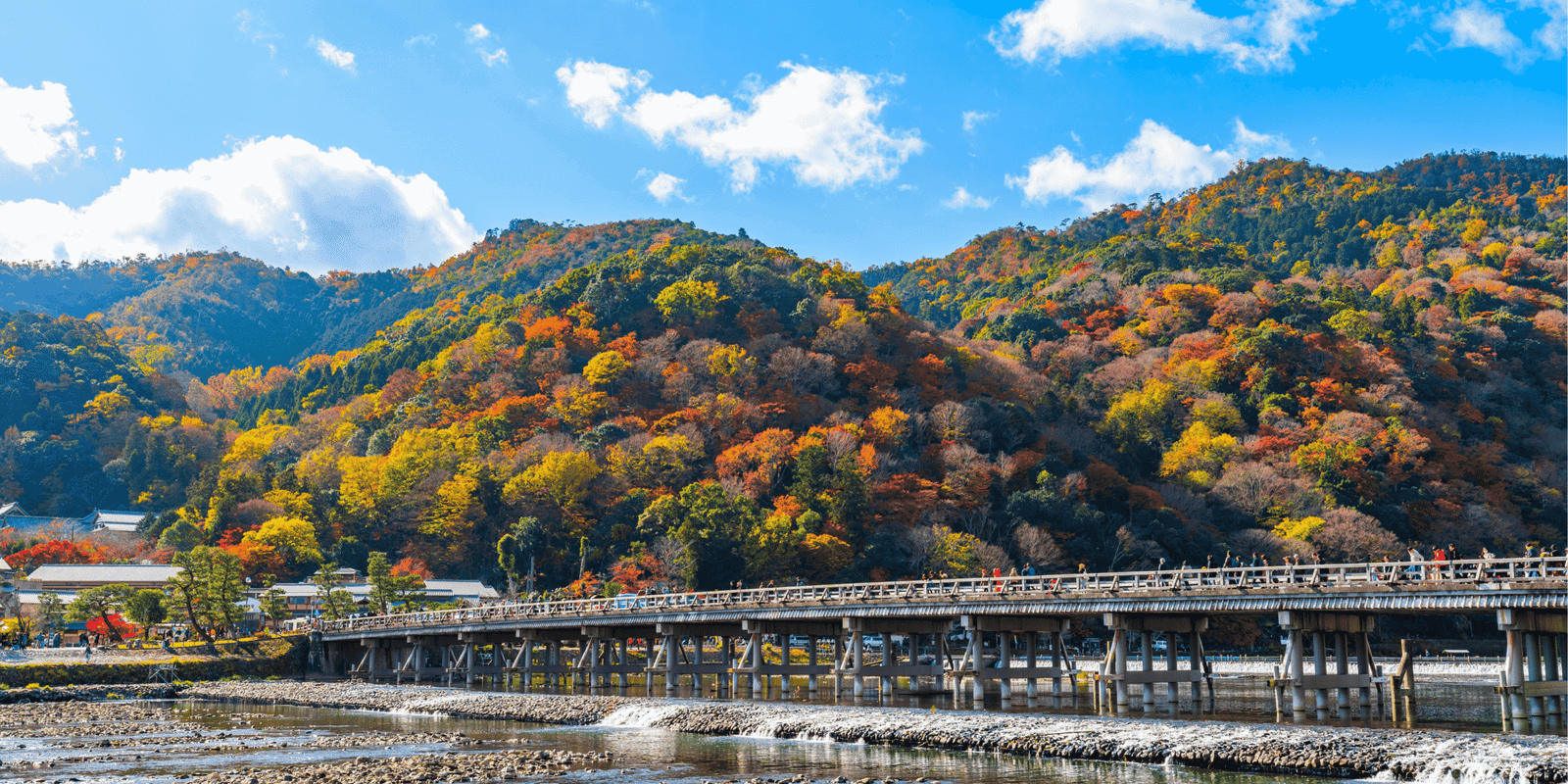
Kyoto is beautiful throughout the year, but autumn transforms the city into one of Japan’s most spectacular destinations. There are many unforgettable places to visit in Kyoto in fall, from temple gardens and wooded hillsides to historic streets surrounded by brilliant shades of red, orange, and gold.
Kyoto’s fall colors usually arrive later than those in northern Japan and higher mountain areas, making the city particularly popular from mid-November into early December. Because Kyoto is directly connected to Tokyo, Nagoya, Osaka, and other major cities by train, it is also easy to include in a wider Japan rail itinerary.
In this guide, I’ll introduce five of the best places to enjoy autumn colors in Kyoto, along with practical train-access information and tips for dealing with the busy fall season.
Top 5 Places to Visit in Kyoto in Fall at a Glance
| Place | Best For | Typical Timing | Nearest Useful Station |
|---|---|---|---|
| Kiyomizu-dera | Panoramic temple and hillside views | Mid-November to early December | Kiyomizu-Gojo Station |
| Tofuku-ji | Dense maple valley views | Mid to late November | Tofukuji Station |
| Eikando | Classic maple gardens and evening illumination | Mid to late November | Keage Station |
| Arashiyama | Mountain scenery and riverside walks | Mid-November to early December | Saga-Arashiyama Station |
| Kibune & Kurama | Mountain atmosphere and earlier foliage | Early to mid-November | Kibuneguchi / Kurama |
These are general seasonal windows rather than guaranteed peak dates. Higher and cooler parts of Kyoto usually change color earlier than central Kyoto.
For current foliage conditions and seasonal updates, check the Kyoto City Official Travel Guide’s Autumn Leaves Calendar .
1. Kiyomizu-dera — Classic Kyoto Autumn Views
Kiyomizu-dera is one of Kyoto’s most famous temples and one of the city’s most impressive places during autumn. The wooden temple buildings sit above a forested hillside that turns red, orange, and gold during peak foliage.
From the temple grounds, you can look across the autumn-colored trees toward Kyoto itself, creating one of the classic fall views of the city.
Why Visit in Autumn?
- Panoramic views over maple-covered hillsides
- Historic temple architecture surrounded by seasonal color
- Easy to combine with Higashiyama, Sannenzaka, and Ninenzaka
- Seasonal evening illuminations are often offered during the autumn period
How to Get There by Train
Kiyomizu-Gojo Station on the Keihan Line is one of the nearest railway stations, although there is still a substantial walk uphill to the temple.
From Kyoto Station, many visitors use a combination of train, subway, bus, or taxi depending on traffic and where else they plan to visit that day.
2. Tofuku-ji — One of Kyoto’s Most Famous Maple Views
Tofuku-ji is one of Kyoto’s best-known autumn foliage destinations. Its most famous view comes from Tsutenkyo Bridge, which crosses a valley filled with maple trees.
During peak season, the entire valley can appear covered in layers of red, orange, and yellow leaves, making it one of the most dramatic autumn scenes in Kyoto.
Why Visit Tofuku-ji?
- One of Kyoto’s densest displays of maple foliage
- Famous views from Tsutenkyo Bridge
- Traditional temple buildings and landscaped gardens
- Very convenient rail access from Kyoto Station
How to Get There by Train
Tofukuji Station is served by both the JR Nara Line and the Keihan Line. From Kyoto Station, the JR Nara Line ride takes only a few minutes.
From the station, the temple is about a 10-minute walk, making Tofuku-ji one of the easiest major autumn spots in Kyoto to reach by train.
3. Eikando — Brilliant Maple Gardens in Eastern Kyoto
Eikando, also known as Zenrin-ji, is one of Kyoto’s classic autumn foliage temples. The grounds contain numerous maple trees, traditional buildings, ponds, stone paths, and elevated viewpoints that become especially beautiful in late autumn.
Compared with some of Kyoto’s larger sightseeing districts, Eikando feels more like a dedicated autumn garden experience, with colorful leaves appearing throughout the temple grounds.
Why Visit Eikando?
- Dense displays of red and orange maple leaves
- Traditional temple buildings surrounded by gardens
- Beautiful reflections around the pond areas
- Easy to combine with nearby Nanzen-ji and the Philosopher’s Path
How to Get There by Train
Keage Station on the Kyoto Subway Tozai Line is one of the most convenient rail access points. From the station, it is roughly a 15-minute walk to the temple area.
Eikando also fits naturally into a walking route through eastern Kyoto, especially if you plan to visit Nanzen-ji or the Philosopher’s Path on the same day.
4. Arashiyama — Autumn Mountains, Temples and Riverside Views
Arashiyama is one of Kyoto’s best areas for combining autumn colors with a wider sightseeing day. Forested mountains surround the district, and the Katsura River creates beautiful seasonal views around Togetsukyo Bridge.
Beyond the famous bamboo grove, Arashiyama has temples, gardens, walking paths, and quieter areas where you can enjoy autumn scenery away from the busiest central streets.
Best Autumn Experiences in Arashiyama
- Togetsukyo Bridge: Classic views of the river with colorful mountains in the background.
- Tenryu-ji: A historic Zen temple with a landscaped garden framed by the surrounding hills.
- Okochi Sanso area: Elevated garden scenery near the bamboo grove.
- Northwestern Arashiyama: Quieter temples and walking routes away from the busiest station area.
How to Get There by Train
From Kyoto Station, the JR Sagano Line provides direct service to Saga-Arashiyama Station. The ride takes around 15 minutes, making Arashiyama one of the easiest major sightseeing areas to reach by JR train.
Hankyu and Keifuku railway services also provide useful access depending on where you are staying in Kyoto.
5. Kibune & Kurama — Mountain Autumn Scenery North of Kyoto
Kibune and Kurama offer a completely different side of Kyoto. Located in the mountains north of the city, these small communities are cooler than central Kyoto and often begin changing color earlier in the autumn season.
The area is ideal for travelers who want forest scenery, mountain temples, traditional streets, and a quieter atmosphere than Kyoto’s central sightseeing districts.
What to See
- Kibune: A narrow mountain village known for Kifune Shrine, forested surroundings, and traditional restaurants.
- Kurama: Home to Kurama-dera Temple, mountain paths, and peaceful wooded scenery.
- Mountain railway views: The Eizan Railway journey itself becomes part of the autumn experience.
- Earlier foliage: Cooler temperatures generally bring autumn colors here before central Kyoto.
How to Get There by Train
The Eizan Railway connects Demachiyanagi Station in northern Kyoto with both Kibuneguchi and Kurama.
For Kibune, get off at Kibuneguchi Station and continue into the village by bus or on foot. Kurama Station provides direct access to the Kurama village and temple area.
How to Plan a Kyoto Autumn Day by Train
Kyoto’s most popular autumn spots are spread across different parts of the city, so trying to visit all five in one day would be rushed. A better approach is to group nearby places together and focus on one or two areas each day.
Suggested Combinations
- Eastern Kyoto: Kiyomizu-dera → Nanzen-ji → Eikando
- Southern Kyoto: Tofuku-ji combined with Fushimi Inari or central Kyoto
- Western Kyoto: Arashiyama and its temples, gardens, and riverside area
- Northern Kyoto: Kibune and Kurama for a mountain-focused day trip
Rail is especially useful for reaching Tofuku-ji, Arashiyama, Kibune, and Kurama. Within central and eastern Kyoto, you may still need to combine trains with walking, subway services, buses, or taxis.
Related Guides
Top 5 Places to Visit in Japan This Fall by Train
Compare Kyoto with other great autumn destinations including Nikko, Kurobe Gorge, Kakunodate, and Miyajima.
Japan Train Itineraries
Browse complete rail itineraries for combining Kyoto with destinations across Kansai and the rest of Japan.
JR Regional Passes
Compare regional rail passes that may help reduce transportation costs when exploring Kyoto and nearby destinations.
Before You Buy a JR Pass
A nationwide Japan Rail Pass can be useful for some long-distance itineraries, but it is not automatically the cheapest option for a Kyoto-focused trip.
Compare your planned journeys with individual fares and regional rail passes before deciding which option offers the best value.
About Train Travel Japan
Train Travel Japan is created by a Japanese native based in Canada who has traveled throughout all 47 prefectures of Japan over more than 30 years.
The goal of this site is to help travelers plan practical, enjoyable train journeys using firsthand knowledge of Japan’s rail network, destinations, regional passes, and travel routes.
Whether you are planning your first Shinkansen trip or a multi-week rail journey across Japan, I hope these guides help make your trip easier to organize and more rewarding.