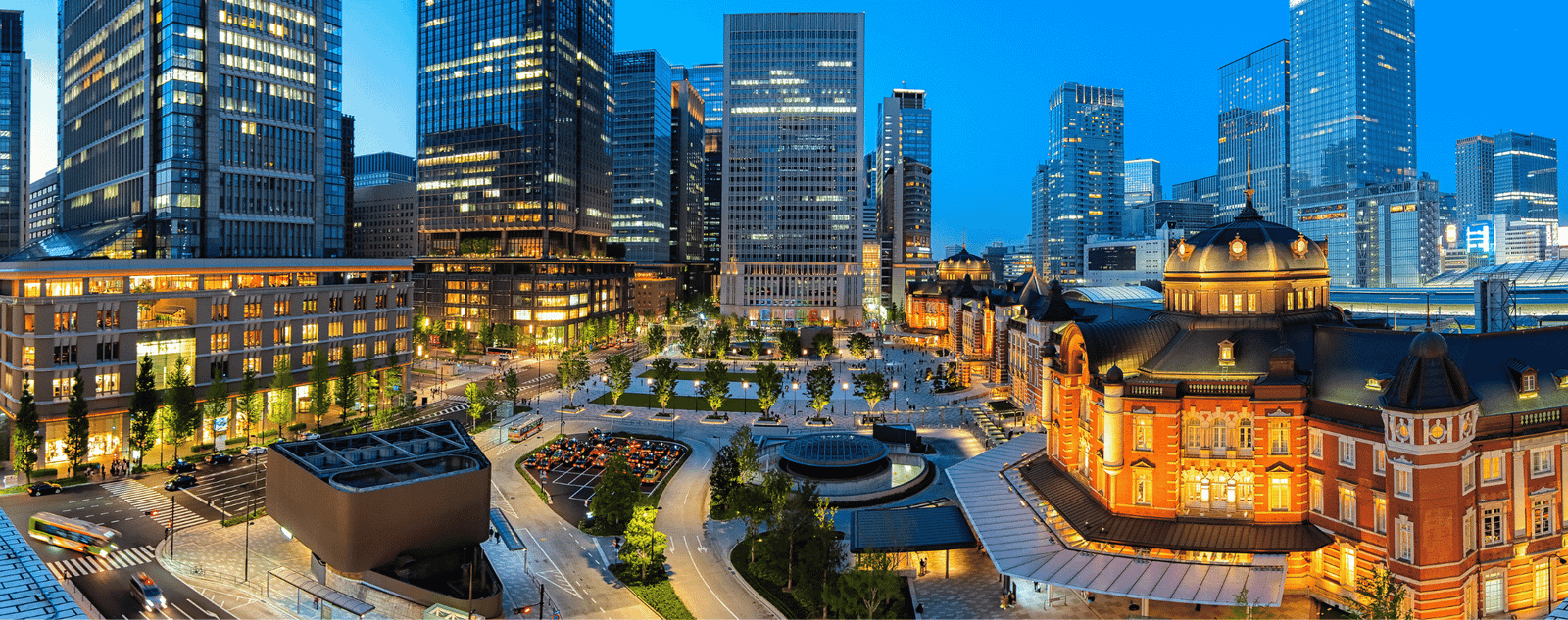
Tokyo Station is one of the most useful places to change trains in Japan, but it is also large enough to feel confusing on a first visit. With children, a stroller or several suitcases, the challenge is not just finding the right platform. You may also need a toilet stop, a baby room, a locker or a place to buy food before the next train.
The easiest way to navigate Tokyo Station with kids is to decide which railway line and gate you need before entering the busiest part of the station. The station has several levels and separate Shinkansen areas, so “follow the Shinkansen signs” is not always specific enough.
Tokyo Station family quick guide
- Tokaido / Sanyo Shinkansen: platforms 14–19, on the Yaesu side.
- Tohoku, Hokkaido, Akita, Yamagata, Joetsu and Hokuriku Shinkansen: platforms 20–23.
- Keiyo / Musashino Line: underground B1 area; allow extra walking time.
- Baby rooms: official Gransta information lists facilities inside the B1 ticketed area.
- Lockers: check live availability before walking around the station looking for an empty one.
Platform groups are based on the Tokyo Station City English map dated March 5, 2026. Check the live station map and departure boards on the day, especially during construction or service changes.
1. Understand the Two Main Levels Before You Start Walking
Tokyo Station is not a single flat concourse. The main railway facilities are spread across the first floor (1F) and basement level (B1), with additional levels and connected underground passages. A route that looks short on a small phone map may involve several changes of level.
The Yaesu side is where you will find the Tokaido–Sanyo Shinkansen gates and the First Avenue Tokyo Station shopping area. The Marunouchi side faces the red-brick station building and the business district. The JR East Travel Service Center is listed at the 1F Marunouchi North Gate.
Before leaving your hotel, open the official Tokyo Station City map and facilities guide. It separates the 1F and B1 maps and identifies gates, lockers, baggage storage, restrooms and other services. JR East also provides a Tokyo Station guide map with separate views for the main floors, Keiyo Line and Sobu Line.
A simple orientation rule
If you are catching a Shinkansen to Kyoto, Osaka, Nagoya or Hiroshima, you will usually be heading toward the Yaesu side for the Tokaido–Sanyo gates. If you are taking a northbound or Hokuriku-area JR East Shinkansen, check the separate JR East Shinkansen gates and platform group. Do not choose an exit based only on the word “North” or “South”; match the full gate name on your ticket and station map.
2. Which Shinkansen Platform Do You Need?
Tokyo Station has two Shinkansen groups. They do not use one shared set of platforms, so check the destination and operator before following the signs.
| Shinkansen group | Typical destinations | Platforms shown on the official map |
|---|---|---|
| Tokaido / Sanyo | Nagoya, Kyoto, Shin-Osaka, Okayama, Hiroshima, Hakata | 14–19 |
| JR East Shinkansen group | Sendai, Morioka, Shin-Aomori, Akita, Yamagata, Niigata and Hokuriku destinations | 20–23 |
These platform groups are a useful starting point, not a substitute for checking the departure board. The exact platform is assigned to the individual service and can change. Follow the operator and destination shown on your ticket, then confirm the train name, departure time and platform on the station screens.
If you are changing from a JR local train to a Shinkansen, look for the correct Shinkansen transfer gate. Do not leave the station through an ordinary exit unless your ticketing arrangement requires it. If you have separate tickets or a rail pass, follow the instructions for that ticket type and ask staff before passing through a gate if you are unsure.
For families, it is worth deciding which adult will manage the tickets and which adult will stay with the children. Have tickets or IC cards ready before reaching the gate rather than stopping in the passenger flow.
3. Allow Extra Time for the Keiyo Line
The Keiyo and Musashino Line platforms are in the underground B1 area, away from the main 1F concourse. This is particularly important if you are travelling to Maihama for Tokyo Disney Resort or changing between the Keiyo Line and a Shinkansen.
Do not plan a tight connection based on the train’s scheduled arrival time alone. With children, you may need time to walk through the station, use an elevator, stop at a restroom or manage a stroller. The official station map shows the Keiyo–Musashino area separately; check the route before you start moving.
If you are going to Tokyo Disney Resort, use the official Tokyo Disney Resort park guide for current transport and ticket information. For the wider Tokyo family itinerary, see our Tokyo with kids guide.
4. Where to Find Baby Rooms and Accessible Routes
Tokyo Station has baby-care facilities, but it helps to know where they are before you need one. Gransta’s baby-room information lists two facilities in the B1 ticketed area: beside Square Zero and inside the Yaesu Underground Central Gate area. The page describes diaper-changing beds, a washbasin and nursing chairs. Facilities can change, so check the current notice before travelling.
Use the official Gransta baby-room guide for the latest location details. It is more useful to save the exact facility location on your phone than to search for a baby-room symbol while carrying a tired child.
Travelling with a stroller or wheelchair
Tokyo Station City provides accessible route maps for both 1F and B1. These are useful when you need to find an elevator or avoid stairs. The accessible route may be longer than the most direct walking route, so allow extra time and follow the route for the level you are actually using.
Open the official accessible route maps before arriving. Our separate Japan train travel with strollers guide explains how to plan elevator use and manage a stroller on trains.
Do not leave the restroom stop until the last minute
Before joining the Shinkansen boarding queue, make one final restroom or diaper stop if your children need it. Once you are through the transfer gates, you may still have a walk to the correct platform and carriage position.
5. Lockers and Luggage Storage at Tokyo Station
Tokyo Station has coin lockers and staffed baggage-storage options both inside and outside the ticket gates. The main difficulty is not finding a locker on the map; it is finding one of the right size that is actually available when you arrive.
Tokyo Station City links to the To Locca locker service and the TOKYO STATION NAVI app, which can show real-time availability for Suica lockers. Check availability before walking across the station with children and suitcases.
| Option | Location shown by Tokyo Station City | When it may help |
|---|---|---|
| Coin lockers | Multiple locations around the station | Short storage when you can find a suitable size and an available locker. |
| Shinkansen Parcel Service & Baggage Storage | Outside the Yaesu South Gate; the page lists hours of 5:30–23:00 | Temporary storage or the specific parcel service described by the operator. |
| JR EAST Travel Service Center baggage storage | 1F, Marunouchi North Gate | When you need a staffed storage counter rather than a coin locker. |
| Gransta baggage storage | B1 inside Gransta Tokyo | Useful if you are already in the underground shopping area; check whether you are inside or outside the ticket gates. |
Locations, opening hours and available services can change. Confirm the current details on the Tokyo Station City baggage-storage page before relying on a particular counter.
For a family moving between cities, a locker is not always the best solution for several large suitcases. If you have multiple bags, compare station storage with luggage forwarding in Japan. Our large luggage and kids guide covers how to make the whole travel day easier.
6. Food, Character Shops and a Short Break
If you have spare time before your train, Tokyo Station has plenty of places to buy a bento, snack or drink. The B1 First Avenue Tokyo Station area includes Tokyo Character Street, Tokyo Ramen Street and Tokyo Okashi Land. It is on the Yaesu side and is convenient if your Shinkansen departure is from that side of the station.
Tokyo Character Street can be a fun short browse for children who enjoy Japanese characters and merchandise. It is best treated as an optional stop rather than something to squeeze into a tight transfer. Shop hours vary; the official First Avenue Tokyo Station service guide lists general hours and facility information.
For a longer journey, buying food before you enter the Shinkansen gate can make boarding simpler. Keep drinks and snacks in one accessible bag so you do not need to reopen a suitcase on the platform.
7. A Simple Tokyo Station Plan for Families
Use this sequence when you are catching a long-distance train. It is a practical planning routine, not an official minimum transfer time.
- Confirm the train. Check the operator, destination, departure time and platform group on your ticket or booking.
- Choose the correct side and level. Use the 1F or B1 official map to identify the gate and route before walking.
- Sort luggage first. If you need a locker or baggage counter, check availability and location before leaving your route.
- Make the restroom or baby-room stop. Do this before you enter the final boarding area.
- Buy food and drinks if needed. Keep purchases compact and easy to carry.
- Go through the correct transfer gate. Keep tickets or IC cards ready and keep children close.
- Confirm the platform again. Check the departure board rather than relying on an old screenshot.
Frequently Asked Questions
Is Tokyo Station difficult with a stroller?
It can involve long walks and changes of level, but accessible route maps are available for 1F and B1. Check the elevator route before you start and allow extra time. See our stroller guide for wider train-travel advice.
Where are the Shinkansen gates at Tokyo Station?
The Tokaido–Sanyo Shinkansen uses the Yaesu-side gate area and platforms 14–19. The JR East Shinkansen group uses platforms 20–23. Confirm the exact gate and platform for your train on the official map and station screens.
Where can I find a baby room?
Gransta’s official information lists baby rooms in the B1 ticketed area beside Square Zero and inside the Yaesu Underground Central Gate area. Check the current guide for the latest details and equipment.
Can I check locker availability before arriving?
Yes. Tokyo Station City links to To Locca and the TOKYO STATION NAVI app for real-time Suica locker availability. A suitable large locker is not guaranteed, so have a staffed storage alternative in mind if you are travelling with several suitcases.
Is Tokyo Station the best place to change to the Keiyo Line?
It is the main Tokyo Station connection for the Keiyo and Musashino lines, but the platforms are in the B1 area and require additional walking from the main concourse. Do not assume it is a quick transfer when travelling with children or luggage.
Related Family Train Guides
Plan the Wider Family Trip
Our two-week Japan itinerary with kids gives you a manageable route with fewer hotel changes, rest time and practical train planning.
Choose Tokyo Activities by Area
See our Tokyo with kids guide for family attractions that can be reached by train.
Prepare for the Train Day
Read our guides to travelling with large luggage and kids, using a stroller on Japanese trains and reserving seats for families.
Tokyo Station becomes much easier when you know the right gate, level and facility before arriving. Give the family time to move at a comfortable pace, keep luggage under control and use the current official map rather than trying to work everything out in the middle of a busy concourse.