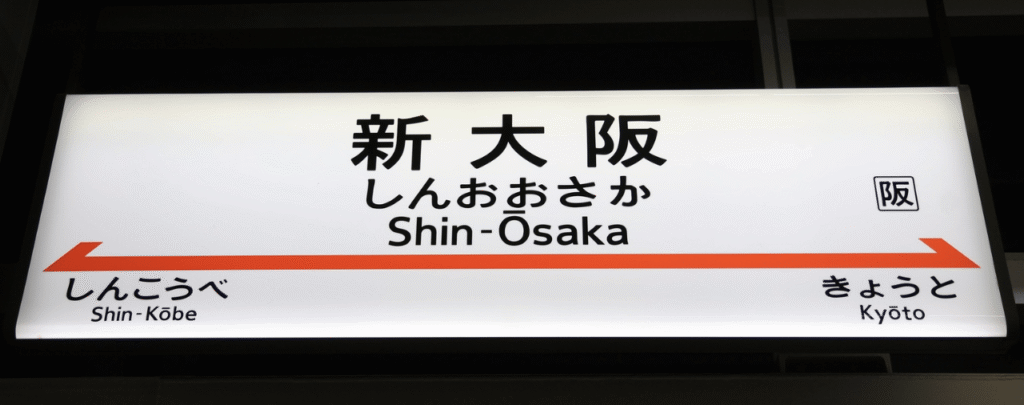
You do not need to read every Japanese sign to travel by train. A small group of words can help you distinguish a transfer from an exit, find a platform and ask a clearer question when you need help.
Start with three: 改札口 means ticket gate, 出口 means exit, and 乗り換え means transfer. They describe different parts of your journey. Recognizing the difference is more useful than memorizing a long vocabulary list before your flight.
This guide gives practical meanings, Japanese readings and examples. Use it alongside your route planner and the station’s current signs. For a broader family overview, see traveling Japan by train with kids .
20 useful Japanese station words
The kana readings help you recognize or say each word. Romanization is a reading aid: a line over a vowel, as in hōmen , indicates a long vowel. You may see different English spellings on signs and maps.
| Japanese sign | Reading | Meaning and use |
|---|---|---|
| 駅 | えき · eki |
Station
A station name may end in 駅. |
| 改札口 | かいさつぐち · kaisatsuguchi |
Ticket gate
A gate name is not necessarily the street exit name. |
| 入口 | いりぐち · iriguchi |
Entrance
Use with the line name and station map. |
| 出口 | でぐち · deguchi |
Exit
Check the exit number or name for your destination. |
| 東口 / 西口 | ひがしぐち / にしぐち · higashiguchi / nishiguchi |
East / west exit
Useful when meeting someone outside a large station. |
| 南口 / 北口 | みなみぐち / きたぐち · minamiguchi / kitaguchi |
South / north exit
Follow the actual station sign, not just your phone compass. |
| 乗り換え / のりかえ | のりかえ · norikae |
Transfer
Follow the connecting line’s name and symbol. |
| 方面 | ほうめん · hōmen |
Toward / direction
Names after this help distinguish opposite directions. |
| ○○行き | ○○ゆき · … yuki |
Bound for …
The final destination may be beyond your stop. |
| ホーム | ほーむ · hōmu |
Platform
Borrowed from the English word ‘platform’. |
| 番線 | ばんせん · bansen |
Platform / track number
3番線 is read san-bansen. Match the departure display. |
| 各駅停車 | かくえきていしゃ · kakueki teisha |
All-stations local
Check that the displayed service serves your stop. |
| 快速 | かいそく · kaisoku |
Rapid
Some stations are skipped; stopping patterns vary. |
| 特急 | とっきゅう · tokkyū |
Limited express
Ticket requirements vary by operator and service. |
| 指定席 | していせき · shiteiseki |
Reserved seat
Use the assigned train, car and seat shown on your ticket. |
| 自由席 | じゆうせき · jiyūseki |
Non-reserved seat
This does not mean ‘free of charge’. |
| 精算 | せいさん · seisan |
Fare adjustment
Ask staff if your ticket or card will not let you exit. |
| エレベーター | えれべーたー · erebētā |
Elevator
Useful with a stroller or heavy suitcase. |
| トイレ | といれ · toire |
Toilet / restroom
Look for the accompanying facility symbols. |
| 駅員 | えきいん · ekiin |
Station staff
A useful word when asking for assistance. |
Read a station sign in this order
First, identify the railway or line you need. Next, check the direction and platform. Once you arrive, look for the exit that serves your destination. Trying to solve all three at once can make a large station feel more confusing than it needs to be.
Tokyo Metro’s official boarding guide explains that overhead signs show line names and symbols, while platform signs show direction and major stations. Its guide distinguishes blue transfer guidance from yellow exit guidance. Treat that as Tokyo Metro guidance, rather than assuming every railway in Japan uses exactly the same design. Source: Tokyo Metro boarding guide .
- Line: Does this sign match the line in your planned route?
- Direction: Is your destination among the stations served in this direction?
- Platform: Does the number match the current departure information?
- Service: Does this particular train stop where you need to get off?
A train’s destination can be farther along the route than your stop. A different final destination is not automatically a problem, but do check the stopping pattern. For a fuller explanation of local, rapid and limited express services, use our guide to JR train types .
Station numbers, platform numbers and exit numbers are different
Tokyo Metro station identifiers combine a line letter and a station number, with a colored outline for the line. The operator explains that these identifiers help passengers recognize stations and travel direction. They do not identify a platform or street exit. Source: Tokyo Metro station-number guide .
| What you are checking | What it tells you | What to do |
|---|---|---|
| Line letter + station number | Your place on a particular subway line | Match the whole identifier, including its line letter. |
| Platform number / 番線 | Where to board within the station | Check it against the departure display. |
| Exit number or name / 出口 | Where to leave the station complex | Compare it with your destination’s access instructions. |
For example, an exit labeled “3” and a platform labeled “3” answer different questions. Do not keep following a number without checking the word or symbol beside it.
Transfer or exit: avoid the easy wrong turn
If your route includes another train, look for 乗り換え or のりかえ and the connecting line. If you are leaving for a hotel or attraction, look for 出口 and the relevant exit name or number.
That does not mean every transfer stays inside the ticket gates. Tokyo Metro’s official guidance describes transfers where passengers must pass through designated gates. Follow the instructions for your actual connection, and ask staff if you are unsure which gate to use. Source: Tokyo Metro transfer and exit guide .
A named gate and a named exit can also be different. If someone says “meet at the west exit,” confirm whether they mean outside the station or beside a particular ticket gate. A screenshot of the meeting point can be easier to use than a long spoken description.
Recognize familiar Tokyo line names
These names are useful recognition practice. They are not ticket-coverage instructions: seeing a familiar name does not tell you whether your particular pass is valid.
| Japanese | Reading | English name |
|---|---|---|
| 山手線 | やまのてせん · Yamanote-sen | Yamanote Line |
| 中央線 | ちゅうおうせん · Chūō-sen | Chuo Line |
| 東京メトロ | とうきょうメトロ · Tōkyō Metoro | Tokyo Metro |
| 都営地下鉄 | とえいちかてつ · Toei chikatetsu | Toei Subway |
The character 線 , read sen here, means line. Remembering the full line name helps when several services share a station.
Four phrases you can show station staff
Keep your destination written on your phone. A short question plus the station name is often easier to understand than a memorized sentence delivered in a hurry.
-
すみません、〇〇駅に行きたいです。
Sumimasen, … eki ni ikitai desu.
Excuse me, I’d like to go to … Station. -
この電車は〇〇駅に止まりますか。
Kono densha wa … eki ni tomarimasu ka?
Does this train stop at … Station? -
エレベーターはどこですか。
Erebētā wa doko desu ka?
Where is the elevator? -
〇〇に行くには、どの出口がいいですか。
… ni iku ni wa, dono deguchi ga ii desu ka?
Which exit should I use for …?
Replace 〇〇 with the station or place name; do not read the circles aloud. You can simply show the Japanese sentence and your map. These are original language examples, not quotations from railway signs.
Make it manageable when traveling with children
Give a child one small recognition task, such as spotting the elevator symbol or looking for 出口 once you have arrived. An adult should still confirm the route, platform and boarding decision.
Before moving through a busy concourse, stop somewhere out of the flow of passengers and agree on the next step: “We are finding the blue line,” or “We are looking for the east exit.” Save the rest of the route for later. With a stroller, check the elevator route rather than assuming the closest exit is the easiest. Our stroller travel guide covers that planning in more detail.
You can practice a few words before departure using the two-week family itinerary : choose a day’s destination, find its station name and decide which three signs would be useful. There is no need to turn the holiday into a language test.
Three meanings worth remembering
- 自由席 is not a free seat. It describes a non-reserved seating category. Ticket requirements still apply.
- 特急 is a service label, not one universal ticket rule. Check the operator and train before boarding.
- 出口 is not the same as 改札口. Leaving the paid area may still leave you inside a large station building.
Start with the words that solve your next decision. Line, direction, platform and exit will get you further than trying to translate every advertisement around you.
Official Tokyo Metro guidance checked October 30, 2026. Japanese readings and examples are editorial language guidance. Station layouts, platform assignments and transfer arrangements should be checked for the actual journey.