Traveling from Tokyo to Kyoto by train is one of the easiest and most popular long-distance journeys in Japan.
The Tokaido Shinkansen connects Tokyo Station directly with Kyoto Station, with the fastest Nozomi trains completing the journey in about 2 hours 10 minutes.
For most travelers, the main decision is simply whether to take the faster Nozomi, use a Hikari train with a Japan Rail Pass, or choose the slower Kodama.
Tokyo to Kyoto by Train at a Glance
| Train | Typical Travel Time | Stops | Japan Rail Pass |
|---|---|---|---|
| Nozomi | About 2 hr 10 min | Fewest | Extra Nozomi ticket required |
| Hikari | About 2 hr 40–50 min | More than Nozomi | Covered |
| Kodama | About 3 hr 40 min | Stops at every station | Covered |
All three services travel on the Tokaido Shinkansen and arrive at Kyoto Station, so there is normally no transfer required between Tokyo and Kyoto.
Nozomi, Hikari or Kodama: Which Train Should You Take?
Nozomi: Best for Most Travelers
Nozomi is the fastest Tokaido Shinkansen service between Tokyo and Kyoto. Because it stops at fewer stations and operates very frequently, it is usually the simplest choice if you are buying individual tickets.
The journey from Tokyo to Kyoto takes about 2 hours 10 minutes on the fastest services.
Hikari: Best for Japan Rail Pass Holders
Hikari trains make more stops than Nozomi and typically take around 2 hours 40 to 50 minutes between Tokyo and Kyoto.
The important advantage is that ordinary Hikari services are covered by the nationwide Japan Rail Pass under the normal pass conditions.
Kodama: Usually Not the Best Choice for Tokyo–Kyoto
Kodama stops at every Tokaido Shinkansen station, so the trip takes around 3 hours 40 minutes.
It is also covered by the Japan Rail Pass, but for a full Tokyo-to-Kyoto journey there is usually little reason to choose it over Hikari unless the schedule, fare, or a special discounted ticket works particularly well for your plans.
Where to Board the Shinkansen in Tokyo
You can board the Tokaido Shinkansen for Kyoto from either Tokyo Station or Shinagawa Station.
Tokyo Station
Tokyo Station is usually the most convenient choice if you are staying around Tokyo Station, Marunouchi, Ginza, Ueno or other parts of central and eastern Tokyo.
Because Tokyo Station is the starting point for many Tokaido Shinkansen services, boarding here can also give you a little more time to find your platform and settle in before departure.
Shinagawa Station
Shinagawa can be more convenient if you are staying in areas such as Shinagawa, Shibuya, Shinjuku or southern Tokyo.
All three Tokaido Shinkansen services — Nozomi, Hikari and Kodama — stop at Shinagawa, so you do not need to travel back to Tokyo Station simply to catch the Shinkansen.
Tokyo to Kyoto Shinkansen Ticket Prices
Expect to pay roughly ¥13,000–¥14,000 one way per adult for an Ordinary Car ticket between Tokyo and Kyoto, depending on the train, seat type, booking method and travel date.
| Ticket Type | Typical One-Way Price |
|---|---|
| Nozomi Ordinary Reserved Seat | About ¥14,000 |
| Hikari / Kodama Ordinary Reserved Seat | About ¥13,500–¥14,000 |
| Ordinary Non-Reserved Seat | About ¥13,300 |
Reserved-seat fares can vary slightly during off-peak, peak and especially busy travel periods, so always check the final fare when you book.
How to Buy Shinkansen Tickets
You have several straightforward options:
- SmartEX: JR’s official online reservation service for the Tokaido, Sanyo and Kyushu Shinkansen.
- JR ticket machines: Available at major JR stations, including Tokyo and Shinagawa.
- JR ticket offices: Useful if you prefer to speak with staff or have a more complicated itinerary.
SmartEX can be particularly useful if you want to choose your train and seat in advance. Some advance-purchase fares may also be cheaper, although availability and conditions vary.
Can You Use the Japan Rail Pass from Tokyo to Kyoto?
Yes. The nationwide Japan Rail Pass can be used between Tokyo and Kyoto on Hikari and Kodama Shinkansen services.
For most JR Pass holders, Hikari is the better choice because it is considerably faster than Kodama while still being covered by the pass.
What About Nozomi?
Nozomi is not included for unlimited travel under the standard Japan Rail Pass conditions.
However, JR Pass holders can now ride Nozomi by purchasing a separate [ONLY WITH JAPAN RAIL PASS] NOZOMI MIZUHO Ticket before boarding.
For Tokyo or Shinagawa to Kyoto, the current adult supplement is ¥4,960 one way.
If you are still deciding whether to purchase a nationwide pass, compare the cost of all your long-distance train journeys rather than buying the pass solely for Tokyo to Kyoto.
See our complete Japan Rail Pass guide for current prices, coverage and advice on deciding whether the pass makes sense for your itinerary.
Should You Reserve a Seat?
You can travel between Tokyo and Kyoto using either a reserved or non-reserved seat on many Tokaido Shinkansen services, but I generally recommend reserving a seat for this route.
A reservation guarantees that you can sit together if you are traveling as a couple or family, and it is especially useful on weekends, holidays and other busy travel periods.
During designated peak periods, all Nozomi seats are reserved, so you cannot rely on a regular non-reserved seat on those trains.
Which Side of the Shinkansen Has the Best Mt. Fuji View?
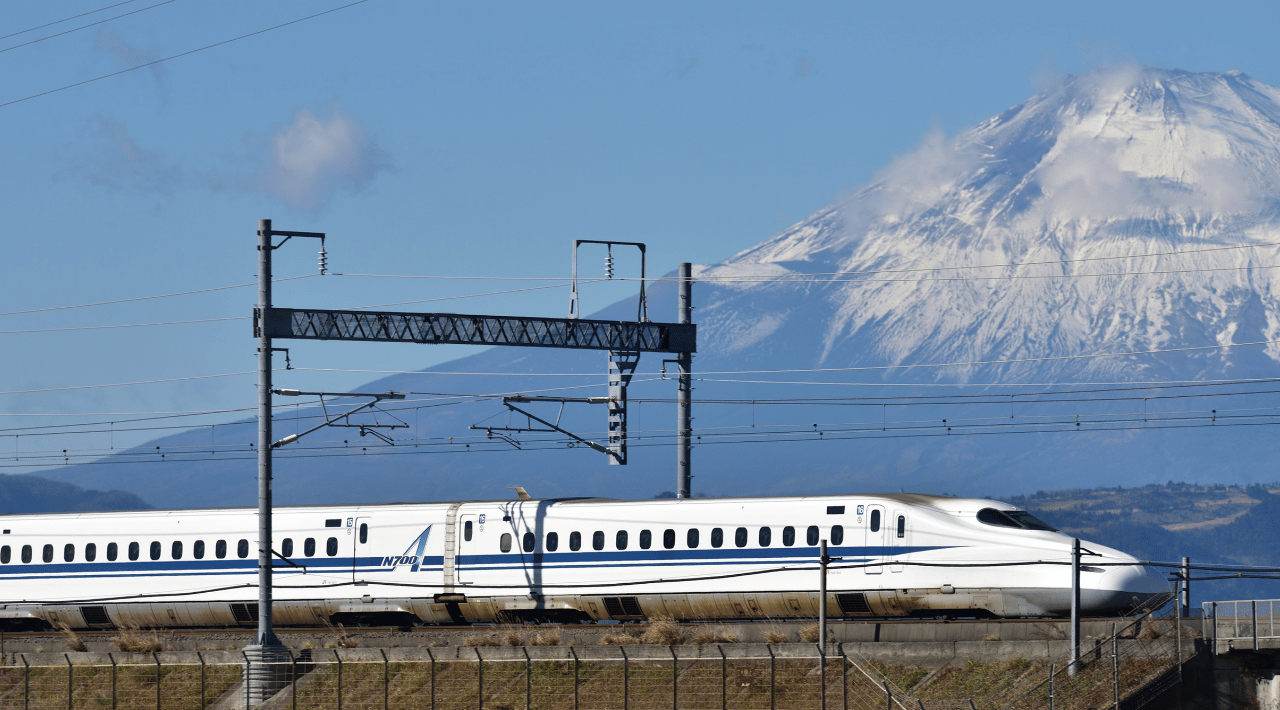
One of the highlights of traveling from Tokyo to Kyoto by Shinkansen is the possibility of seeing Mt. Fuji from the train.
When traveling from Tokyo toward Kyoto, choose a seat on the right-hand side of the train.
- Ordinary Car: Seat E is the window seat on the Mt. Fuji side.
- Green Car: Seat D is the window seat on the Mt. Fuji side.
Mt. Fuji is normally visible after passing through the area around Shin-Fuji Station, although the exact timing depends on the train.
Traveling from Tokyo to Kyoto With Large Luggage
The Tokaido Shinkansen has special rules for oversized baggage, so it is worth measuring very large suitcases before traveling.
If the combined total of your suitcase’s length + width + height is 160 cm or less, you normally do not need a special baggage reservation.
If the total dimensions are more than 160 cm and up to 250 cm, you must reserve a seat with an oversized baggage area or other designated oversized-baggage space.
| Baggage Size | Reservation Required? |
|---|---|
| 160 cm or less total dimensions | No, normally not |
| 161–250 cm total dimensions | Yes |
| Over 250 cm total dimensions | Cannot be brought onboard |
There is no additional charge when you correctly reserve a seat with an oversized baggage area. However, bringing oversized baggage onboard without the required reservation may result in a ¥1,000 baggage fee, and railway staff may direct you to another storage location.
You can reserve an oversized-baggage seat when booking through participating online reservation services, ticket machines or JR ticket offices.
Arriving at Kyoto Station
The Tokaido Shinkansen arrives directly at Kyoto Station, one of the main transportation hubs for sightseeing around Kyoto and the surrounding Kansai region.
From Kyoto Station, you can connect to JR local trains, the Kyoto City Subway, Kintetsu trains, buses and taxis.
If your hotel is near Kyoto Station, the area is especially convenient for travelers planning day trips to destinations such as Osaka, Nara, Himeji or Uji.
Getting from Kyoto Station to Popular Sightseeing Areas
Kyoto’s attractions are spread across the city, so the best transportation depends on where you are going.
| Destination | Approx. Travel Time | Useful Transportation |
|---|---|---|
| Fushimi Inari | About 10 min | JR Nara Line |
| Downtown Kyoto / Shijo-Kawaramachi | About 20 min | Subway and/or local transport |
| Arashiyama | About 25 min | JR Sagano Line |
| Kiyomizu-dera / Higashiyama | About 30–35 min | Train/subway plus walking or bus |
| Gion | About 20–30 min | Subway/train plus walking |
Fushimi Inari
Fushimi Inari is particularly easy to reach. Take the JR Nara Line from Kyoto Station to Inari Station, which is located directly beside the shrine entrance.
Arashiyama
For Arashiyama, take the JR Sagano Line from Kyoto Station to Saga-Arashiyama Station. This is usually much more convenient than taking a bus all the way across the city.
Gion and Higashiyama
Gion and the Higashiyama sightseeing area are not directly served by JR trains from Kyoto Station. Depending on your destination, using the subway or transferring to another railway line and then walking can help you avoid congested city buses.
Shinkansen vs Flying or Taking a Bus from Tokyo to Kyoto
For most travelers, the Shinkansen is the easiest way to travel between Tokyo and Kyoto because it takes you directly from central Tokyo to central Kyoto with no airport transfer.
Shinkansen
The fastest Nozomi trains take about 2 hours 10 minutes from Tokyo to Kyoto. You can board at Tokyo or Shinagawa Station and arrive directly at Kyoto Station.
This combination of speed, frequent departures and city-center convenience is why the Shinkansen is generally the most practical option.
Flying
Kyoto does not have its own commercial airport. If you fly from Tokyo, you must use an airport in the Osaka area and then continue to Kyoto by train, bus or other ground transportation.
Once travel to and from the airports, check-in and security time are included, flying is usually less convenient than taking the Shinkansen for a Tokyo-to-Kyoto trip.
Highway and Overnight Bus
Highway buses can be considerably cheaper than the Shinkansen and may be worth considering for travelers prioritizing budget over travel time.
Overnight buses also allow you to leave Tokyo in the evening and arrive in Kyoto the following morning, potentially saving the cost of one night’s accommodation.
The trade-off is comfort and journey time. Tokyo–Kyoto buses generally take most of the night, so they are much slower than the Shinkansen.
Example Tokyo to Kyoto Shinkansen Journey
A typical Tokyo-to-Kyoto journey is very straightforward.
- Arrive at Tokyo Station or Shinagawa Station with enough time to find the Tokaido Shinkansen platforms.
- Board a Nozomi, Hikari or Kodama train bound west toward Nagoya, Kyoto, Shin-Osaka or beyond.
- Store smaller luggage on the overhead rack or use your reserved oversized-baggage space if required.
- Keep an eye out for Mt. Fuji on the right-hand side of the train after leaving the Tokyo area.
- Arrive directly at Kyoto Station with no transfer required.
If you take a Nozomi, the journey is typically just over two hours. Hikari takes a little longer but is usually the most practical choice for nationwide Japan Rail Pass holders.
Where to Travel After Kyoto by Train
Kyoto is an excellent base for exploring the wider Kansai region by train.
Kyoto to Nara
Nara is one of the easiest day trips from Kyoto. JR and Kintetsu both provide convenient services, with typical journeys taking under an hour.
Read our Nara day trip by train guide.
Kyoto to Osaka
Osaka is also very easy to reach. JR Special Rapid trains connect Kyoto Station with Osaka Station in roughly 30 minutes, making Osaka practical as either a day trip or your next overnight stop.
If you are heading for Namba or Dotonbori, continue from Osaka or use a route that connects efficiently with the Osaka Metro.
See our Dotonbori access and sightseeing guide.
Kyoto to Himeji
Himeji Castle is also within easy reach by train. Some Shinkansen services run directly from Kyoto to Himeji, making it possible to visit the castle as a long day trip or as a stop while traveling farther west.
Read our Himeji Castle by train guide.
Tokyo to Kyoto by Train FAQ
How long does the Shinkansen take from Tokyo to Kyoto?
The fastest Nozomi services take about 2 hours 10 minutes. Hikari generally takes around 2 hours 40–50 minutes, while Kodama takes considerably longer.
Is there a direct train from Tokyo to Kyoto?
Yes. The Tokaido Shinkansen runs directly from Tokyo Station and Shinagawa Station to Kyoto Station with no transfer required.
Can I use the Japan Rail Pass from Tokyo to Kyoto?
Yes. Hikari and Kodama services are covered under the normal nationwide Japan Rail Pass conditions. Nozomi requires a separate JR Pass-holder Nozomi ticket.
Should I reserve a seat?
A reservation is not always required, but it is recommended if you want to sit together, travel during a busy period, reserve space for oversized baggage or choose a specific seat for the Mt. Fuji view.
Which side should I sit on to see Mt. Fuji?
When traveling from Tokyo toward Kyoto, choose the right-hand side of the train. In an Ordinary Car, Seat E is the usual Mt. Fuji-side window seat.
Is Tokyo to Kyoto possible as a day trip?
It is technically possible, but I do not normally recommend it. Even using Nozomi, you will spend more than four hours on long-distance trains in one day before including local transportation within Kyoto.
If possible, stay at least one night in Kyoto so you can explore the city at a more comfortable pace.
Is the Shinkansen better than flying?
For most travelers, yes. Kyoto does not have its own commercial airport, while the Shinkansen runs directly from central Tokyo to Kyoto Station. Once airport transfers and check-in time are included, the train is usually much more convenient.
Final Thoughts: Tokyo to Kyoto by Shinkansen
For most travelers, the Shinkansen is by far the easiest way to travel from Tokyo to Kyoto. It is fast, frequent and takes you directly from central Tokyo to Kyoto Station without the extra transfers required when flying.
If you are buying individual tickets, Nozomi is usually the most convenient choice. If you are traveling with a nationwide Japan Rail Pass, Hikari offers an excellent alternative without the additional Nozomi charge.
Whichever train you choose, reserving a seat in advance can make the journey more comfortable — particularly during busy travel periods, when traveling with family, or if you want a Mt. Fuji-side window seat.
Tokyo and Kyoto are two of the most important stops on a first trip to Japan, and traveling between them by Shinkansen is one of the simplest long-distance journeys you can make.
Before You Buy a JR Pass
Compare the cost of your planned train journeys with the current JR Pass price. Depending on your route, individual tickets or a regional pass may offer better value.
Check Current JR Pass PricesAbout Train Travel Japan
Train Travel Japan is written from firsthand experience traveling throughout Japan by rail. I am a Japanese native based in Canada and have traveled to all 47 prefectures of Japan over more than 30 years.
My goal is to make Japan train travel easier to understand, especially for international visitors planning JR Pass trips, regional rail journeys and independent itineraries.