
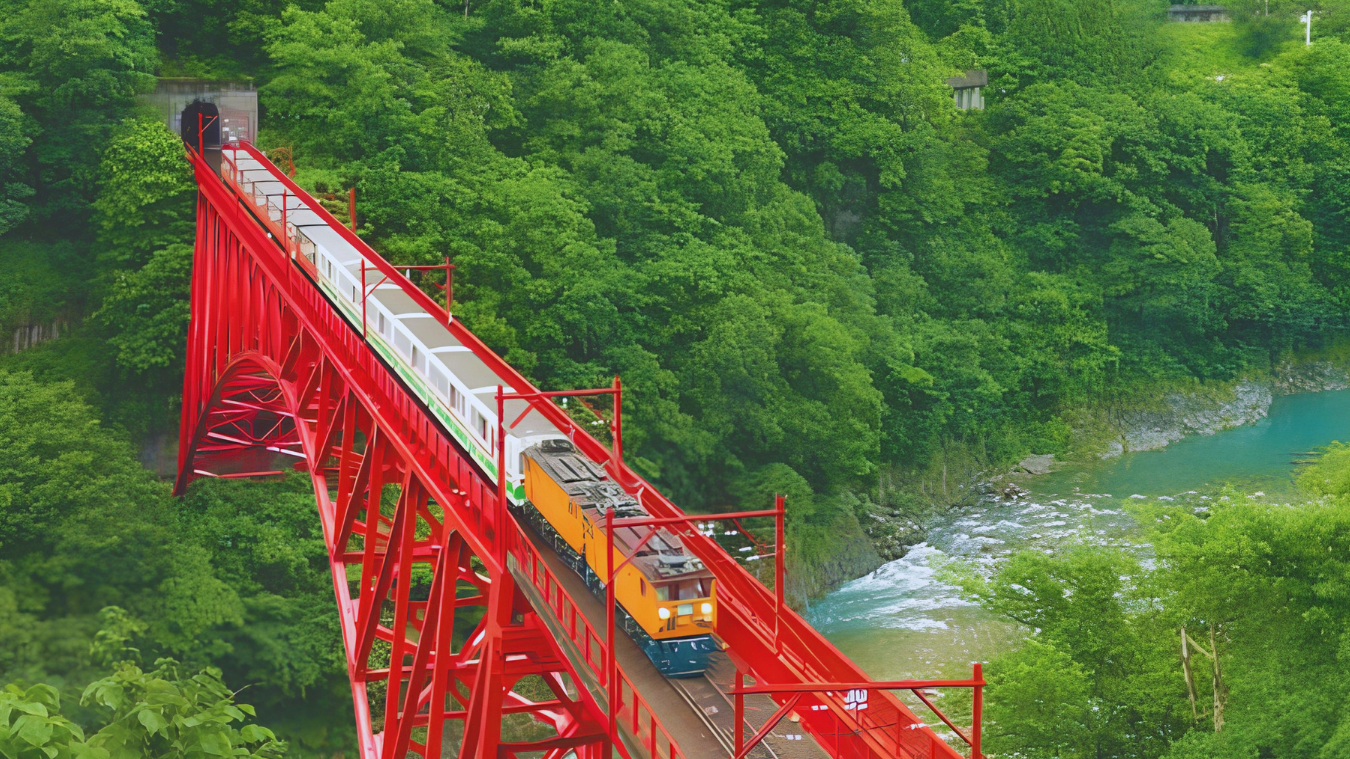
Sightseeing trains in Chubu and Hokuriku offer some of Japan’s most distinctive scenic railway journeys. Instead of simply connecting major cities, these trains take you through mountain valleys, rural landscapes, dramatic gorges and regions known for local food, sake and traditional culture.
In this guide, we highlight five sightseeing trains across Chubu, Hokuriku, Nagano and Niigata that are worth building into a wider Japan rail itinerary.
5 Sightseeing Trains at a Glance
Kurobe Gorge Railway → Belles Montagnes et Mer → Koshino Shu*Kura → HIGH RAIL 1375 → Resort View Furusato
Some are mainly about spectacular scenery, while others make the onboard experience itself part of the attraction through local food, sake, special interiors or evening stargazing.
Chubu & Hokuriku Sightseeing Trains at a Glance
| Train | Main Route | Best For |
|---|---|---|
| Kurobe Gorge Railway | Unazuki → Kurobe Gorge | Dramatic gorge and mountain scenery |
| Belles Montagnes et Mer | Takaoka / Shin-Takaoka → Johana or Himi | Local Toyama scenery, mountains and coast |
| Koshino Shu*Kura | Routes through Niigata Prefecture | Sake, local food and regional culture |
| HIGH RAIL 1375 | Kobuchizawa ↔ Komoro | High-altitude scenery and stargazing |
| Resort View Furusato | Nagano ↔ Minami-Otari | Northern Alps, countryside and panoramic views |
These Trains Don’t Run Like Ordinary Commuter Services
Many sightseeing trains operate only on selected days or seasons and require reserved seats. Always check the current operating calendar before building one into your itinerary.
Temporary Kurobe Gorge Railway Notice — September 2026
The Kurobe Gorge Railway is currently operating only between Unazuki and Nekomata while earthquake-related restoration work continues.
Full-line operation between Unazuki and Keyakidaira is currently scheduled to resume from October 1, 2026.
Travelers visiting before then should check the latest official operating information before making plans.
1. Kurobe Gorge Railway — Dramatic Gorge and Mountain Scenery
The Kurobe Gorge Railway is one of Japan’s most distinctive scenic train rides. Small trolley trains travel from Unazuki deep into the mountains of Toyama Prefecture, following the steep Kurobe River through tunnels, bridges and forested valleys.
This is very different from an ordinary JR sightseeing train. The railway was originally developed in connection with hydroelectric construction, and today’s compact open-sided trains give passengers unusually close views of the surrounding gorge.
Why Ride the Kurobe Gorge Railway?
- Spectacular river and mountain scenery
- Open-air trolley-style carriages
- Numerous bridges and tunnels
- Excellent autumn foliage
- A completely different rail experience from the Shinkansen
Best Time to Ride
The railway normally operates from spring through late November. Autumn is especially popular, with foliage in the gorge generally reaching its best colors from around late October into early November.
Mountain weather can change quickly, so bring an extra layer even when the weather at lower elevations feels warm.
How to Get to the Kurobe Gorge Railway
Kurobe Gorge Railway trains depart from Unazuki Station in Unazuki Onsen.
From the Hokuriku Shinkansen
Travel to Kurobe-Unazuki-Onsen Station on the Hokuriku Shinkansen. From nearby Shin-Kurobe Station, take the Toyama Chiho Railway to Unazuki Onsen.
Kurobe Gorge Railway’s Unazuki Station is a short walk from the Toyama Chiho Railway station.
Japan Rail Pass Coverage
The Kurobe Gorge Railway is not operated by JR, so the Japan Rail Pass does not cover the trolley-train journey.
Travelers using a JR pass may be able to use it for the JR portion of the journey toward Kurobe-Unazuki-Onsen, but the connecting private railway and Kurobe Gorge Railway require separate fares.
Tickets and Reservations
Advance reservations are strongly recommended during popular periods, especially Golden Week, summer holidays and the autumn foliage season.
Same-day tickets may also be available at Unazuki Station, subject to capacity.
Open-Air or Windowed Carriage?
The standard open-air carriage gives you the most atmospheric experience, but a windowed Relaxation Car is also available for an additional fee. It can be a better choice in cold, wet or windy weather.
2. Belles Montagnes et Mer — Mountains and Sea in Toyama
Belles Montagnes et Mer, commonly called Bell Monte or Berumonta, is a small JR West sightseeing train based around Takaoka in Toyama Prefecture.
Its French name means “beautiful mountains and sea,” which perfectly describes the two routes it operates: one toward rural mountain scenery on the Johana Line and another toward the coast on the Himi Line.
Two Different Bell Monte Experiences
Johana Line: Takaoka / Shin-Takaoka toward Johana, passing rural landscapes and views toward the mountains.
Himi Line: Takaoka / Shin-Takaoka toward Himi, combining coastal scenery with views across Toyama Bay.
Which Route Should You Choose?
Choose the Johana Line if you prefer rural landscapes, traditional countryside and mountain scenery.
Choose the Himi Line if the coast, Toyama Bay and seafood destinations around Himi interest you more.
How to Ride Belles Montagnes et Mer
All Seats Are Reserved
Bell Monte operates as an all-reserved-seat rapid train. You need both the appropriate fare for your journey and a reserved-seat ticket.
The current reserved-seat charge is ¥530 for adults and ¥260 for children, in addition to the applicable base fare.
How to Reserve
Tickets normally go on sale one month before the travel date at 10:00. Reservations can be made through JR West’s e5489 service, at major JR ticket offices and through participating travel agencies.
Japan Rail Pass Holders
Bell Monte operates on JR lines. If your Japan Rail Pass is valid for the journey, eligible ordinary JR travel and reserved seating can be used within the pass rules.
You still need to obtain a reserved-seat ticket before boarding because Bell Monte has no non-reserved seating.
Check the Operating Day First
Bell Monte is not a daily train. Under the current operating pattern, the Johana Line generally runs on Saturdays and the Himi Line generally runs on Sundays, with selected additional holiday services.
Always confirm the official operating calendar before planning your itinerary around this train.
3. Koshino Shu*Kura — Niigata Sake and Regional Culture
Koshino Shu*Kura is one of Japan’s most distinctive sightseeing trains, built around the culture of sake in Niigata Prefecture.
Rather than focusing only on scenery, the train turns the journey itself into a regional experience through local sake, food, onboard events and views of Niigata’s countryside.
Why Ride Koshino Shu*Kura?
- Niigata sake tastings onboard
- Regional food and special travel packages
- Comfortable lounge-style spaces
- Scenic travel through Niigata Prefecture
- A strong cultural experience rather than simply a train ride
Not Just One Fixed Route
Koshino Shu*Kura operates in several route variations through Niigata. Current services include journeys linking Joetsumyoko with destinations such as Tokamachi, Echigo-Yuzawa and Niigata, depending on the operating calendar.
Check the specific train name and operating date carefully before planning your itinerary.
How to Ride Koshino Shu*Kura
Car No. 3: Regular Reserved Seating
Car No. 3 can be used with a regular basic fare ticket or valid rail pass plus a reserved-seat ticket.
Seats can be reserved through JR East’s reservation system, at JR ticket offices and through other participating sales channels.
Car No. 1: Food & Sake Packages
Car No. 1 is reserved for special travel packages that may include food, sake and additional onboard services.
These packages are separate from ordinary reserved-seat tickets and are sold through JR East’s Joyful Train reservation service or participating travel products.
Japan Rail Pass Holders
If your Japan Rail Pass or eligible JR East pass is valid for the route, you can use Car No. 3 without an additional seat-reservation charge, but you must still obtain a reserved-seat ticket before boarding.
Special meal and sake packages are not automatically included with a rail pass.
Best for Adult Travelers Interested in Sake
This train is particularly memorable for travelers interested in regional food and drink. Even if you do not purchase a full meal package, the sake-focused onboard atmosphere makes it very different from an ordinary JR train.
4. HIGH RAIL 1375 — High-Altitude Scenery and Stargazing
HIGH RAIL 1375 is a JR East sightseeing train running through the mountains of Yamanashi and Nagano on the Koumi Line between Kobuchizawa and Komoro.
The train is designed around the line’s high elevation, mountain scenery and clear night skies, making it very different from Japan’s coastal or food-focused sightseeing trains.
Why Ride HIGH RAIL 1375?
- High-altitude mountain scenery
- Travel through rural Yamanashi and Nagano
- Special astronomy-themed interior
- HIGH RAIL Gallery onboard
- Optional evening stargazing experience
What Does “1375” Mean?
The name reflects the exceptionally high elevation of the Koumi Line. The route includes some of the highest railway sections on the JR network, reinforcing the train’s “closest to the sky” theme.
HIGH RAIL Hoshizora — The Evening Stargazing Train
The evening HIGH RAIL Hoshizora service is the most distinctive version of the train.
Stargazing at Nobeyama
During the evening service, the train makes an extended stop at Nobeyama, where local guides lead a stargazing session.
The surrounding Minamimaki area is well known for exceptionally dark night skies and strong stargazing conditions.
Weather Matters
Stargazing may be held indoors or canceled if weather conditions are unsuitable. Bring warm clothing even outside winter, because temperatures at this elevation can become much cooler after dark.
How to Ride HIGH RAIL 1375
All Seats Are Reserved
HIGH RAIL 1375 has reserved seating only. You need a basic fare ticket or valid rail pass plus an advance reserved-seat ticket.
How to Reserve
Reservations can be made through JR-EAST Train Reservation or at participating JR ticket offices.
Seats normally go on sale one month before departure, so booking early is worthwhile for weekends, holidays and the evening Hoshizora service.
Rail Pass Coverage
HIGH RAIL 1375 is covered by eligible JR passes valid for the route, including the Japan Rail Pass, JR EAST PASS, JR TOKYO Wide Pass and Hokuriku Arch Pass within their applicable areas.
Pass holders must still reserve a seat in advance, but there is no additional reserved-seat charge when the pass covers the journey.
Check the Operating Calendar
HIGH RAIL 1375 does not operate every day, and daytime and evening services vary by season. Confirm the current timetable before arranging accommodation or connections around the train.
5. Resort View Furusato — Northern Alps and Rural Nagano
Resort View Furusato is a JR East sightseeing train running between Nagano and Minami-Otari through some of the most attractive countryside in Nagano Prefecture.
The journey combines mountain scenery, rivers, lakes, rural communities and views toward the Northern Japan Alps, making it a particularly good addition to a Nagano or Japanese Alps itinerary.
Why Ride Resort View Furusato?
- Views of mountains, lakes and rural Nagano
- Large windows and an observation area
- Spacious reclining seats
- Special station stops and occasional onboard activities
- Easy to combine with Nagano, Matsumoto, Azumino or Hakuba
More Than a Scenic Train Ride
On selected services, local residents host onboard activities such as regional storytelling, shakuhachi performances and taiko drumming. Activities vary by operating day and may change without notice.
Highlights Along the Resort View Furusato Route
Hotaka Station
On the Minami-Otari-bound journey, the train currently stops at Hotaka Station for approximately 30 minutes, giving passengers time to briefly explore the station area.
Shinano-Omachi
Shinano-Omachi is one of the main gateways to the Northern Japan Alps and the Tateyama Kurobe Alpine Route. The Nagano-bound service currently includes a short sightseeing stop here.
Obasute
The route around Obasute offers expansive views over the Zenkoji Plain. The station is also known for its unusual switchback railway layout, making this section especially interesting for rail enthusiasts.
Watch the Clock at Sightseeing Stops
The train departs according to its timetable and will not wait for passengers who return late, so keep track of the departure time whenever you leave the train during a sightseeing stop.
How to Ride Resort View Furusato
All Seats Are Reserved
Resort View Furusato has reserved seating only. You need a basic fare ticket or valid rail pass plus a reserved-seat ticket before boarding.
How to Reserve
Reservations can be made through JR-EAST Train Reservation and at participating JR ticket offices and reserved-seat ticket machines.
Seat reservations normally open at 10:00 one month before the departure date.
Rail Pass Coverage
The train can be used with eligible JR passes covering the route, including the nationwide Japan Rail Pass and JR EAST PASS.
The Hokuriku Arch Pass also covers Resort View Furusato within its applicable service area.
Pass holders still need to obtain a reserved-seat ticket before boarding, but there is no additional reservation charge when the pass covers the journey.
Check the Operating Calendar
Resort View Furusato does not operate every day. Confirm the current JR East operating calendar before arranging hotels or connections around the train.
Which Chubu & Hokuriku Sightseeing Train Should You Choose?
| Train | Choose It For… | Best Base / Area |
|---|---|---|
| Kurobe Gorge Railway | Dramatic gorge scenery and an unusual trolley-train experience | Toyama / Unazuki Onsen |
| Belles Montagnes et Mer | Toyama countryside, mountains or coastal scenery | Takaoka / Toyama |
| Koshino Shu*Kura | Niigata sake, food and regional culture | Joetsumyoko / Niigata |
| HIGH RAIL 1375 | High-altitude railway scenery and stargazing | Kobuchizawa / Nagano area |
| Resort View Furusato | Northern Alps, lakes and rural Nagano scenery | Nagano / Matsumoto / Hakuba area |
Our Picks
For pure scenery, choose Kurobe Gorge Railway. For a uniquely Japanese food-and-drink experience, choose Koshino Shu*Kura. For something especially unusual, try the evening HIGH RAIL Hoshizora service.
Final Tips for Riding Sightseeing Trains in Central Japan
- Check the operating calendar before planning your itinerary. Most of these trains do not operate daily.
- Reserve seats as soon as practical once your travel date is fixed, particularly for weekends and holidays.
- Do not assume every sightseeing train is covered by the JR Pass. Kurobe Gorge Railway, for example, is a separate railway.
- Even when a JR pass covers the train, all-reserved services still require you to obtain a seat reservation.
- Build sightseeing trains into an existing route rather than traveling several hours solely to ride one whenever possible.
- Allow extra connection time. Sightseeing trains usually operate only a small number of services each day.
- Check seasonal weather conditions, particularly for mountain routes.
Make the Train Part of the Itinerary
The best sightseeing-train trips are not simply rides out and back. Combine the train with destinations such as Toyama, Kanazawa, Nagano, Matsumoto, Niigata or the Japanese Alps so the journey becomes part of a wider Central Japan route.
Chubu & Hokuriku Sightseeing Trains FAQ
Do these sightseeing trains run every day?
Usually not. Many operate only on selected weekends, holidays or seasonal dates. Always check the official operating calendar before planning your trip.
Are sightseeing trains covered by the Japan Rail Pass?
Some are. JR-operated trains such as Koshino Shu*Kura, HIGH RAIL 1375 and Resort View Furusato can be covered when your pass is valid for the route. Private railways such as the Kurobe Gorge Railway require separate tickets.
Do I need to reserve sightseeing trains?
Many of the trains in this guide have reserved seating only or very limited capacity. Reserving in advance is strongly recommended.
Which train is best for autumn foliage?
Kurobe Gorge Railway is particularly famous for autumn colors, while the mountain routes used by HIGH RAIL 1375 and Resort View Furusato can also be beautiful during the foliage season.
Which sightseeing train is best for food and drink?
Koshino Shu*Kura is the standout choice for travelers interested in Niigata sake and regional food culture.
Which train is best for families?
Resort View Furusato and Bell Monte are relatively straightforward choices for families who primarily want scenery and a special train experience. HIGH RAIL 1375 can also be fun for children interested in trains, mountains or astronomy.
Which train is easiest to combine with the Hokuriku Arch Pass?
HIGH RAIL 1375 and Resort View Furusato are specifically listed among JR East’s applicable sightseeing trains for the Hokuriku Arch Pass, within the pass’s valid service area.
Before You Buy a JR Pass
Compare the cost of your planned train journeys with the current JR Pass price. Depending on your route, individual tickets or a regional pass may offer better value.
Check Current JR Pass PricesRelated Train Travel Guides
About Train Travel Japan
Train Travel Japan is written from firsthand experience traveling throughout Japan by rail. I am a Japanese native based in Canada and have traveled to all 47 prefectures of Japan over more than 30 years.
My goal is to make Japan train travel easier to understand, especially for international visitors planning JR Pass trips, regional rail journeys and independent itineraries.