
8 Ekiben You Should Try on Your Next Japan Rail Journey
There is a moment that most first-time Shinkansen passengers experience somewhere around twenty minutes after departure: the person in the next seat opens a small, beautifully packaged box and the carriage fills with the smell of seasoned rice, grilled fish, and something subtly sweet. You spend the rest of the journey wishing you had bought one too. That box is an ekiben — a portmanteau of eki (station) and bento (boxed meal) — and it is one of the great underrated pleasures of travelling Japan by train. The concept has existed since 1885, when a teahouse near Utsunomiya Station began selling sesame-sprinkled onigiri to passengers through the windows of departing trains. The idea spread rapidly, and today there are estimated to be over five thousand varieties sold across the country, each one a small, edible portrait of the region it comes from.
JR REGIONAL PASSKYOTOHOKURIKUCENTRAL JAPANFOODTOKYOOSAKA
Josh K
4/17/202611 min read
An ekiben is not just lunch. It is the crab from Hokkaido in a box, the pressed trout from the mountains of Toyama in a round wooden frame, the slow-braised beef from Yonezawa wrapped in its own sauce. Each one tells you something specific and honest about its place of origin in a way that no restaurant meal quite can. Eating one on the train, with the landscape changing outside the window, is one of the most genuinely Japanese experiences this country offers travellers.
Below are eight ekiben worth going out of your way for — ranging from the country's most beloved classic to lesser-known regional gems. Most are available at the station they originate from; several can also be found at Ekibenya Matsuri inside Tokyo Station, which stocks over 170 varieties from across Japan and is worth arriving an hour early to browse before any long Shinkansen journey.
Planning your rail routes? Our 7-day JR Pass itinerary from Tokyo to Fukuoka and 15-day north-to-south itinerary from Sapporo to Fukuoka pass through many of the regions on this list.


1. Ikameshi — Mori Station, Hokkaido
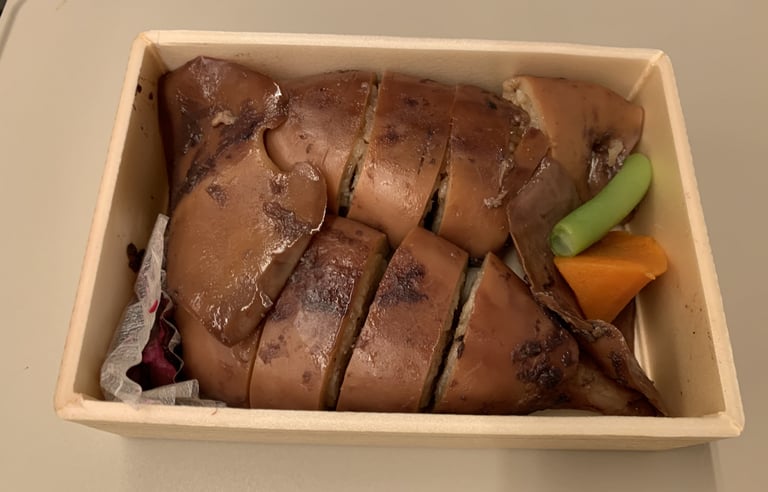
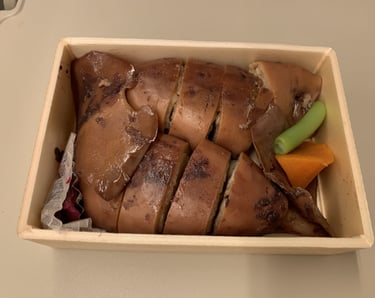
If there is one ekiben that has transcended its origins to become a national institution, it is ikameshi — whole Japanese squid stuffed with seasoned rice and simmered in a sweetened soy broth until the flesh is tender and deeply savoury. The concept is almost absurdly simple, and the result is almost absurdly good.
Ikameshi has been sold at tiny Mori Station on the Hakodate Main Line since 1941, created originally as a way to stretch limited rice supplies during wartime rationing by stuffing rice inside abundant local squid. It won every ekiben competition it entered, became a permanent fixture at department store ekiben fairs across Japan, and is now one of the country's best-selling station bento boxes — remarkable for a product sold at a station most trains barely slow down for. The squid comes from the cold, clean waters off the Hokkaido coast and has a natural sweetness that the soy-based braising liquid amplifies rather than masks. The glutinous rice inside absorbs all of it.
This is the ekiben that converts people who claim not to like squid.
Where to find: Mori Station (Hokkaido); nationwide at department store ekiben fairs and Ekibenya Matsuri, Tokyo Station
Best on: The Hakodate Main Line, or any journey where you want maximum flavour for minimum fuss
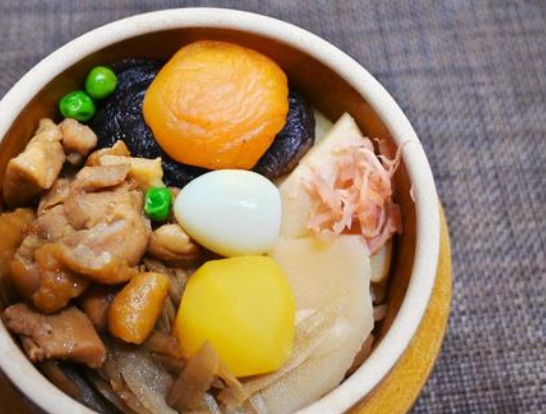
Kamameshi
2. Toge no Kamameshi — Yokokawa Station, Gunma
The most famous ekiben in Japan, and the one most likely to come up when you ask a Japanese person to name one. Toge no Kamameshi — 'kettle rice of the mountain pass' — has been sold at Yokokawa Station in Gunma Prefecture since 1958, when a bento maker named Oginoya did something entirely new: served a station bento warm, in a small ceramic pot.
At the time, ekiben were almost universally cold. Serving hot, freshly cooked rice in a durable, reusable pottery vessel was revolutionary. The ceramic pot is made from Mashiko-yaki earthenware — a pottery tradition with over 150 years of history in Tochigi Prefecture — and passengers on the old mountain line would pass coins out of train windows at Yokokawa while vendors passed the pots back in. The railway line no longer runs, but the bento has never stopped selling.
Inside the pot: soy and dashi-seasoned rice topped with chicken, shiitake mushrooms, bamboo shoots, burdock root, chestnuts, a small apricot, and a quail egg. Rich, warming, and layered with the kind of flavours that only slow cooking produces. The pot itself is part of the appeal — most people take it home. It works as a rice cooker, a serving bowl, or a plant pot. At Ekibenya Matsuri in Tokyo Station it is consistently among the biggest sellers, bought by people who will never pass through Yokokawa.
Where to find: Yokokawa Station (Gunma); Ekibenya Matsuri, Tokyo Station; selected department stores nationwide
Best on: Any long Shinkansen journey; the first ekiben to buy if you have never tried one before
3. Gyutan Bento — Sendai Station, Miyagi
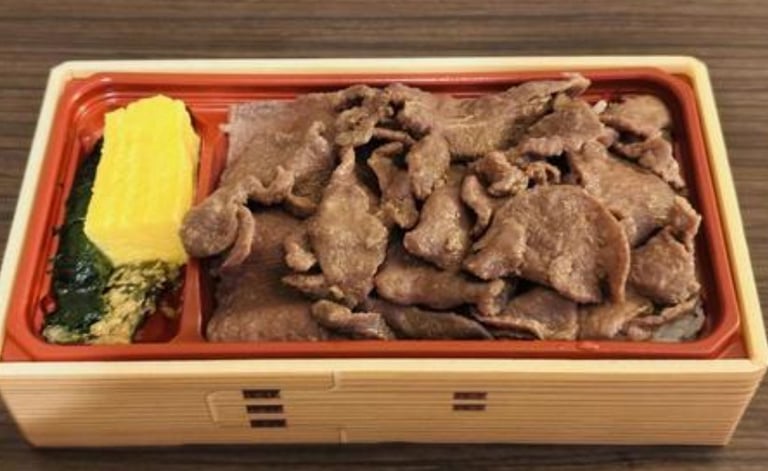
Sendai is the home of gyutan — thick-cut, charcoal-grilled beef tongue — and the ekiben version is one of the most satisfying meals you can buy at any station in Japan. Marinated beef tongue is grilled until the edges are caramelised and the interior is tender, then laid over barley rice (mugi-meshi) with pickled vegetables and a small container of rich oxtail soup on the side. It is a proper meal, not a snack — substantial, deeply savoury, and warmly flavoured in a way that holds up well on a cold Tohoku morning.
Gyutan was invented in Sendai in the 1940s by a restaurant owner who began working with cuts of beef that most Japanese kitchens ignored. It took decades to spread beyond the city, and even now Sendai does it better than anywhere. The ekiben version was created in the 1980s to coincide with the opening of the Tohoku Shinkansen route, and has become one of the most recognised regional station bentos in Japan. It is also one of the few ekiben that works equally well as a dinner — buy it at Sendai Station on the way back to Tokyo and you will not regret it.
Where to find: Sendai Station; also available at Ekibenya Matsuri, Tokyo Station
Best on: The Tohoku Shinkansen; anyone travelling through the Tohoku region
Kamameshi
4. Masu no Sushi — Toyama Station, Toyama
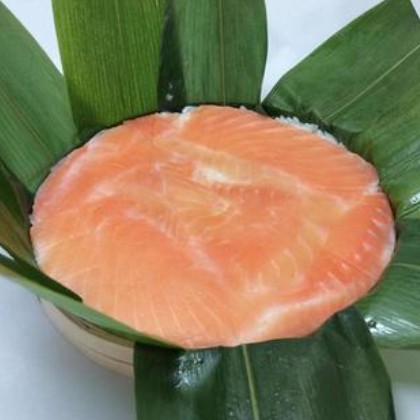
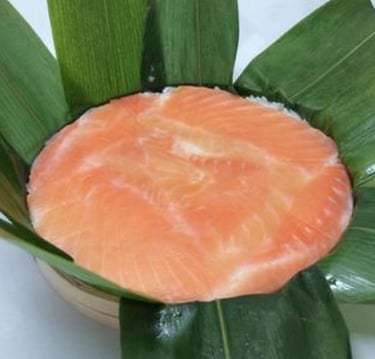
Pressed trout sushi wrapped in fragrant bamboo leaves and packed into a round wooden box: Masu no Sushi is one of the most beautiful ekiben in Japan, and one of the most distinctive. The sushi is made by lining a circular wooden mould with fresh bamboo leaves, layering thin slices of salt-cured trout over vinegared rice, pressing it firmly with a wooden lid, then cutting it into wedges like a cake. The result is dense, elegant, and intensely flavoured — nothing like the nigiri and rolls most visitors associate with the word sushi.
Toyama sits on the Sea of Japan coast at the foot of the Japanese Alps, and the trout that run through its rivers have been prized for centuries. Masu no Sushi has been made here since at least the 18th century — records exist of it being presented to the Tokugawa shogunate as a regional gift — and the ekiben version has been sold at Toyama Station since the early 20th century. Multiple producers compete for the title of best version, with subtle differences in the curing of the fish, the seasoning of the rice, and the tightness of the press. Buying one from two different makers and comparing them over the course of a Hokuriku journey is a reasonable way to spend an afternoon.
Where to find: Toyama Station; also sold at Kanazawa Station and selected Tokyo retailers
Best on: The Hokuriku Shinkansen; anyone travelling between Kanazawa and Tokyo
Kakinoha Sushi
5. Shokado Bento — Kyoto Station, Kyoto
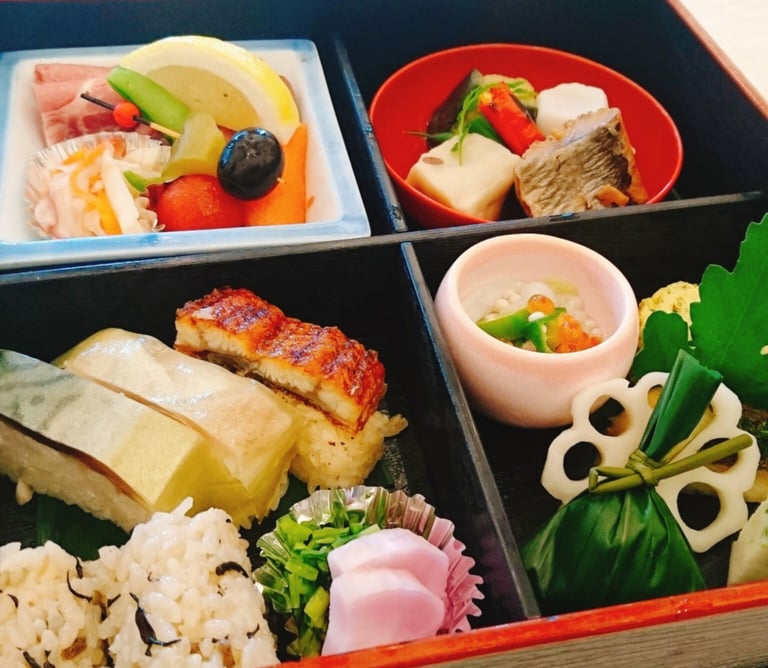
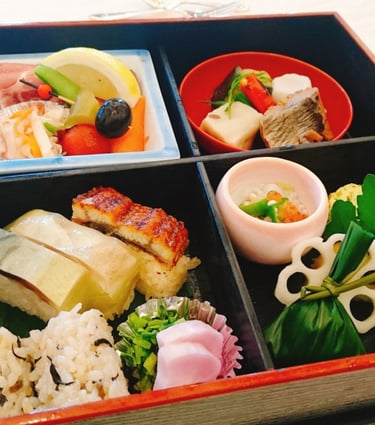
The most refined ekiben on this list, and the one that comes closest to being a restaurant meal in a box. The Shokado bento takes its name and format from a style of lacquered painting box used in traditional Japanese art — a tray divided into four compartments, each holding something different. The ekiben version is inspired by kaiseki, Kyoto's multi-course haute cuisine tradition, and the contents change with the seasons.
A typical Shokado might contain a piece of carefully grilled seasonal fish, tamagoyaki (the precisely layered Japanese omelette that requires real technique to make well), simmered root vegetables seasoned with dashi, a portion of rice, and pickles selected to balance the other flavours. Every element is cooked properly, presented with the kind of visual care that Kyoto food takes seriously, and portioned so that you finish the box feeling well-fed rather than stuffed. A spring version might include bamboo shoots and cherry blossom-flavoured sweets; an autumn version might feature matsutake mushrooms. It is the ekiben for travellers who eat with attention.
Where to find: Kyoto Station; premium ekiben shops at major Shinkansen stations
Best on: The Tokaido Shinkansen from Kyoto toward Tokyo; a long journey where you want something genuinely good
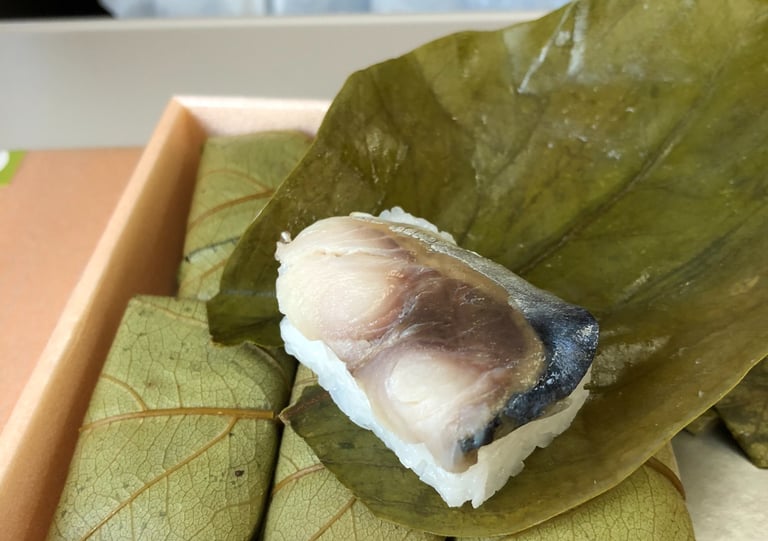
6. Kakinoha Sushi — Nara and Wakayama Stations
One of Japan's most elegantly simple regional foods: bite-sized portions of vinegared rice topped with a slice of salt-cured mackerel or salmon, each piece individually wrapped in a fragrant persimmon leaf. The leaf is not eaten — it functions as both natural packaging and preservative, its antimicrobial properties keeping the fish fresh while imparting a faint, pleasant bitterness to the rice beneath it. The result is a subtle, delicate, clean-tasting sushi that is genuinely unlike anything you will find in a Tokyo sushi restaurant.
Kakinoha sushi originated in the mountain villages of the Yoshino region in Nara Prefecture, where fresh ocean fish was unavailable but river transport brought salt-cured mackerel from the coast. Wrapping the sushi in the persimmon leaves that grew abundantly in the area was a practical solution that became a culinary tradition — one with several hundred years of history behind it. It is sold throughout Nara and Wakayama, and is one of those foods that is simultaneously very local and completely unreproducible anywhere else. After a day of deer and Daibutsu in Nara, it makes an excellent meal on the train back to Kyoto.
Where to find: Nara Station; Wakayama Station; Yoshino area shops; some Osaka Station vendors
Best on: The JR Nara Line; the Kinokuni Line along the Wakayama coast
Kakinoha Sushi
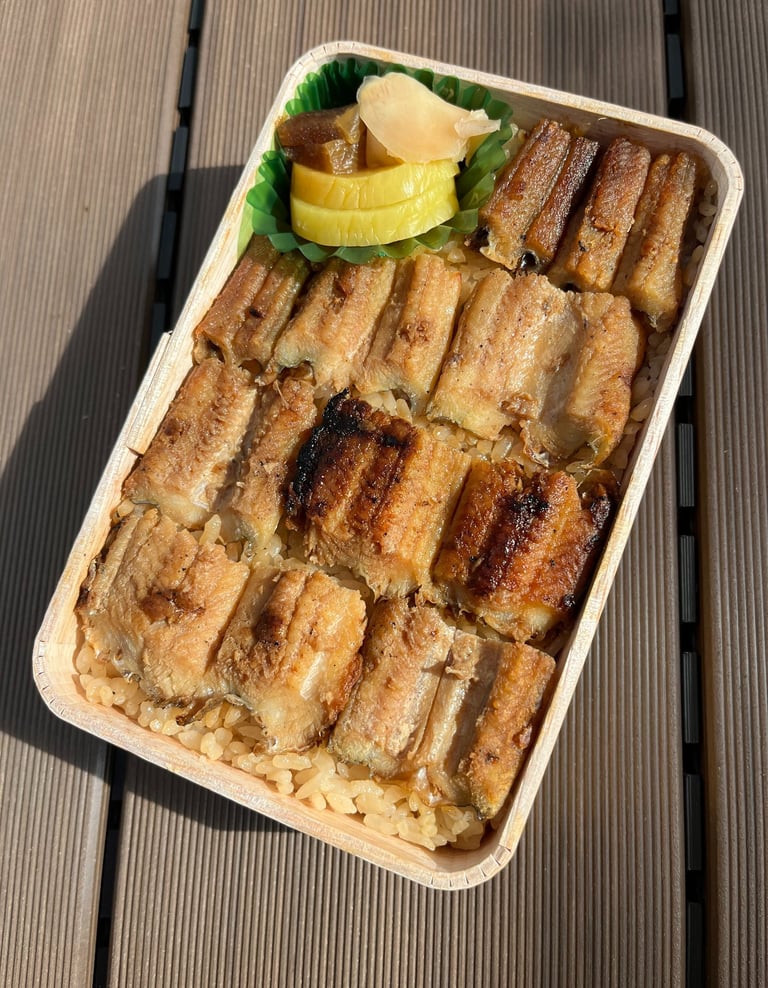
7. Anago Meshi — Miyajimaguchi Station, Hiroshima
The traditional meal eaten before catching the ferry to Miyajima Island has been anago meshi — grilled conger eel over rice — for over a century, and it remains the most fitting thing you can eat at this particular station. Anago (saltwater conger eel) is not the same fish as the freshwater unagi served elsewhere in Japan: it is lighter, more delicate, with a subtle sweetness and a less fatty texture. The Hiroshima version is grilled and basted with a soy-based tare, laid carefully over rice that has been cooked in the eel's own broth, and served in a lacquered box that makes even a station lunch feel considered.
The Wada family have been making anago meshi at Miyajimaguchi Station since 1901, when the area's oyster farmers began catching conger eel as a secondary harvest from the same beds. The recipe has barely changed in 120 years. Hiroshima Prefecture produces more oysters than anywhere else in Japan, and the cold, clean water of the Seto Inland Sea that makes those oysters good makes the anago from this stretch of coastline exceptional. Buy the box at the station, eat it on the ferry, arrive on Miyajima with the floating torii gate in front of you and the empty box behind you. Few train meals have a better setting.
Where to find: Miyajimaguchi Station (Hiroshima Prefecture); also at Hiroshima Station
Best on: The journey to or from Miyajima Island; the Sanyo Shinkansen corridor
Anago Meshi
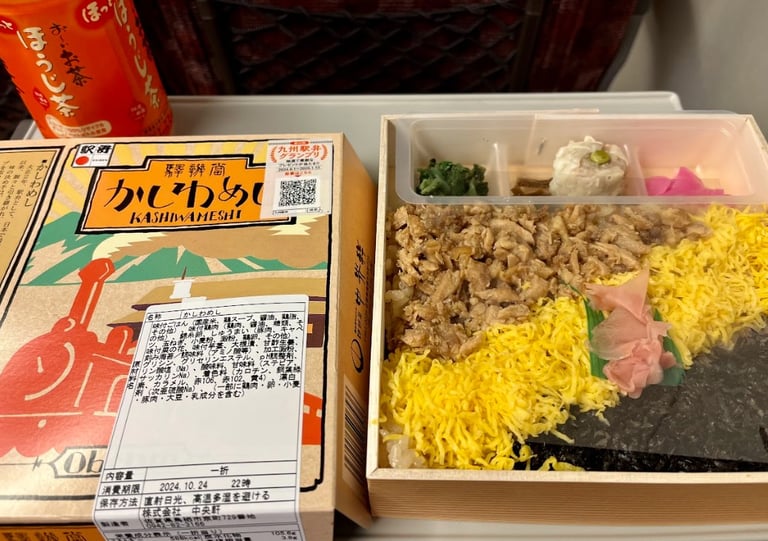
8. Kashiwa Meshi — Kokura and Hakata Stations, Fukuoka
The great comfort food ekiben of Kyushu. Kashiwa meshi features rice cooked in chicken broth until each grain has absorbed the stock, then topped with shredded chicken braised in soy and mirin, thin ribbons of egg crepe, and a scattering of nori seaweed. Kashiwa is an old Japanese word for chicken — one still used in parts of Kyushu — and the dish has a homestyle warmth that distinguishes it from the more elaborate bento boxes further north. It is the kind of food that tastes like someone's grandmother made it, which is, in the best way, precisely what it is.
Kashiwa meshi has a long history in the northern Kyushu region and is particularly associated with the JR Kagoshima and Nagasaki lines, where it has been sold at stations for generations. It is not flashy. The ingredients are humble. But the flavour is deeply satisfying in a way that more elaborate ekiben sometimes are not, and after days of travel through Japan's most celebrated cities it can feel like the most honest thing on the menu. If you are boarding the Shinkansen from Hakata at the end of a Kyushu trip, this is the box to take with you.
Where to find: Kokura Station; Hakata Station (Fukuoka); Nishi-Kagoshima Station and JR Kyushu main lines
Best on: The Kyushu Shinkansen; any journey departing from Fukuoka heading north
Kashiwa Meshi (Kyushu)
Looking for a hotel in Japan?
Where to Find Ekiben: A Quick Guide
Each ekiben on this list is sold at the station it originates from. But several are also available further afield — and if you are not passing through the originating station, there are a few reliable alternatives.
Ekibenya Matsuri — Tokyo Station
The best single ekiben shop in Japan. More than 170 varieties are stocked at any time, sourced from stations across the entire country, and the selection rotates regularly. It is located inside the Gransta Tokyo shopping area within the ticket gates. Arrive early — popular boxes like Toge no Kamameshi and Ikameshi sell out before midday on busy days.
👉 You can also check some of the ekibens available at Tokyo Station here:
https://shopping.jreast.co.jp/order/stores/M018-T001/?mode=take-out
Department Store Ekiben Fairs
Several times a year, major Japanese department stores (Isetan, Takashimaya, Mitsukoshi) hold ekiben fairs where producers from across the country sell their boxes directly. These events are enormously popular and a good way to try several regional varieties in one place. Check the event listings of major department stores when planning your trip.
The Originating Station
Buying an ekiben at the station it was made for — and eating it on the train out of that station — is the purest version of the experience. The rice is fresher, the context is right, and the box almost always tastes better than the same product sold hundreds of kilometres away. If you are passing through Mori, or Yokokawa, or Miyajimaguchi, buy the ekiben there. It is part of the journey.
A Few Tips Before You Buy
Buy early — The most popular ekiben sell out by mid-morning at busy stations, especially at Tokyo Station's Ekibenya Matsuri. If you have a specific box in mind, get there early.
Eating on the Shinkansen is fine — In Japan, eating on trains is generally considered impolite on local and commuter services. Shinkansen are the exception: eating ekiben on a bullet train is entirely normal and widely expected.
Self-heating ekiben — Some ekiben come with a pull-string heating mechanism that activates a reaction between water and quicklime in the base of the box, warming the contents in a few minutes. These are marked clearly and tend to cost a little more. Worth it for a cold day.
Keep the containers — The ceramic pot from Toge no Kamameshi, the round wooden box from Masu no Sushi, and the lacquered tray from the Shokado Bento are all designed to be kept and reused. They make excellent and very lightweight souvenirs.
Seasonal variety — Many ekiben change their contents with the season. A box you buy in spring will be different from the same box in autumn. The Shokado Bento in particular is worth trying in different seasons if you visit Japan more than once.
Plan Your Journey
The best ekiben experiences come naturally from good route planning — passing through the right stations at the right time. Our complete guide to the Japan Rail Pass covers everything you need to know about buying and using the pass, and our how to reserve Shinkansen seats online guide makes booking your seats straightforward.
For the journeys themselves, our 7-day JR Pass itinerary from Tokyo to Fukuoka passes through Kyoto, Nara, Osaka, Hiroshima, and Miyajima — four of the ekiben regions on this list. And our 15-day north-to-south itinerary from Sapporo to Fukuoka covers nearly all of them. Buy your JR Pass here
Japan's trains are remarkable for their speed, punctuality, and comfort. But some of the best things about travelling on them are small: the announcement chime that changes at every station, the way the conductors bow when they enter each carriage, and the quiet ritual of opening a beautifully packaged box of food and eating something that could only have come from exactly where you are. The ekiben is part of what makes the journey worth slowing down for — even on the fastest trains in the world.
Happy travels — and happy eating.