
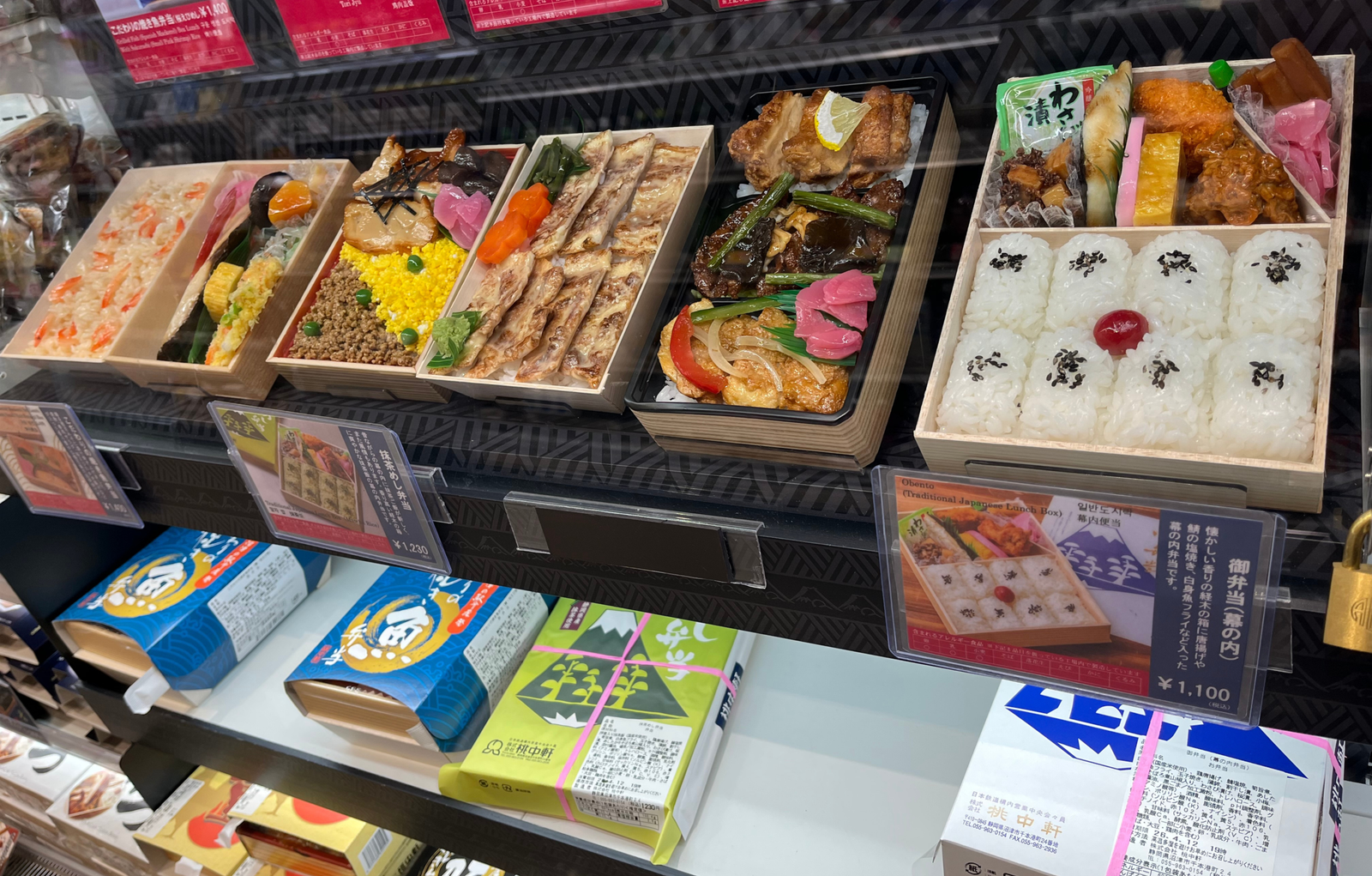
Looking for the best ekiben in Japan? One of the highlights of travelling by train is enjoying these regional boxed meals made especially for railway journeys.
Ekiben are sold at major stations, inside station shopping areas, and sometimes on station platforms. Many feature local ingredients and regional specialties, so they are more than just a convenient meal — they can also be a small taste of the place you are travelling through.
Prices vary depending on the station, ingredients, and type of meal, but many standard ekiben fall roughly in the ¥1,000–¥1,500 range, with premium boxes costing more.
What Makes Ekiben Special?
Unlike a typical takeaway meal, many ekiben are designed around regional food culture. You might find beef in Yonezawa, seafood in Hokkaido, oysters in Hiroshima, or locally grown vegetables and rice in other parts of Japan.
For train travellers, trying different ekiben can become part of the journey itself.
1. Ikameshi — Mori, Hokkaido
Ikameshi is one of Hokkaido’s classic railway foods: whole squid stuffed with rice and simmered in a sweet-savory soy-based sauce until tender.
The original Mori version was created in 1941 by Ikameshi Abe Shoten and became closely associated with Mori Station on the Hakodate Main Line. It remains one of Japan’s best-known regional ekiben. :contentReference[oaicite:0]{index=0}
The squid is small enough to eat easily from a bento box, while the rice absorbs the sauce during cooking. It is simple, filling, and very different from the more elaborate multi-compartment ekiben sold at larger Shinkansen stations.
Where to find it: Ikameshi Abe Shoten currently lists year-round sales near Mori Station at Shibata Shoten and Lawson Fujimi, with limited seasonal platform sales at Mori Station itself. The company also appears regularly at department-store and ekiben events around Japan. :contentReference[oaicite:1]{index=1}
Best for: Travellers exploring southern Hokkaido, or anyone who wants to try one of the country’s most famous traditional station meals.
2. Toge no Kamameshi — Yokokawa, Gunma
Toge no Kamameshi is one of Japan’s classic ekiben, first sold at Yokokawa Station in Gunma Prefecture in 1958 by Oginoya.
The meal is served in a distinctive Mashiko-yaki ceramic pot and features seasoned Koshihikari rice topped with chicken, shiitake mushrooms, bamboo shoots, burdock root, quail egg, chestnut, apricot, green peas, and red ginger.
Part of the appeal is the container itself. Many travellers take the ceramic pot home after the journey and reuse it as a bowl or keepsake.
Current price: The standard ceramic-pot Toge no Kamameshi is listed by Oginoya at ¥1,500.
Where to find it: Yokokawa Station and several Oginoya outlets, including locations around Gunma and Nagano.
Best for: Travellers passing through Gunma or anyone who wants to try one of Japan’s longest-running and most recognizable station bentos.
3. Gyutan Bento — Sendai Station, Miyagi
Sendai is famous for gyutan — grilled beef tongue — and it is one of the best regional foods to pick up before boarding the Tohoku Shinkansen.
A typical gyutan bento pairs slices of seasoned grilled beef tongue with mugi-meshi, rice cooked with barley. Different producers offer their own versions, so ingredients, thickness, seasoning, and side dishes vary.
One current example sold at Sendai Station is the Sendai Specialty Gyutan Bento, featuring thick-cut beef tongue seasoned with a special salt-based sauce and served with barley rice.
Current example price: JR East currently lists the Sendai Specialty Gyutan Bento at ¥2,180.
Where to find it: Sendai Station has dedicated ekiben outlets as well as several gyutan specialists, so you can compare different versions before boarding.
Best for: Travellers using the Tohoku Shinkansen and anyone who wants to try one of Sendai’s signature foods without sitting down for a full restaurant meal.
4. Masu no Sushi — Toyama Station, Toyama
Masu no Sushi is one of Toyama’s most famous local foods: pressed trout sushi arranged over vinegared rice, wrapped in bamboo leaves, and packed into a round wooden container.
Unlike nigiri or sushi rolls, the fish and rice are firmly pressed together, creating a dense, neatly sliced style of sushi that travels extremely well. The bamboo leaves also give the package its distinctive appearance and aroma.
One of the best-known producers is Minamoto, which has been selling railway bentos in Toyama for more than 100 years and operates shops inside Toyama Station.
Current price example: Minamoto’s standard Masu no Sushi Ichiju is currently ¥2,200.
Where to find it: Toyama Station is the easiest place to compare different versions from local producers before boarding the Hokuriku Shinkansen.
Best for: Travellers using the Hokuriku Shinkansen or visiting Toyama and the surrounding Hokuriku region.
5. Shokado-Style Kyoto Bento — Kyoto Station
Kyoto is known for beautifully presented meals built around seasonal ingredients, delicate seasoning, and several small dishes. A Shokado-style bento follows that tradition, typically arranging rice, grilled or simmered foods, vegetables, pickles, and other side dishes in separate compartments.
Unlike Ikameshi or Toge no Kamameshi, however, Shokado bento is a style of meal rather than one specific branded ekiben. The contents and producers vary, so it is better to browse the Kyoto bento selection when you arrive rather than look for a single box with this exact name.
Kyoto Station has several excellent places to buy takeaway meals featuring traditional Kyoto flavours. One particularly useful stop is Kyo Shinise no Aji Maiko inside the Shinkansen ticket gates, which brings together bento and foods from established Kyoto restaurants and producers.
Where to find it: Kyo Shinise no Aji Maiko is on the second floor inside the Shinkansen ticketed area at Kyoto Station and is currently open 7:00–21:00 daily.
Look for seasonal Kyoto-style bentos rather than expecting one permanent Shokado product — selections can change throughout the year.
Best for: A Tokaido Shinkansen journey from Kyoto when you want something more refined and distinctly Kyoto-style than a standard station lunch.
6. Kakinoha Sushi — Nara
Kakinoha sushi is one of Nara Prefecture’s most distinctive regional foods. Each small piece of vinegared rice is topped with cured fish — traditionally mackerel, although salmon is also common — and individually wrapped in a persimmon leaf.
The leaf itself is not eaten. Historically, wrapping the sushi helped preserve the fish while it travelled inland to the mountainous Yoshino region. Today, the wrapping remains an essential part of the tradition and gives the sushi its instantly recognizable appearance.
Kakinoha sushi is especially convenient for train travel because the individual pieces are compact, neatly wrapped, and easy to eat without plates or cutlery.
Where to find it: Several specialist producers sell kakinoha sushi throughout Nara Prefecture. Kakinoha Sushi Hompo Tanaka, for example, has shops around Nara including locations immediately beside Kintetsu Nara Station.
Rather than looking for one particular branded ekiben, compare the different boxes and combinations of mackerel, salmon, and seasonal varieties available when you visit.
Best for: A day trip to Nara followed by a train journey back toward Kyoto or Osaka — an easy way to take one of Nara’s best-known local foods with you.
7. Anago Meshi — Miyajimaguchi, Hiroshima
Anago meshi — grilled conger eel served over seasoned rice — is one of the signature foods of the Miyajima area and one of Hiroshima Prefecture’s classic railway meals.
The best-known version comes from Anagomeshi Ueno, which began selling anago meshi as a station bento at Miyajimaguchi in 1901. The eel is grilled and brushed with a traditional sauce, while the rice is cooked with broth made from conger eel bones.
Anago is lighter and less fatty than unagi, with a more delicate flavour. Ueno’s bento is specifically designed to remain delicious after cooling, which makes it particularly well suited to train travel.
Where to find it: Anagomeshi Ueno’s main shop is directly outside JR Miyajimaguchi Station, on the way toward the ferry terminals for Miyajima.
Bento sales currently begin at 9:00 and continue until 19:00 on most days, or until sold out.
Best for: A journey to or from Miyajima, or as a memorable meal before continuing along the Sanyo Shinkansen corridor.
8. Kashiwa Meshi — Orio, Fukuoka
Kashiwa meshi is one of northern Kyushu’s classic railway foods. Rice is cooked in a flavourful chicken broth and topped with seasoned shredded chicken, thin strips of egg, and nori seaweed.
“Kashiwa” is a traditional word for chicken that is still commonly used in parts of Kyushu. The dish is simple compared with some of Japan’s more elaborate ekiben, but its comforting combination of savoury chicken rice and slightly sweet toppings has made it a favourite for generations.
One of the most famous versions comes from Tochikuken in Orio, Kitakyushu. The company has been making its signature kashiwa meshi since 1921, making it one of Kyushu’s longest-established station bento traditions.
Current price: Tochikuken currently sells its standard kashiwa meshi for ¥860 for the small box and ¥970 for the large box.
Where to find it: Orio Station is the traditional home of the bento, with additional Tochikuken outlets around northern Fukuoka Prefecture, including Yahata, Tobata, and Kokura.
Best for: Travellers exploring northern Kyushu or passing through Kitakyushu who want to try an authentic local ekiben with more than a century of history.
Tips for Buying and Eating Ekiben in Japan
Buy Before You Board
The best selection is usually inside major stations before departure. Large stations often have dedicated ekiben shops where you can compare regional specialties from several producers.
Popular Ekiben Can Sell Out
Famous regional bentos are sometimes sold in limited quantities, especially on weekends and holidays. If there is one you particularly want to try, buying earlier in the day is safer.
Eating on Long-Distance Trains Is Completely Normal
Eating an ekiben on Shinkansen and many limited express trains is part of the Japanese rail-travel experience. Seats usually have tray tables, making boxed meals easy to enjoy during the journey.
Avoid Eating on Crowded Local Commuter Trains
On ordinary city trains and busy commuter services, eating a full meal is generally best avoided. Save your ekiben for a Shinkansen, limited express, sightseeing train, or another service designed for longer journeys.
My tip: Don’t feel you need to hunt down only the most famous ekiben. Some of the most enjoyable finds are seasonal or regional boxes you discover at the station just before your train departs.
Related Guides
What to Eat on Miyajima Island
Planning a visit to Miyajima? Discover local specialties including oysters, anago meshi, momiji manju, and other foods worth trying while you are on the island.
Sightseeing Trains in Japan
Turn the train journey itself into part of your Japan experience with scenic, themed, and regional sightseeing trains around the country.
15 Smart Tips to Save Money When Traveling in Japan
Reduce unnecessary spending on trains, accommodation, meals, transport passes, and other everyday travel costs while still enjoying Japan.
Before You Buy a JR Pass
Compare the cost of your planned train journeys with the current JR Pass price. Depending on your route, individual tickets or a regional pass may offer better value.
Check Current JR Pass PricesAbout Train Travel Japan
Train Travel Japan is written from firsthand experience traveling throughout Japan by rail. I am a Japanese native based in Canada and have traveled to all 47 prefectures of Japan over more than 30 years.
My goal is to make Japan train travel easier to understand, especially for international visitors planning JR Pass trips, regional rail journeys and independent itineraries.