
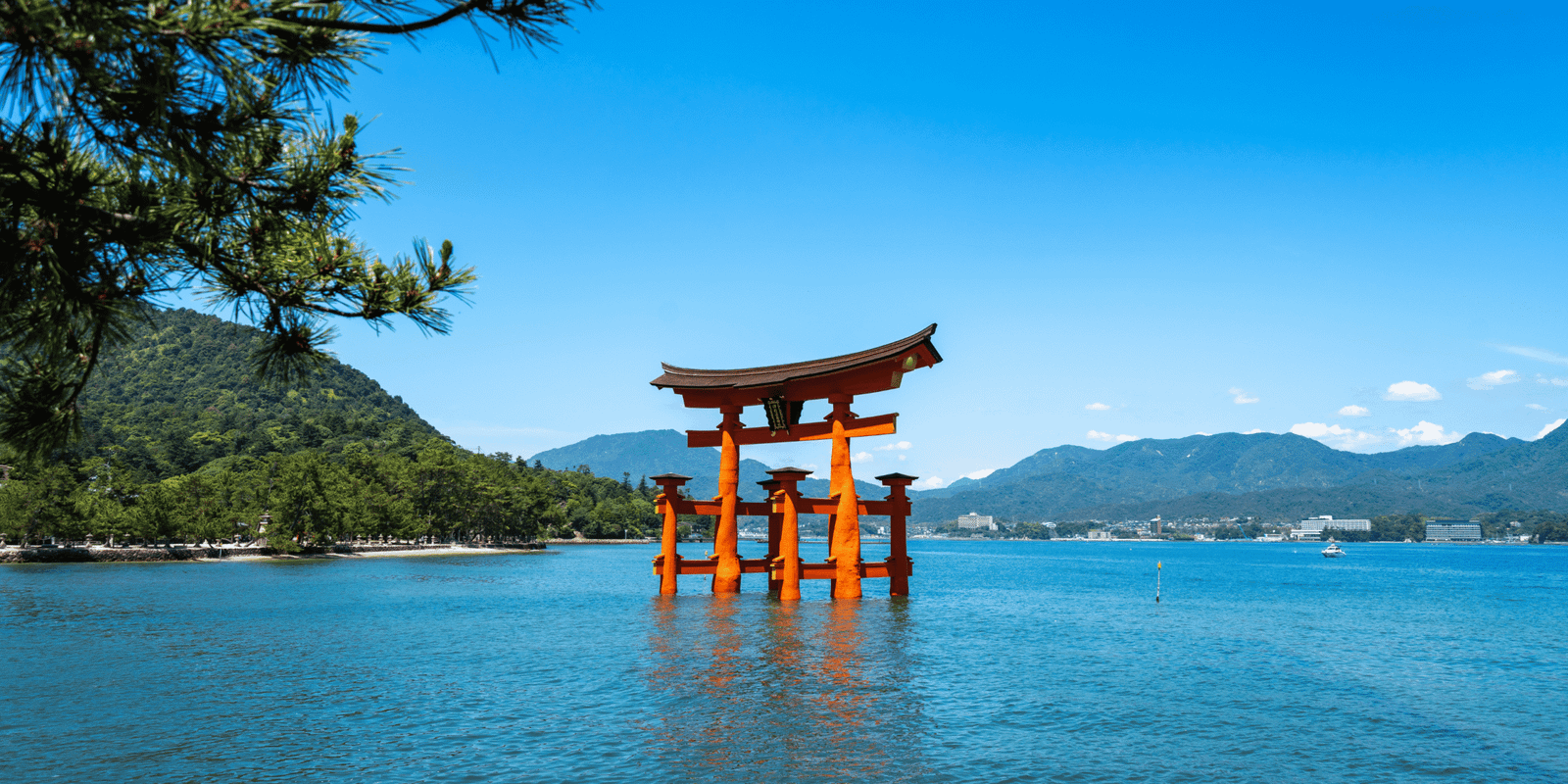
UNESCO World Heritage Sites in Japan include ancient temples, castles, sacred mountains, historic villages, memorials, pilgrimage routes and extraordinary natural landscapes. Many are also surprisingly easy to include in a train-based Japan itinerary.
As of 2026, Japan has 27 properties on the UNESCO World Heritage List: 22 cultural properties and 5 natural properties. The newest addition is the Ancient Capitals of Asuka and Fujiwara, inscribed in 2026.
10 UNESCO Sites That Work Especially Well for Train Travellers
This is not an official UNESCO popularity ranking. Instead, I’ve selected 10 of Japan’s best-known and most rewarding World Heritage destinations that international visitors can realistically incorporate into a rail itinerary.
For each destination, we’ll look at the nearest useful train station, how to complete the final journey, what makes the site culturally important, how much time to allow, and whether a JR Pass or regional rail pass can help.
Some sites, such as Himeji Castle, Kyoto, Nara, Hiroshima, and Nikko, are straightforward rail destinations. Others require a final bus, private railway, ferry, or walk after leaving the JR network, so I’ll point those differences out as we go.
Planning tip: UNESCO status applies to the designated heritage property, which may include several individual temples, shrines, buildings, villages, or landscapes. In places such as Kyoto and Nara, you should not expect to see the entire UNESCO property in a single visit.
1. Historic Monuments of Ancient Kyoto — Temples, Shrines, Gardens, and Nijo Castle
The Historic Monuments of Ancient Kyoto are among Japan’s most important cultural treasures. Kyoto served as Japan’s imperial capital for more than 1,000 years and became a centre for architecture, religion, garden design, art, and traditional culture.
UNESCO inscribed the property in 1994. Rather than one location, it consists of 17 separate component sites spread across Kyoto City, nearby Uji, and Otsu in Shiga Prefecture.
Main rail gateway: Kyoto Station
UNESCO inscription: 1994
Number of component sites: 17
Suggested time: At least 2–3 days for several major sites
Best for: Temples, gardens, traditional architecture, Japanese history, and culture
Which UNESCO Sites Should First-Time Visitors See?
You cannot realistically visit all 17 components in one day. For a first trip, I would concentrate on several of the best-known and easiest to combine:
- Kiyomizu-dera — famous for its wooden stage overlooking eastern Kyoto.
- Kinkaku-ji — the iconic Golden Pavilion reflected in its surrounding pond.
- Nijo Castle — an important surviving example of shogunate architecture and the only castle among the 17 components.
- To-ji — known for its five-story pagoda and convenient location near Kyoto Station.
- Byodo-in in Uji — the elegant Phoenix Hall depicted on Japan’s ¥10 coin.
How to Visit by Train
Kyoto Station is the main long-distance gateway, with direct Shinkansen access from Tokyo, Nagoya, Shin-Osaka, and western Japan.
Once inside Kyoto, however, the UNESCO sites are spread across the city and are served by a mixture of JR trains, Kyoto subway, Keihan, Hankyu, Randen, buses, and walking routes.
- Kiyomizu-dera: From Kyoto Station, one useful rail-heavy route is JR Nara Line to Tofukuji, then Keihan Railway toward Kiyomizu-Gojo, followed by a walk uphill.
- Kinkaku-ji: Take the subway to Kitaoji and continue by city bus, or use the JR Sagano Line to Enmachi and transfer to a bus.
- Nijo Castle: Take the Kyoto Subway to Nijojo-mae Station; the castle moat is immediately outside the station.
- To-ji: One of the easiest UNESCO components from Kyoto Station and walkable from the station area.
- Byodo-in: Take the JR Nara Line from Kyoto to Uji, then walk through central Uji to the temple.
Transport tip: Do not rely entirely on Kyoto city buses. Traffic and crowding can make journeys slow during peak seasons. Kyoto’s official tourism office recommends combining trains and subways with shorter bus rides or walking where practical.
Does a JR Pass Help?
A Japan Rail Pass can be useful for reaching Kyoto and for certain local JR journeys, including travel toward Uji or along the JR Sagano and Nara lines.
However, many UNESCO sites require Kyoto Subway, Keihan Railway, city buses, or other non-JR transport, so a JR Pass does not cover all sightseeing transportation within Kyoto.
Planning tip: Treat Kyoto’s UNESCO listing as a collection rather than a checklist. Visiting three or four sites slowly will usually give you a much better experience than trying to rush through all 17 components.
2. Itsukushima Shrine, Miyajima — The Famous Floating Torii Gate
Itsukushima Shrine on Miyajima is one of Japan’s most recognizable UNESCO World Heritage Sites. The shrine appears to float above the sea at high tide, while its huge vermilion torii gate stands offshore against the backdrop of Mt. Misen.
UNESCO inscribed Itsukushima Shrine in 1996. The site is especially significant because its architecture was designed to harmonize with the surrounding sea, mountains, and sacred island landscape.
Main rail gateway: JR Miyajimaguchi Station
Hiroshima → Miyajimaguchi: About 30 minutes by JR Sanyo Main Line
Ferry crossing: About 10 minutes
UNESCO inscription: 1996
Suggested time: Half day to 1 full day
Best for: Shinto culture, iconic scenery, photography, temples, hiking, and island atmosphere
How to Get There by Train and Ferry
From Hiroshima Station, take the JR Sanyo Main Line to Miyajimaguchi Station. The journey takes about 30 minutes.
From the station, walk a few minutes to Miyajimaguchi Ferry Terminal and take the ferry across to Miyajima. The crossing takes about 10 minutes.
Two ferry companies operate this route, but JR Pass users will usually want the JR West Miyajima Ferry.
JR Pass tip: The JR West Miyajima Ferry accepts the nationwide Japan Rail Pass and eligible JR West passes. However, the separate ¥100 Miyajima Visitor Tax is not included and must still be paid when entering the island.
Visiting Itsukushima Shrine
The shrine is open year-round, with opening hours changing slightly by season. Standard admission is currently ¥300 for adults, ¥200 for high-school students, and ¥100 for elementary and junior-high-school students.
If possible, check the tide times before your visit. At high tide, the shrine buildings and torii appear to float on the water. At low tide, you may be able to walk across the exposed seabed toward the giant torii gate.
What Else Should You See on Miyajima?
- Daisho-in Temple — one of Miyajima’s most atmospheric Buddhist temples.
- Mt. Misen — hike or use the ropeway for panoramic views over the Seto Inland Sea.
- Omotesando Shopping Street — ideal for local food and souvenirs.
- Senjokaku and the Five-Story Pagoda — historic structures near Itsukushima Shrine.
- Miyajima deer — commonly seen around the waterfront and town.
What to Eat
Miyajima is especially known for oysters, anago meshi grilled conger eel, momiji manju, and seafood snacks. If you have enough time, stay for lunch or dinner rather than visiting only the shrine and immediately returning to Hiroshima.
My recommendation: If your itinerary allows, stay on Miyajima until late afternoon or overnight. The island becomes noticeably calmer after many day-trippers return to Hiroshima, and the waterfront atmosphere around Itsukushima Shrine is especially beautiful around sunset.
3. Himeji Castle — Japan’s Best-Preserved Original Castle
Himeji Castle is widely regarded as Japan’s finest surviving feudal castle. Its elegant white-plastered walls, complex defensive layout, original wooden interiors, and soaring main keep earned it the nickname “White Heron Castle.”
Himeji Castle was inscribed on the UNESCO World Heritage List in 1993 and remains one of the best examples of early 17th-century Japanese castle architecture.
Main station: JR Himeji Station
Walk from station: About 15–20 minutes
UNESCO inscription: 1993
Suggested time: Half day
Best for: Samurai history, original architecture, castles, gardens, and photography
How to Get There by Train
Himeji is one of the easiest UNESCO sites in Japan to add to a rail itinerary because Himeji Station is served by the Sanyo Shinkansen.
- Shin-Osaka → Himeji: Roughly 30 minutes by Shinkansen.
- Kyoto → Himeji: Around 45–60 minutes by Shinkansen, depending on the service and connection.
- Hiroshima → Himeji: Roughly 1 hour by faster Shinkansen services.
From Himeji Station’s north side, the castle is visible straight ahead at the end of Otemae-dori. The walk is about 1 km and takes roughly 15–20 minutes.
JR Pass tip: Eligible Shinkansen services to Himeji are covered by the nationwide Japan Rail Pass. If you choose a Nozomi service, pass holders need the separate Nozomi/Mizuho supplemental ticket.
Himeji Castle Admission in 2026
Himeji introduced a new admission structure on March 1, 2026.
| Ticket | 2026 Price |
|---|---|
| General adult admission, age 18+ | ¥2,500 |
| Visitors under 18 | Free |
| Himeji Castle + Koko-en Garden | ¥2,600 |
The castle is generally open from 9:00 AM to 5:00 PM, with entry ending earlier. Seasonal arrangements can vary, so check the official site before travelling.
What Should You See?
- Main Keep: Climb through the original wooden interior to the upper floors.
- West Bailey: Walk through long defensive corridors and historic rooms.
- Castle grounds: See the maze-like gates, stone walls, moats, and defensive passages.
- Koko-en Garden: Nine traditional Japanese gardens immediately beside the castle.
Inside the castle: Expect steep wooden stairs, narrow passages, and several floors of climbing. Shoes must be removed inside the main keep, and there is no elevator through the historic structure.
Should You Add Koko-en?
Yes. With the combined ticket costing only ¥100 more than castle admission alone, Koko-en is one of the easiest additions to your visit. The landscaped gardens are particularly attractive during cherry blossom and autumn foliage seasons.
Train itinerary tip: Himeji works extremely well as a stop between Osaka/Kyoto and Hiroshima. You can leave your luggage at Himeji Station, spend several hours at the castle and Koko-en, then continue west without changing hotels.
For more detailed planning, see our dedicated Himeji guide:
4. Historic Villages of Shirakawa-go and Gokayama — Gassho-Zukuri Farmhouses in the Mountains
The Historic Villages of Shirakawa-go and Gokayama preserve some of Japan’s most distinctive traditional rural architecture. Their steeply pitched thatched-roof farmhouses are known as gassho-zukuri, meaning “constructed like hands in prayer.”
UNESCO inscribed the property in 1995. It consists of three village components: Ogimachi in Shirakawa-go, plus Ainokura and Suganuma in Gokayama.
UNESCO inscription: 1995
Main visitor hub: Shirakawa-go Bus Terminal
Nearest useful rail gateways: Takayama, Kanazawa, Toyama, and Shin-Takaoka
Suggested time: Half day to 1 full day
Best for: Traditional architecture, mountain scenery, winter landscapes, rural culture, and photography
Why Is Shirakawa-go So Special?
The gassho-zukuri houses were designed for the heavy snowfall of this mountainous region. Their sharply angled thatched roofs help shed snow, while the large interiors historically supported activities such as silkworm cultivation.
Importantly, these are not simply museum villages. People still live and work within the communities, so visitors should treat the area as a living heritage site.
How to Reach Shirakawa-go Without a Car
Shirakawa-go has no train station. The final journey is always by highway bus.
- Takayama → Shirakawa-go: About 50 minutes by highway bus.
- Kanazawa → Shirakawa-go: Roughly 1 hour 15–20 minutes by highway bus.
- Toyama → Shirakawa-go: Around 1 hour 20 minutes by highway bus.
- Shin-Takaoka → Shirakawa-go: World Heritage Bus and other eligible services connect the Hokuriku Shinkansen with the village.
Reservation tip: Many highway buses serving Shirakawa-go require advance reservations. Popular departures can sell out during weekends, holidays, autumn foliage, and winter illumination periods.
What Should You See in Shirakawa-go?
- Ogimachi Village: The largest and most frequently visited UNESCO component.
- Wada House: One of the village’s largest surviving gassho-zukuri houses and open to visitors.
- Ogimachi Castle Site Observatory: The classic panoramic viewpoint overlooking the village.
- Traditional houses and museums: Several historic interiors can be visited for a small admission fee.
- Village lanes and rice fields: Allow time simply to walk rather than rushing between attractions.
What About Gokayama?
The UNESCO listing also includes Ainokura and Suganuma in Toyama Prefecture. These villages are smaller and generally quieter than Shirakawa-go, making them especially appealing if you want a less crowded experience.
Some bus routes connect Shirakawa-go with Gokayama and Shin-Takaoka, so it is possible to combine the areas as part of a route between Gifu and the Hokuriku region.
Does a JR Pass Help?
A nationwide Japan Rail Pass can cover eligible JR travel to gateways such as Takayama, Kanazawa, Toyama, or Shin-Takaoka, but it does not normally cover the highway bus to Shirakawa-go.
A notable exception is the Takayama-Hokuriku Area Tourist Pass. This 5-day pass currently costs ¥19,800 for adults and includes eligible JR trains plus specified bus routes linking Takayama, Shirakawa-go, Gokayama, Kanazawa, Toyama, and Shin-Takaoka.
Best rail itinerary: Shirakawa-go works especially well between Takayama and Kanazawa. Travel by train to Takayama, stay overnight, take the highway bus to Shirakawa-go the next morning, then continue by bus toward Kanazawa rather than backtracking.
5. Hiraizumi — Temples and Gardens Representing the Buddhist Pure Land
Hiraizumi in southern Iwate Prefecture was once one of northern Japan’s most important political, cultural, and religious centres. During the 11th and 12th centuries, the powerful Oshu Fujiwara clan developed temples and gardens here based on the Buddhist concept of the Pure Land — an earthly representation of paradise.
UNESCO inscribed Hiraizumi – Temples, Gardens and Archaeological Sites Representing the Buddhist Pure Land in 2011.
The World Heritage property consists of five components: Chuson-ji, Motsu-ji, the Kanjizaio-in ruins, the Muryoko-in ruins, and Mt. Kinkeisan.
Main station: JR Hiraizumi Station
Tokyo → Ichinoseki: About 2 hours 10 minutes by Tohoku Shinkansen
Ichinoseki → Hiraizumi: About 8 minutes by JR Tohoku Main Line
UNESCO inscription: 2011
Suggested time: Full day
Best for: Buddhist history, temples, Japanese gardens, Tohoku culture, and quieter heritage sightseeing
Chuson-ji — Hiraizumi’s Must-See Temple
The highlight for most visitors is Chuson-ji, founded on a forested hillside above Hiraizumi.
Its greatest treasure is Konjikido, a spectacular 12th-century hall covered inside and out with gold leaf and decorated with mother-of-pearl, lacquer, and intricate Buddhist artwork.
Chuson-ji also preserves thousands of National Treasures and Important Cultural Properties, many of which are displayed in the Sankozo Museum.
Chuson-ji admission: ¥1,000 adult
High-school students: ¥700
Junior-high students: ¥500
Elementary students: ¥300
The paid ticket includes access to Konjikido, Sankozo Museum, the Sutra Repository, and the former protective shelter for Konjikido.
Motsu-ji and the Pure Land Garden
Motsu-ji is another essential Hiraizumi site. Although many of its original temple buildings were lost, its large Pure Land garden and pond preserve the spiritual landscape envisioned by the Fujiwara rulers.
Motsu-ji is only about 700 metres from Hiraizumi Station, making it an easy first stop after arriving by train.
How to Get Around Hiraizumi
The UNESCO components are spread around the town rather than concentrated beside one station.
- Hiraizumi Station → Motsu-ji: About 700 metres.
- Hiraizumi Station → Chuson-ji: About 1.6 km.
- Motsu-ji → Chuson-ji: About 1.6 km.
Walking is possible if the weather is comfortable, while seasonal sightseeing buses and rental bicycles can make it easier to cover several sites in one day.
Train tip: Hiraizumi is an excellent stop on a Tohoku rail itinerary. The journey from Tokyo is entirely practical by JR: take the Tohoku Shinkansen to Ichinoseki, then transfer to a local train for the short ride to Hiraizumi.
Does a JR Pass Help?
Yes. Eligible JR travel from Tokyo to Ichinoseki and onward to Hiraizumi can be covered by the Japan Rail Pass. This makes Hiraizumi particularly easy to combine with Sendai, Morioka, Yamadera, or a longer northern Japan itinerary.
My recommendation: Give Hiraizumi a full day rather than visiting only Konjikido. Chuson-ji is the headline attraction, but Motsu-ji and the wider landscape are important for understanding why the entire area received UNESCO recognition.
6. Shrines and Temples of Nikko — Tokugawa History in a Sacred Forest
The Shrines and Temples of Nikko form one of Japan’s most impressive religious and architectural complexes. Ornate shrine buildings, Buddhist temples, towering cedar trees, stone lanterns, and mountain scenery combine to create a site that feels very different from Kyoto or Nara.
UNESCO inscribed the property in 1999. It includes 103 religious buildings belonging to two Shinto shrines — Toshogu and Futarasan-jinja — and one Buddhist temple, Rinno-ji.
Main stations: JR Nikko Station / Tobu-Nikko Station
Tokyo → Nikko: About 2 hours
UNESCO inscription: 1999
Suggested time: Full day or 1 night
Best for: Tokugawa history, shrine architecture, Buddhist temples, forests, and photography
Nikko Toshogu Shrine
The best-known part of the UNESCO property is Nikko Toshogu, where Tokugawa Ieyasu, founder of the Tokugawa shogunate, is enshrined.
The complex is famous for its lavish decoration, gold leaf, intricate carvings, and vividly painted architecture. Highlights include:
- Yomeimon Gate — one of Japan’s most elaborate shrine gates.
- Three Wise Monkeys — the famous “see no evil, hear no evil, speak no evil” carving.
- Sleeping Cat — another celebrated carving within the complex.
- Tokugawa Ieyasu’s mausoleum — reached by climbing through the forest above the main shrine buildings.
Toshogu admission: ¥1,600 for adults and high-school students
Elementary and junior-high students: ¥550
Toshogu + Museum: ¥2,400 adult
Don’t Skip Rinno-ji and Futarasan-jinja
Toshogu receives most of the attention, but the UNESCO property is larger than one shrine.
- Rinno-ji: Nikko’s most important Buddhist temple, with roots stretching back to the 8th century.
- Futarasan-jinja: A historic Shinto shrine dedicated to the sacred mountains of Nikko.
- Taiyuin: The ornate mausoleum of Tokugawa Iemitsu, the third Tokugawa shogun, within the Rinno-ji complex.
How to Get There by Train
There are two main approaches from Tokyo.
JR route: Take the Tohoku Shinkansen from Tokyo or Ueno to Utsunomiya, then transfer to the JR Nikko Line. The Shinkansen portion takes about an hour, followed by roughly 45 minutes from Utsunomiya to JR Nikko Station.
Tobu route: Direct limited express trains from Asakusa reach Tobu-Nikko in about 2 hours and are often the simplest option if you are not using a JR Pass.
JR Pass tip: The JR route via Utsunomiya is covered by the nationwide Japan Rail Pass. Direct Tobu Railway services from Asakusa are not covered by the JR Pass.
From the Station to the UNESCO Area
From JR Nikko or Tobu-Nikko Station, local buses connect with the World Heritage area in roughly 10–15 minutes. You can also walk, but allow around 30–40 minutes depending on your exact destination.
Once you reach the shrine and temple area, the main UNESCO sites are close enough to explore largely on foot.
Should You Stay Overnight?
Nikko is possible as a day trip from Tokyo, but staying overnight gives you a much more relaxed experience. You can visit the shrines early, then continue the next day toward Lake Chuzenji, Kegon Falls, or an onsen in the wider Nikko area.
My recommendation: If Nikko is one of the main cultural stops on your trip, give it at least one full day. Toshogu alone can take considerable time, and adding Rinno-ji and Futarasan-jinja makes the UNESCO listing much easier to appreciate as a complete religious landscape.
7. Historic Monuments of Ancient Nara — Temples, Deer, and Japan’s First Permanent Capital
Nara was Japan’s capital from 710 to 784 and played a crucial role in the development of Japanese government, Buddhism, architecture, and art.
UNESCO inscribed the Historic Monuments of Ancient Nara in 1998. The property consists of eight components spread across the city.
Main stations: JR Nara Station / Kintetsu-Nara Station
UNESCO inscription: 1998
Number of components: 8
Suggested time: Full day
Best for: Buddhist temples, Shinto shrines, ancient history, gardens, deer, and easy Kansai sightseeing
The 8 UNESCO Components
- Todai-ji
- Kofuku-ji
- Kasuga Taisha
- Kasugayama Primeval Forest
- Gango-ji
- Yakushi-ji
- Toshodai-ji
- Nara Palace Site
Todai-ji and the Great Buddha
For most first-time visitors, Todai-ji is the essential UNESCO stop. Its enormous Daibutsuden, or Great Buddha Hall, houses the famous bronze image of Vairocana Buddha.
Todai-ji Great Buddha Hall admission: ¥800 adult
Children age 6–12: ¥400
Great Buddha Hall + Todai-ji Museum: ¥1,200 adult
Current opening hours for the Great Buddha Hall are 7:30 AM–5:30 PM from April through October and 8:00 AM–5:00 PM from November through March.
How to Get There by Train
Nara is an easy rail trip from both Kyoto and Osaka.
- Kyoto → JR Nara: About 45 minutes by JR Nara Line rapid service.
- Osaka → JR Nara: Roughly 45–55 minutes, depending on your starting station and service.
- Kintetsu-Nara Station: The most convenient station for Nara Park, Todai-ji, and Kofuku-ji.
From Kintetsu-Nara Station, Nara Park begins only a few minutes away. From JR Nara Station, allow roughly 15–20 minutes on foot to reach the main park area, or take a local bus.
JR Pass tip: A nationwide Japan Rail Pass covers eligible JR services to JR Nara Station. Kintetsu Railway is not covered, although Kintetsu-Nara Station is more convenient for many of the main sightseeing sites.
Don’t Miss the Wider UNESCO Site
Todai-ji gets most of the attention, but the UNESCO listing represents much more of ancient Nara.
- Kasuga Taisha: Famous for its thousands of stone and bronze lanterns.
- Kofuku-ji: Historic temple complex close to central Nara.
- Yakushi-ji and Toshodai-ji: Important early Buddhist temples in western Nara.
- Nara Palace Site: The archaeological remains of the former imperial palace and one of the best places to understand the scale of the ancient capital.
The Nara Palace Site is particularly easy to overlook. It is free to visit and can be reached in about a 10-minute walk from Yamato-Saidaiji Station.
What About the Deer?
Nara’s famous deer are closely associated with the city and Kasuga Taisha, although the deer themselves are not a separate UNESCO component. They roam freely through Nara Park and the surrounding temple and shrine areas.
Deer tip: The deer are wild animals. Feed them only the special shika senbei crackers sold around the park, and keep paper, maps, and food packaging safely stored.
My recommendation: For a first visit, combine Kofuku-ji, Nara Park, Todai-ji, and Kasuga Taisha in one walking route. If you have a second day, add the Nara Palace Site, Yakushi-ji, and Toshodai-ji.
8. Fujisan — Sacred Place and Source of Artistic Inspiration
Mt. Fuji is Japan’s highest mountain at 3,776 metres and one of the country’s most recognizable symbols. But UNESCO recognition is about much more than the mountain’s natural beauty.
UNESCO inscribed Fujisan, Sacred Place and Source of Artistic Inspiration as a cultural World Heritage property in 2013, recognizing centuries of mountain worship, pilgrimage traditions, and the enormous influence Mt. Fuji has had on Japanese art and culture.
The UNESCO property consists of 25 component sites spread around the mountain rather than one single attraction.
Main rail gateway for first-time visitors: Kawaguchiko Station
UNESCO inscription: 2013
UNESCO type: Cultural
Number of components: 25
Suggested time: Full day or 1–2 nights
Best for: Mt. Fuji views, sacred sites, lakes, photography, art history, and scenic rail travel
Why Is Mt. Fuji a Cultural World Heritage Site?
For centuries, Mt. Fuji has been a place of religious pilgrimage and mountain worship. Shrines, pilgrimage routes, historic lodging houses, lakes, springs, waterfalls, and other sacred locations around the mountain form part of the UNESCO property.
Mt. Fuji also became an internationally recognized artistic symbol through works such as the woodblock prints of Katsushika Hokusai and Utagawa Hiroshige, which later influenced artists far beyond Japan.
UNESCO Sites You Can Visit Around Mt. Fuji
You do not need to climb Mt. Fuji to experience the World Heritage property. Several important components can be visited around the base of the mountain.
- Lake Kawaguchi: One of the Fuji Five Lakes and an excellent place for classic Mt. Fuji views.
- Kitaguchi Hongu Fuji Sengen Jinja: Historic shrine associated with the traditional northern pilgrimage route up Mt. Fuji.
- Oshino Hakkai: Sacred spring-fed ponds formed by water filtered through Mt. Fuji’s volcanic geology.
- Mountain pilgrimage routes and shrines: Several historic routes and religious sites are included in the UNESCO property.
- Miho no Matsubara: A famous pine-covered coastal landscape in Shizuoka associated with artistic views of Mt. Fuji.
How to Get to Lake Kawaguchi by Train
One of the easiest train routes from Tokyo is:
Shinjuku → Otsuki: JR Chuo Line
Otsuki → Kawaguchiko: Fujikyu Railway
You can also take the direct Fuji Excursion limited express from Shinjuku to Kawaguchiko without changing trains at Otsuki.
The regular 2026 timetable includes four Fuji Excursion round trips every day, with additional seasonal services on selected dates. The current one-way fare from Shinjuku to Kawaguchiko is ¥4,200.
Does a JR Pass Cover the Journey?
Only partially.
- A Japan Rail Pass can cover eligible JR travel between Shinjuku and Otsuki.
- The railway from Otsuki to Kawaguchiko is operated by Fujikyu Railway, not JR.
- If you use the direct Fuji Excursion while holding a JR Pass, you still need to pay the applicable fare and limited express charge for the Fujikyu Railway section.
JR Pass tip: Do not assume the Japan Rail Pass covers the entire journey simply because the Fuji Excursion departs from JR Shinjuku Station. The train continues onto a private railway after Otsuki.
Should You Stay Overnight?
A day trip from Tokyo is possible, but staying around Lake Kawaguchi for one night gives you a much better chance of seeing Mt. Fuji clearly.
Cloud can obscure the mountain surprisingly quickly, and visibility is often better earlier in the morning. An overnight stay also gives you time for lakeside sightseeing, an onsen, and sunset or sunrise photography.
My recommendation: Treat the UNESCO listing as more than a photo stop. Combine a classic view of Mt. Fuji with at least one shrine, lake, spring, or other cultural component to better understand why Fujisan received World Heritage status.
9. Hiroshima Peace Memorial (Genbaku Dome) — A Symbol of Peace
The Hiroshima Peace Memorial, or Genbaku Dome, is one of Japan’s most important modern historical sites. The surviving structure stands close to the hypocentre of the atomic bombing of Hiroshima on August 6, 1945.
UNESCO inscribed the Hiroshima Peace Memorial in 1996. Its significance lies not in architectural beauty, but in what the preserved ruin represents: the destructive consequences of nuclear weapons and the continuing hope for lasting peace.
Main rail gateway: Hiroshima Station
Hiroshima Station → Atomic Bomb Dome: About 20 minutes by streetcar
UNESCO inscription: 1996
Suggested time: 2–4 hours for the Dome, park, and museum
Best for: Modern history, peace education, reflection, and understanding Hiroshima
How to Get There From Hiroshima Station
From Hiroshima Station, take Hiroshima Electric Railway streetcar Line 2 or Line 6 to Genbaku Dome-mae. The journey takes about 20 minutes, and the Atomic Bomb Dome is immediately beside the stop.
Another option is the Hiroshima sightseeing loop bus, which connects Hiroshima Station with the Peace Memorial Park area.
JR Pass tip: Your Japan Rail Pass can cover eligible JR travel to Hiroshima Station, but the regular Hiroshima streetcar is not included. Some JR-operated sightseeing bus services may be covered depending on the pass and service, so check current conditions before travelling.
The Atomic Bomb Dome
The building was originally the Hiroshima Prefectural Industrial Promotion Hall. Although much of central Hiroshima was destroyed by the atomic bomb, portions of the structure remained standing near the hypocentre.
The Dome has been preserved as a ruin and can be viewed from outside at any time. There is no admission charge to see the Atomic Bomb Dome or walk through the surrounding Peace Memorial Park.
Visit the Hiroshima Peace Memorial Museum
To properly understand the historical context, I strongly recommend continuing through Peace Memorial Park to the Hiroshima Peace Memorial Museum.
The museum presents personal belongings, photographs, testimony, and historical information documenting the bombing and its impact on Hiroshima’s residents.
Peace Memorial Museum admission: ¥200 for adults
High-school-age visitors: ¥100
Junior-high-school students and younger: Free
The museum receives very large numbers of visitors. Hiroshima City currently recommends purchasing a web ticket in advance, especially during busy periods, to reduce time spent waiting in ticket lines.
Other Important Sites in Peace Memorial Park
- Cenotaph for the A-Bomb Victims — aligned visually with the Peace Flame and Atomic Bomb Dome.
- Children’s Peace Monument — inspired by Sadako Sasaki and dedicated to children affected by the bombing.
- Peace Flame — intended to remain lit until nuclear weapons no longer exist.
- National Peace Memorial Hall for the Atomic Bomb Victims — a quiet space for remembrance and historical learning.
Visit respectfully: This is not simply a sightseeing attraction. Allow enough time to move through the park and museum thoughtfully, and keep in mind that Hiroshima remains a place of remembrance for survivors and families affected by the bombing.
Combine Hiroshima With Miyajima
Hiroshima is unusual in having two UNESCO World Heritage Sites within easy reach of the same rail hub. You can visit the Peace Memorial in central Hiroshima and Itsukushima Shrine on Miyajima during the same stay.
I recommend allowing at least two days: one for Hiroshima city and the Peace Memorial area, and another for Miyajima.
10. Sacred Sites and Pilgrimage Routes in the Kii Mountain Range — Koyasan, Kumano Kodo, and Yoshino
The Sacred Sites and Pilgrimage Routes in the Kii Mountain Range form one of Japan’s most extensive and spiritually important UNESCO properties. Rather than one temple or shrine, the listing connects sacred mountains, religious centres, forests, waterfalls, and ancient pilgrimage trails across the Kii Peninsula.
UNESCO inscribed the property in 2004. It brings together three major sacred areas — Koyasan, Kumano Sanzan, and Yoshino-Omine — along with the historic pilgrimage routes connecting them with Kyoto and Nara.
UNESCO inscription: 2004
Main sacred areas: Koyasan / Kumano Sanzan / Yoshino-Omine
Pilgrimage routes: Approximately 307 km within the UNESCO property
Suggested time: At least 1 night for Koyasan; 2–4 days for a Kumano Kodo experience
Best for: Pilgrimage, Buddhist and Shinto history, temple stays, hiking, forests, waterfalls, and spiritual travel
Koyasan — The Easiest Introduction
For most train travellers, Koyasan is the easiest part of this UNESCO property to add to a Kansai itinerary.
From Osaka, travel from Nankai Namba Station on the Nankai Koya Line toward Gokurakubashi, then transfer to the Koyasan Cable Car for the final climb to Koyasan Station.
The journey from Osaka takes roughly 90 minutes on faster connections.
What to See at Koyasan
- Okunoin: The atmospheric cemetery and mausoleum of Kobo Daishi, founder of Shingon Buddhism.
- Kongobu-ji: The head temple of the Koyasan Shingon Buddhist sect.
- Danjo Garan: One of Koyasan’s main sacred temple complexes.
- Temple stay: Spend a night at a shukubo, where visitors can experience Buddhist vegetarian cuisine and morning prayers.
JR Pass warning: The main route from Osaka to Koyasan uses Nankai Railway and the Nankai Koyasan Cable Car, not JR. A nationwide Japan Rail Pass therefore does not cover the standard journey from Namba to Koyasan.
Kumano Sanzan and the Kumano Kodo
Farther south, the UNESCO property includes the three great Kumano shrines known collectively as Kumano Sanzan:
- Kumano Hongu Taisha
- Kumano Hayatama Taisha
- Kumano Nachi Taisha
These sacred sites are connected by sections of the ancient Kumano Kodo pilgrimage network, which has been travelled by emperors, monks, aristocrats, and ordinary pilgrims for more than a thousand years.
Visiting Kumano Nachi Taisha by Train
One of the easiest Kumano sites to combine with rail travel is Kumano Nachi Taisha.
Take a JR limited express to Kii-Katsuura Station, then continue by local bus to Nachisan. The bus journey takes about 25 minutes.
From the shrine area you can also visit Seiganto-ji Temple and Nachi Waterfall, creating one of the most iconic cultural landscapes in the Kii Peninsula.
If you want to experience part of the pilgrimage trail rather than simply arriving by bus, consider getting off around Daimon-zaka. This beautiful cobblestone section of the Kumano Kodo runs for about 600 metres with 267 stone steps beneath centuries-old trees.
Does a JR Pass Help?
It depends heavily on which part of the UNESCO property you visit.
- Koyasan: Mainly Nankai Railway — not covered by the JR Pass.
- Kumano area: Eligible JR trains toward Kii-Katsuura, Shingu, and the southern Kii Peninsula can be covered, but local buses require separate payment.
- Yoshino: The final rail connection to Yoshino uses Kintetsu Railway, which is not covered by the nationwide JR Pass.
Planning tip: Do not try to treat the Kii Mountain UNESCO property as a single-day sightseeing stop. Choose one area first. Koyasan is ideal for a 1-night temple stay, while the Kumano Kodo deserves several days if you want to walk part of the historic pilgrimage route.
My recommendation: For a first visit, spend one night at Koyasan or build a separate 2–4 day Kumano itinerary. Both offer something increasingly rare on a busy Japan trip: time to slow down and experience the spiritual landscape rather than simply moving between famous attractions.
Quick Comparison: 10 UNESCO World Heritage Sites in Japan by Train
| UNESCO Site | Main Rail Gateway | Final Access | Suggested Time | JR Pass Usefulness |
|---|---|---|---|---|
| Historic Monuments of Ancient Kyoto | Kyoto Station | JR, subway, private railway, bus, walking | 2–3+ days | Useful for reaching Kyoto; limited for local sightseeing |
| Itsukushima Shrine | JR Miyajimaguchi | JR West Miyajima Ferry | Half day–1 day | Very useful |
| Himeji Castle | Himeji Station | 15–20 min walk | Half day | Very useful |
| Shirakawa-go & Gokayama | Takayama / Kanazawa / Toyama / Shin-Takaoka | Highway bus | Half day–1 day | Useful to gateway only |
| Hiraizumi | Hiraizumi Station | Walk, bus, or bicycle | Full day | Very useful |
| Shrines and Temples of Nikko | JR Nikko / Tobu-Nikko | Local bus or walk | Full day–1 night | Useful via JR route |
| Historic Monuments of Ancient Nara | JR Nara / Kintetsu-Nara | Walk or local bus | Full day | Useful via JR Nara |
| Fujisan | Kawaguchiko Station | Fujikyu Railway / local buses | 1–2 days | Partial coverage only |
| Hiroshima Peace Memorial | Hiroshima Station | Streetcar or sightseeing bus | 2–4 hours | Useful for reaching Hiroshima |
| Kii Mountain Sacred Sites | Varies by area | Private railway, bus, walking | 1–4 days | Depends heavily on route |
Easiest UNESCO sites for a rail itinerary: Himeji Castle, Hiroshima, Miyajima, Kyoto, Nara, Nikko, and Hiraizumi are especially straightforward to combine with major JR routes. Shirakawa-go, Mt. Fuji, and the Kii Peninsula require more non-JR transport planning.
Tips for Visiting Japan’s UNESCO Sites by Train
Don’t Assume Every UNESCO Site Is Beside a Station
Many major heritage destinations are easy to reach by rail, but the final section may require a bus, private railway, ferry, or substantial walk. Check the full door-to-door route rather than only the nearest JR station.
Use Major Cities as Bases
Kyoto, Osaka, Hiroshima, Tokyo, and Nagoya make excellent bases for nearby UNESCO day trips. Staying in fewer hotels and using trains for day trips can make your itinerary much easier to manage.
Allow More Time Than You Think
UNESCO sites are often larger than a single building. Kyoto, Nara, Hiraizumi, Nikko, and the Kii Peninsula all reward slower exploration, so avoid trying to turn every heritage site into a one-hour photo stop.
Check Opening Hours and Admission Before Travelling
Temple, shrine, museum, and castle hours can change seasonally, and some sites close admission before the grounds themselves close. Always check the official site shortly before your visit.
Compare Individual Tickets With Rail Passes
A Japan Rail Pass is not automatically the best choice simply because you are visiting several UNESCO sites. Regional JR passes or individual tickets can be better value if your trip is concentrated in Kansai, Hokuriku, Tohoku, Kyushu, or another specific region.
Plan Around Crowds
Kyoto, Nara, Himeji, Miyajima, and Mt. Fuji can become extremely busy during cherry blossom season, autumn foliage, weekends, and national holidays. Early morning visits can make a major difference.
Best strategy: Build your itinerary around a few major rail hubs, then add UNESCO destinations that fit naturally along the route. This usually creates a much better trip than trying to collect as many World Heritage Sites as possible.
FAQ: Visiting UNESCO World Heritage Sites in Japan by Train
How many UNESCO World Heritage Sites does Japan have?
As of 2026, Japan has 27 UNESCO World Heritage properties, including both cultural and natural sites.
Which UNESCO site in Japan is easiest to visit by Shinkansen?
Himeji Castle is one of the easiest. Himeji Station is served directly by the Sanyo Shinkansen, and the castle is only about a 15–20 minute walk from the station.
Can I visit Kyoto and Nara UNESCO sites on the same trip?
Yes. Kyoto and Nara are close together by train and work naturally in the same Kansai itinerary. However, both UNESCO properties include multiple component sites, so allow at least several days if you want to explore them properly.
Which UNESCO sites are best for a first trip to Japan?
For most first-time visitors, Kyoto, Nara, Himeji Castle, Hiroshima Peace Memorial, and Itsukushima Shrine on Miyajima are among the easiest and most rewarding choices to combine with a classic Japan rail itinerary.
Does the Japan Rail Pass cover travel to all of these UNESCO sites?
No. The JR Pass can cover many major JR journeys, but some destinations require non-JR transport. Examples include highway buses to Shirakawa-go, Fujikyu Railway toward Lake Kawaguchi, Nankai Railway to Koyasan, and local buses in the Kumano area.
Can I visit Miyajima and the Hiroshima Peace Memorial in one day?
It is possible, but it can feel rushed. If your schedule allows, spend two days in Hiroshima: one for Peace Memorial Park and the museum, and another for Miyajima and Itsukushima Shrine.
Is Mt. Fuji a natural UNESCO World Heritage Site?
No. Fujisan is listed as a cultural World Heritage property because of its religious significance, pilgrimage traditions, and influence on Japanese art and culture.
Do I need to visit every component of a UNESCO property?
No. Several Japanese UNESCO properties contain many separate component sites. For example, Ancient Kyoto has 17 components and Fujisan has 25. Most travellers should choose a few representative sites rather than trying to visit every component.
Related Guides
Himeji Castle Travel Guide
Planning to visit one of Japan’s easiest UNESCO sites by Shinkansen? See our detailed guide to Himeji Castle, including access, admission, sightseeing tips, and nearby Koko-en Garden.
Japan Rail Pass Guide
If your UNESCO itinerary crosses several regions, see what the nationwide JR Pass covers, current prices, and when it may offer better value than individual tickets.
JR Regional Passes
Many UNESCO sites fit naturally into regional rail trips. Compare JR passes for Kansai, Hokuriku, Tohoku, Kyushu, and other areas before choosing the best option for your route.
Before You Buy a JR Pass
Compare the cost of your planned train journeys with the current JR Pass price. Depending on your route, individual tickets or a regional pass may offer better value.
Check Current JR Pass PricesAbout Train Travel Japan
Train Travel Japan is written from firsthand experience traveling throughout Japan by rail. I am a Japanese native based in Canada and have traveled to all 47 prefectures of Japan over more than 30 years.
My goal is to make Japan train travel easier to understand, especially for international visitors planning JR Pass trips, regional rail journeys and independent itineraries.