
Saphir Odoriko: Tokyo's Sapphire-Blue Train to the Izu Peninsula
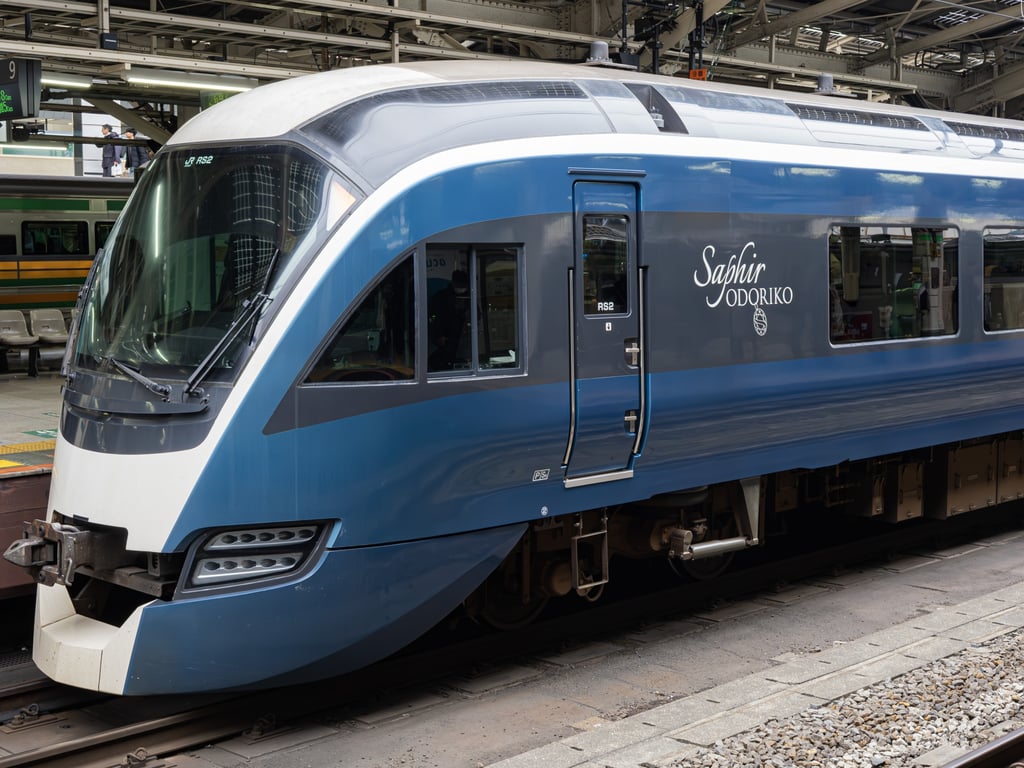
There is a particular shade of blue that shows up again and again along the Izu coast — somewhere between the sea and the sky — and JR East built an entire train around it. The Saphir Odoriko (サフィール踊り子) is a first-class-only limited express that glides south from Tokyo along Sagami Bay, slowing down at the best viewpoints so passengers can actually enjoy them. If your Japan itinerary has room for one slow, scenic afternoon away from the bullet train crowds, this is the ride to book. Named for the French word for sapphire, the train was designed by Ken Okuyama and entered service in March 2020, taking over the route previously run by the Super View Odoriko. Every seat on board is Green Class, and the train's Premium Green car was the first of its kind on any JR East service — think wide reclining seats, a café car with an open kitchen, and private compartments for those who want the view entirely to themselves.
TIPS AND SECRETSJR REGIONAL PASSHOKKAIDOJR PASS 7 DAYSHIDDEN GEMSJR PASS 14 DAYS
Josh K
7/7/20263 min read
Route and Schedule
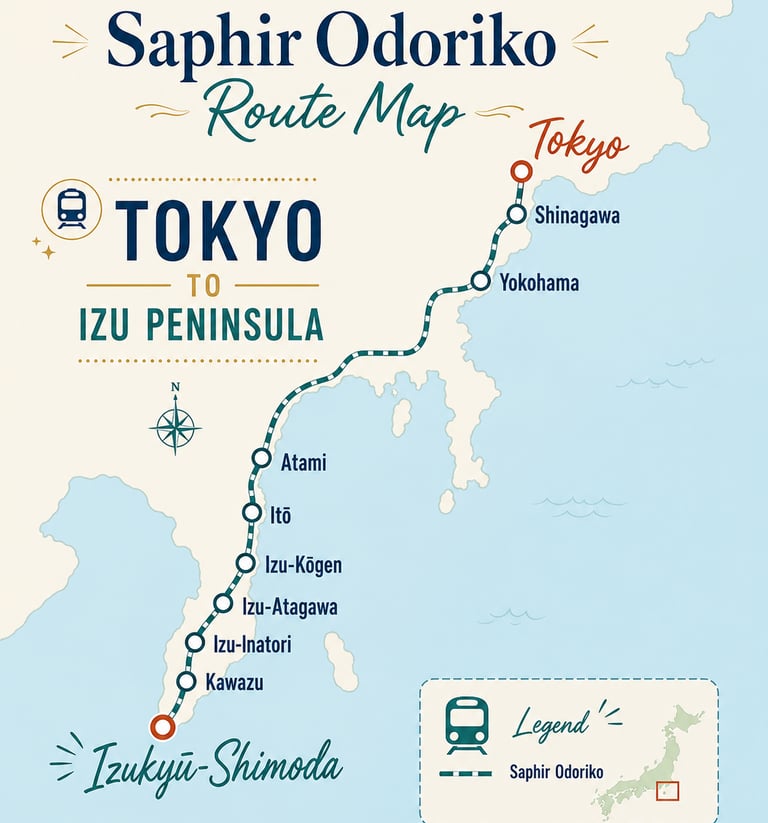
Most Saphir Odoriko services depart from Tokyo Station and run via Shinagawa and Yokohama before turning south along the coast. On weekends and holidays, an extra service also departs from Shinjuku and Shibuya, joining the main line at Yokohama.
Tokyo → Shinagawa → Yokohama → Atami → Ito → Izu-Kogen → Izu-Atagawa → Izu-Inatori → Kawazu → Izukyu-Shimoda
The full run takes roughly two and a half hours end to end, with the most dramatic scenery unfolding south of Atami, where the train hugs the Pacific coastline. There are only two to three round trips a day, so unlike the regular Odoriko service, this isn't a train you can simply turn up and catch — it needs to be planned into your day.
💡 Tip: Sit on the right-hand side (facing the direction of travel) heading south from Tokyo for the best ocean views along the Izu coast.
Onboard: Green Class, Premium Green, and the Café Car
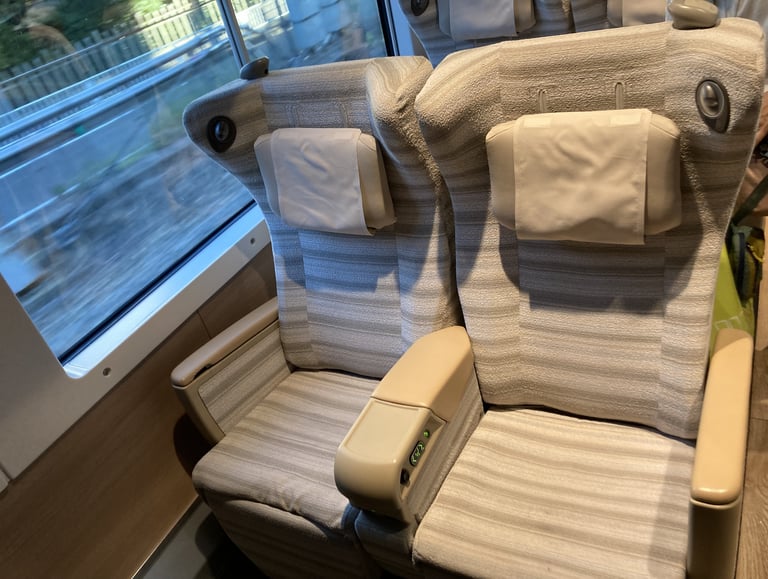
Because every seat is Green Class, even the standard cars (numbers 4 through 8) feel like an upgrade: a spacious 1+1 layout on one side of the aisle, large windows, and noticeably more legroom than a normal reserved seat.
Car 1 is where the train earns its reputation. Premium Green seats here face slightly outward toward the windows for an unobstructed coastal view, and a handful of private compartments are available for two to four people who want their own enclosed space for the journey. The café car sits between the classes and serves a small menu built around Izu ingredients — seafood, citrus, and local vegetables — though the selection is limited, so reserving your order in advance through the SAPHIR ODORIKO app is worthwhile if you want to eat onboard.
How to Reserve Seats
All seats on the Saphir Odoriko are reserved — there is no non-reserved car — so a booking is required no matter which pass or ticket type you're using.
Online: the JR EAST Train Reservation website lets pass holders and ticket buyers select seats directly. Search using the train's English name, "SAPHIR ODORIKO," or its Japanese name, サフィール踊り子, choose your date and departure, then pick a specific carriage, row, and window or aisle seat.
At the station: reserved-seat ticket vending machines with a passport scanner (found at major stations) can issue Saphir Odoriko tickets, and staffed JR ticket counters (Midori-no-madoguchi) at stations including Tokyo, Ueno, and Shinjuku can book seats in person.
Through a retailer: if you'd rather not navigate the reservation system yourself, sites such as [Klook – Saphir Odoriko tickets] let you arrange tickets online ahead of your trip.
💡 Tip: Book a few days ahead whenever possible — with only two or three departures a day, Premium Green seats and private compartments sell out quickly, especially for weekend and holiday travel.
Also check these guides: 5 Spectacular Sightseeing Trains to Ride in Kansai, Japan


Planning Summary
Operator: JR East
Route: Tokyo ↔ Shinagawa ↔ Yokohama ↔ Atami ↔ Ito ↔ Izu-Kogen ↔ Izu-Atagawa ↔ Izu-Inatori ↔ Kawazu ↔ Izukyu-Shimoda
Weekend/holiday extension: Some departures start from Shinjuku or Shibuya, joining the main route at Yokohama
Journey time: Approx. 2 hours 30–40 minutes, Tokyo to Izukyu-Shimoda
Frequency: About 2–3 round trips daily, more on weekends and holidays
Seating: All-Green-Class: Standard Green (cars 4–8), Premium Green with extra-wide view (car 1), private compartments
JR Pass coverage: Base fare + limited express fee covered on the JR East section (Tokyo–Ito). Green Class supplement and the private Izukyu Corporation section (Ito–Izukyu-Shimoda) are NOT covered
Standard Green one-way fare: Tokyo–Ito: ¥6,270 • Tokyo–Izukyu-Shimoda: ¥9,110
Premium Green one-way fare: Tokyo–Ito: ¥7,770 • Tokyo–Izukyu-Shimoda: ¥11,430
Reservations: JR EAST Train Reservation website, ticket offices (Midori-no-madoguchi), or reserved-seat vending machines
Find the best Izu hotel deals!
Along the Way
The stops themselves are worth building a day around rather than just watching go by. Atami is one of Japan's classic hot spring towns and an easy add-on for an onsen soak before continuing south. Ito offers historic bathhouses and the wooden Tokaikan hotel-turned-museum. Further along, Izu-Kogen is the gateway to the peninsula's parks and coastal walking trails, and the line terminates at Izukyu-Shimoda, a laid-back port town best known for its hydrangea festival in early summer.
Whether you ride the whole way to Shimoda or hop off partway for an onsen stop, the Saphir Odoriko turns a routine transfer south of Tokyo into one of the more memorable short rides in Japan — which, for a train named after a gemstone, feels about right.
Happy travels!