Narita Airport to Tokyo is usually associated with trains, but one of the cheapest and easiest options is actually a bus.
When it comes to travelling from Narita Airport to central Tokyo, most visitors immediately think of the Narita Express or Keisei Skyliner. Both are excellent, but there is another option that can be much cheaper if you are heading toward Tokyo Station or Ginza.
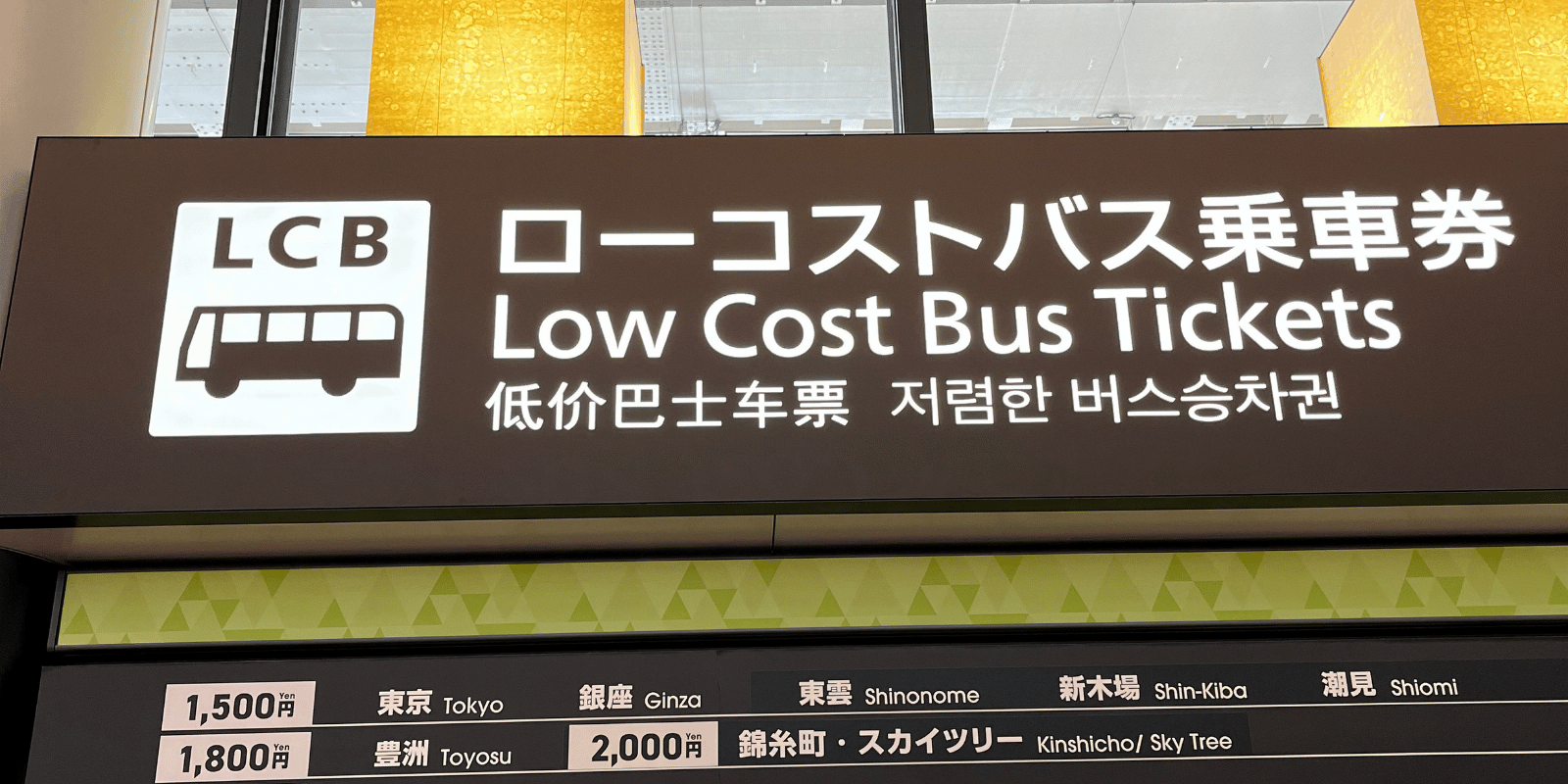
It is called the Airport Bus TYO-NRT, also known as the low-cost airport bus. As of 2026, the standard daytime fare is just ¥1,500 one way, with the fastest scheduled journey between Tokyo Station and Narita Airport taking about 65 minutes.
Why Consider the TYO-NRT Bus?
Standard adult fare: ¥1,500 one way
Fastest scheduled journey: About 65 minutes
Main Tokyo stops: Tokyo Station and Ginza
Big advantage: Your large suitcase can go in the luggage compartment underneath the bus
The bus is especially useful after a long international flight because you do not need to carry a heavy suitcase through train stations, stairs, platforms, and transfers. You board at Narita Airport, store your luggage underneath the coach, and ride directly into central Tokyo.
It is important to be precise, however: some regular commuter trains can cost slightly less. What makes the TYO-NRT attractive is the combination of a low fare, direct access to Tokyo Station, frequent service, and easy luggage handling.
2026 update: The regular TYO-NRT fare remains ¥1,500. Certain early-morning and late-night services cost ¥3,000, so check the departure you plan to use before assuming the standard fare applies.
In this guide, I’ll explain how the TYO-NRT works, where to board it at Narita Airport, how to buy tickets, how it compares with the Narita Express and Skyliner, and when I would choose the bus instead of the train.
How to Catch the TYO-NRT Bus at Narita Airport
Using the TYO-NRT after landing at Narita is straightforward, but the boarding procedure is slightly different from taking the bus in central Tokyo.
Step 1: Buy a Ticket at the Airport Counter
For most departures from Narita Airport, go to the bus ticket counter in your arrival terminal and buy a ticket for a specific departure.
The buses themselves use non-reserved seating, so your ticket is tied to a departure time but not to a particular seat.
Important: Do not simply walk to the bus stop for most daytime services from Narita. Buy your time-specific ticket at the airport counter first.
Step 2: Go to the Correct Bus Stop
- Terminal 1: Bus Stop 7
- Terminal 2: Bus Stop 6
- Terminal 3: Bus Stop 5
Airport signs are clear, and the TYO-NRT ticket counters can point you toward the correct boarding area if you are unsure.
Step 3: Arrive at the Stop a Few Minutes Early
The operator asks passengers to be at the bus stop at least 5 minutes before departure. Show your ticket to the attendant and board when instructed.
Large suitcases are normally placed in the luggage compartment underneath the bus, which is one of the biggest advantages over carrying luggage through a busy rail station.
What About the Last Bus of the Day?
The final departure from Narita Airport is handled differently. Instead of buying a ticket at the counter, passengers go directly to the bus stop and pay when boarding using cash or a transportation IC card such as Suica or PASMO.
Credit cards are not accepted for this onboard payment.
After a long flight: I would buy the ticket only after clearing immigration, collecting luggage, and customs. That way you are not worrying about missing a preselected departure if your arrival takes longer than expected.
Where Does the TYO-NRT Bus Drop You in Tokyo?
The main advantage of the TYO-NRT is that it takes you directly from Narita Airport into central Tokyo without a train transfer.
Tokyo Station
Most visitors will find Tokyo Station the most useful stop. The airport bus arrives on the Nihombashi Exit side of JR Tokyo Station, giving you easy access to JR lines, the Shinkansen, taxis, and nearby hotels.
From Narita Airport Terminal 1, the scheduled journey to Tokyo Station is about 68 minutes, although actual travel time can vary with road traffic.
Ginza
Some TYO-NRT services continue to Ginza, which can be convenient if your hotel is around Ginza, Yurakucho, or the southern side of central Tokyo.
From Narita Airport Terminal 1, the scheduled journey to Ginza is about 81 minutes.
Which stop should you choose? If you are connecting to another JR train, staying near Marunouchi or Nihombashi, or continuing by Shinkansen, Tokyo Station is usually the better choice. If your accommodation is around Ginza, taking a bus that continues there can save you another transfer.
Taking the Bus Back to Narita Airport
For the return journey, buses from Tokyo Station depart from the Yaesu South Exit bus terminal, platforms 7 and 8.
Current TYO-NRT services from central Tokyo are non-reserved. If you are paying at Tokyo Station with cash or credit card, buy your ticket at the JR Express Bus Ticket Office before boarding. If you are paying with a transportation IC card such as Suica or PASMO, you can normally go directly to the bus stop and pay on board.
Airport departure tip: Because road traffic can cause delays, I would allow a generous buffer when using the bus to Narita for an international flight. The bus is convenient, but a train generally offers more predictable journey times when your flight departure is time-sensitive.
TYO-NRT vs Narita Express vs Skyliner: Which Is Best?
| Option | Typical Adult Fare | Fastest Time | Best For |
|---|---|---|---|
| TYO-NRT Bus | ¥1,500 | About 65 minutes | Budget travellers heading to Tokyo Station or Ginza |
| Narita Express (N’EX) | ¥3,140 to Tokyo Station | About 53 minutes | Tokyo, Shinagawa, Shibuya, Shinjuku and JR Pass users |
| Keisei Skyliner | ¥2,580 to Nippori or Keisei-Ueno | About 36 minutes to Nippori | Ueno, Nippori, northern Tokyo and travellers prioritizing speed |
Choose the TYO-NRT Bus If…
- You are staying near Tokyo Station, Nihombashi, Ginza, or Yurakucho.
- You want to keep your airport transfer cost low.
- You have a large suitcase and would rather store it underneath a bus than carry it through railway stations.
- You do not mind the possibility of delays caused by road traffic.
Choose the Narita Express If…
- You want a direct train to Tokyo Station.
- You are continuing to Shinagawa, Shibuya, Shinjuku, or Yokohama.
- You value a predictable rail journey more than the lowest possible fare.
- You already have a rail pass that covers the Narita Express.
The fastest Narita Express journey between Narita Airport and Tokyo Station takes about 53 minutes.
Choose the Keisei Skyliner If…
- You are staying around Ueno or Nippori.
- You want one of the fastest rail connections between Narita Airport and central Tokyo.
- You are comfortable making another train connection if your hotel is elsewhere in Tokyo.
The Skyliner can travel from Narita Airport Terminal 2·3 to Nippori in as little as 36 minutes. The standard adult fare to Nippori or Keisei-Ueno is currently ¥2,580.
My simple rule: If I were staying near Tokyo Station and travelling on a budget, I would seriously consider the ¥1,500 TYO-NRT. For Shinjuku or Shibuya, I would normally favour the Narita Express. For Ueno or Nippori, the Skyliner is hard to beat.
Luggage Rules and Practical Tips
How Much Luggage Can You Bring?
The TYO-NRT has an under-floor luggage compartment, but the allowance is more limited than many travellers expect.
As a general rule, each passenger may store one suitcase with total outside dimensions of approximately 158 cm or less in the luggage compartment.
Typical allowance: One suitcase per passenger
Maximum approximate size: 158 cm total for length + width + height
Some Large Items Are Not Accepted
The operator does not accept certain oversized or awkward items either inside the bus or in the luggage compartment.
These include items such as bicycles, skis, snowboards, surfboards, golf bags, large musical instruments, and cardboard boxes.
If you are travelling with unusual or oversized luggage, consider using a Japanese luggage delivery service instead.
Keep Electronics and Valuables With You
In 2026, the operator specifically reminded passengers that certain items should not be placed in the under-floor luggage compartment.
Keep mobile batteries, electronic devices, valuables, and precision equipment with you inside the bus rather than packing them into luggage that will be stored underneath.
There Are No Standing Passengers
The TYO-NRT operates with a fixed seating capacity. Standing passengers are not permitted, so if a Tokyo-origin bus becomes full, you may need to wait for another departure.
For your return trip to Narita, I would therefore avoid planning around the absolute latest bus that would still get you to the airport on time.
Allow Extra Time for Traffic
Unlike the Narita Express or Skyliner, the bus uses expressways and city streets, so journey times can change because of traffic, accidents, or weather.
This usually matters less when you are travelling from Narita into Tokyo. When travelling back to the airport for an international flight, however, build in a generous safety margin.
Best for travellers with one normal suitcase: The TYO-NRT can be extremely convenient if you have one standard suitcase. If you are carrying several large bags, sports equipment, or other oversized luggage, a train or luggage-delivery service may be more practical.
Who Should Use the TYO-NRT Bus?
Best for Budget Travellers Staying Near Tokyo Station
If your hotel is around Tokyo Station, Nihombashi, Ginza, or Yurakucho, the TYO-NRT is one of the strongest-value airport transfer options.
At ¥1,500, it can save a meaningful amount compared with the Narita Express while still taking you directly into central Tokyo.
Good for Travellers With One Large Suitcase
Being able to place a standard suitcase underneath the bus can make arrival day much easier, especially after a long international flight.
You avoid dragging luggage through stations, platforms, escalators, and train transfers.
Less Ideal if You Are Staying in Shinjuku or Shibuya
If your hotel is around Shinjuku, Shibuya, or another western Tokyo neighbourhood, arriving at Tokyo Station may simply create another transfer.
In that situation, the Narita Express can be more convenient despite the higher fare because it serves several major Tokyo stations directly.
Less Ideal When Your Flight Departure Is Time-Sensitive
The bus is vulnerable to road congestion. For your journey to Narita Airport, a rail option may provide greater peace of mind if your schedule is tight.
My recommendation: For arrival into Japan, the TYO-NRT is an excellent option if you are staying near Tokyo Station and want a low-cost, simple transfer. For the journey back to Narita, I would compare the bus schedule with the Narita Express or Skyliner and choose the option that gives you the most comfortable time buffer.
FAQ: TYO-NRT Low-Cost Bus from Narita Airport
How much is the TYO-NRT bus from Narita Airport to Tokyo?
The standard adult fare is ¥1,500 one way. Certain designated early-morning and late-night services cost more.
How long does the bus take from Narita Airport to Tokyo Station?
The fastest scheduled journey is about 65 minutes, but actual travel time can vary depending on traffic and road conditions.
Do I need to reserve the TYO-NRT bus in advance?
From Narita Airport, you normally buy a ticket for a specific departure at the airport bus counter. Seats themselves are not individually reserved.
Can I use Suica or PASMO on the TYO-NRT?
IC card payment is available in some boarding situations, including certain Tokyo-origin services and the final Narita-origin departure. At Narita Airport, most regular daytime passengers should first buy a ticket at the airport counter.
Is the TYO-NRT cheaper than the Narita Express?
Yes. At the current standard fare of ¥1,500, the TYO-NRT costs substantially less than a regular Narita Express ticket to Tokyo Station.
Is the TYO-NRT cheaper than the Skyliner?
Yes, based on standard fares. However, the Skyliner is considerably faster if you are travelling toward Nippori or Ueno, so price should not be the only factor.
Can I bring a large suitcase?
Yes, but the standard allowance is generally one suitcase per passenger, with combined outside dimensions of around 158 cm or less. Oversized items and some sports equipment are not accepted.
Is the TYO-NRT covered by the Japan Rail Pass?
No. The TYO-NRT is a bus service and is not covered by the nationwide Japan Rail Pass. JR Pass users may instead prefer the Narita Express if it fits their itinerary.
Related Guides
Welcome Suica Mobile
Planning to use trains and public transport after arriving in Japan? See how Welcome Suica Mobile works, who can use it, and how to set it up for your trip.
Japan Rail Pass Guide
If you are continuing beyond Tokyo by train, compare the nationwide JR Pass with individual tickets and regional passes before deciding what to buy.
How JR Pass Holders Can Reserve Shinkansen Seats Online
Travelling onward by Shinkansen? Learn how seat reservations work for JR Pass holders and when it makes sense to reserve before your journey.
Before You Buy a JR Pass
Compare the cost of your planned train journeys with the current JR Pass price. Depending on your route, individual tickets or a regional pass may offer better value.
Check Current JR Pass PricesAbout Train Travel Japan
Train Travel Japan is written from firsthand experience traveling throughout Japan by rail. I am a Japanese native based in Canada and have traveled to all 47 prefectures of Japan over more than 30 years.
My goal is to make Japan train travel easier to understand, especially for international visitors planning JR Pass trips, regional rail journeys and independent itineraries.
2 thoughts on “The Cheapest Way from Narita Airport to Tokyo: The Low-Cost Bus Most Travellers Don’t Know About”
Comments are closed.