
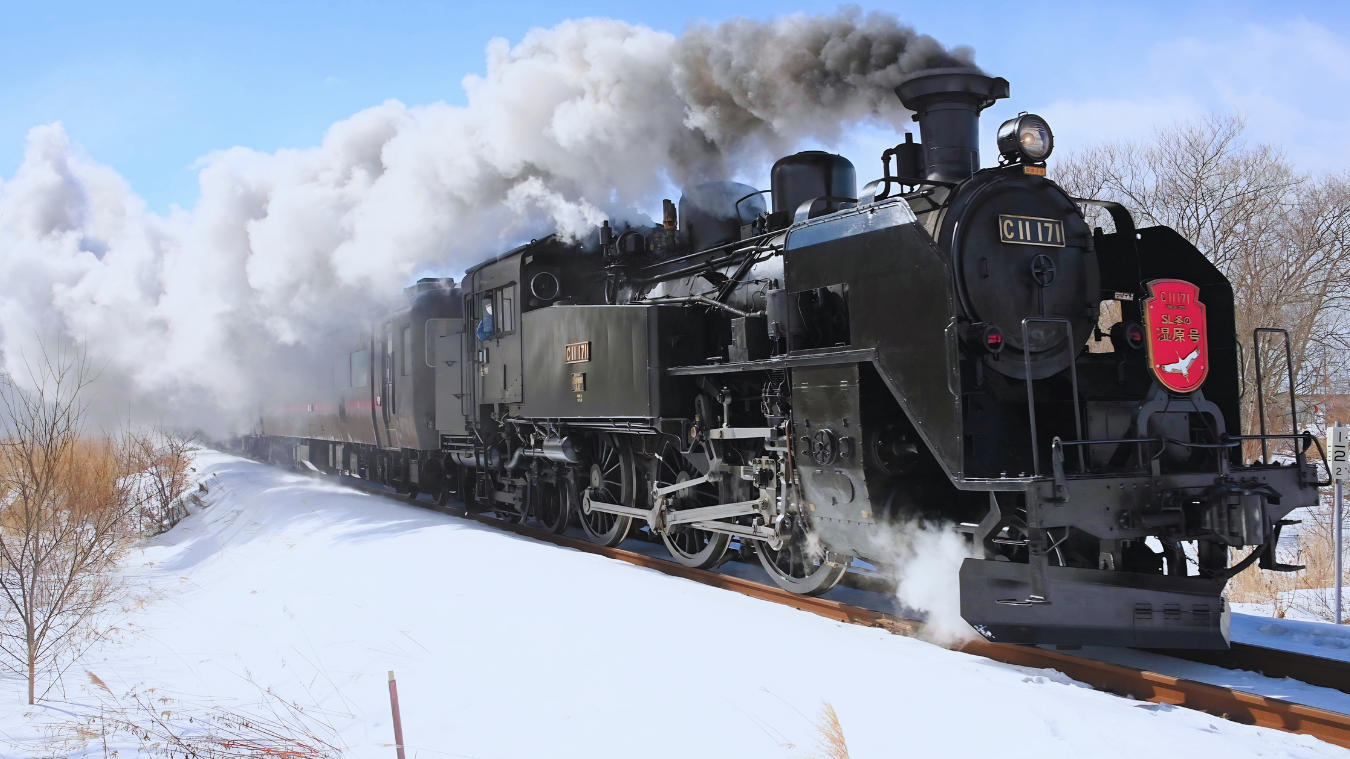
Hokkaido is one of the best regions in Japan for scenic rail travel. Its trains cross snowy wetlands, dramatic coastlines, flower-covered countryside and vast mountain landscapes that feel very different from railway journeys around Tokyo, Kyoto or Osaka.
Many of Hokkaido’s most interesting trains are seasonal, so choosing the right experience depends heavily on when you visit. Winter brings steam trains and drift-ice scenery, summer brings direct trains to Furano, and autumn offers scenic journeys through western Hokkaido.
Best Sightseeing Trains in Hokkaido
SL Fuyu-no-Shitsugen → Ryuhyo Monogatari → Furano Lavender Express → Limited Express Niseko
This guide explains the best season for each train, reservation requirements, rail-pass coverage and how to incorporate these journeys into a wider Hokkaido itinerary.
Hokkaido Sightseeing Trains at a Glance
| Train | Main Route | Best Season | Best For |
|---|---|---|---|
| SL Fuyu-no-Shitsugen | Kushiro ↔ Shibecha | Winter | Steam train, snow and Kushiro Wetlands |
| Ryuhyo Monogatari | Abashiri ↔ Shiretoko-Shari | Winter | Sea of Okhotsk and drift ice |
| Furano Lavender Express | Sapporo ↔ Furano | Summer | Furano, flower season and direct travel |
| Limited Express Niseko | Sapporo ↔ Hakodate via Kutchan | Autumn | Mt. Yotei, Niseko and western Hokkaido scenery |
Most Hokkaido Sightseeing Trains Are Seasonal
These trains do not operate year-round. Exact operating dates can change each year, so always check JR Hokkaido’s current timetable before planning accommodation around a particular service.
1. SL Fuyu-no-Shitsugen — Steam Train Through the Snowy Kushiro Wetlands
SL Fuyu-no-Shitsugen is one of Hokkaido’s most atmospheric winter train experiences. A historic steam locomotive travels between Kushiro and Shibecha through the snow-covered Kushiro Wetlands of eastern Hokkaido.
The combination of steam, retro passenger cars, winter scenery and the possibility of seeing wildlife makes this much more than an ordinary journey between two stations.
Why Ride SL Fuyu-no-Shitsugen?
- Historic steam locomotive
- Snow-covered Kushiro Wetland scenery
- Possible sightings of red-crowned cranes and Ezo deer
- Retro passenger-car interiors
- Traditional potbelly stove onboard
- Nature guide and onboard sales
Best for a Winter Hokkaido Trip
This train is specifically a winter experience. If your Hokkaido trip includes Kushiro during the colder months, it is one of the most distinctive rail journeys you can add to the itinerary.
2. Ryuhyo Monogatari — Drift Ice Along the Sea of Okhotsk
Ryuhyo Monogatari is eastern Hokkaido’s signature drift-ice train, traveling between Abashiri and Shiretoko-Shari along the Sea of Okhotsk.
During the heart of winter, huge fields of drift ice can reach the coastline from the waters north of Hokkaido, creating one of Japan’s most unusual seasonal railway landscapes.
Why Ride Ryuhyo Monogatari?
- Views across the Sea of Okhotsk
- Chance to see winter drift ice from the train
- Distant views toward the Shiretoko mountain range
- Easy to combine with an Abashiri winter stay
- Short sightseeing stops on selected services
- Japan Rail Pass and Hokkaido Rail Pass eligible
Drift Ice Is a Natural Phenomenon
Riding the train does not guarantee that you will see drift ice. Its timing and position depend on weather, wind and sea conditions.
Treat the train and the winter coastline as the experience rather than planning your trip around a guaranteed ice sighting.
Highlights Along the Ryuhyo Monogatari Route
Kitahama Station
Kitahama is one of Japan’s best-known coastal railway stations, with the Sea of Okhotsk immediately beside the tracks.
Selected Ryuhyo Monogatari services make a short stop here, allowing passengers time to enjoy the view from the station’s observation deck.
Hama-Koshimizu Station
Selected services also pause at Hama-Koshimizu, where a roadside rest area is directly connected to the station.
These sightseeing stops help make the journey feel different from an ordinary local train between Abashiri and Shiretoko-Shari.
Combine It with Abashiri
Ryuhyo Monogatari works particularly well as part of a winter stay in Abashiri. Travelers can also consider the Abashiri drift-ice sightseeing ship when conditions permit.
Ryuhyo Monogatari Tickets and Reservations
| Ticket | Current Adult Price |
|---|---|
| Basic Fare: Abashiri ↔ Shiretoko-Shari | ¥1,040 one way |
| Reserved Seat Ticket | ¥1,000 one way |
Children aged 6–11 currently pay half the adult amounts.
Not Every Seat Is Reserved
Unlike SL Fuyu-no-Shitsugen, Ryuhyo Monogatari currently has both reserved and non-reserved seating.
If you want a reserved seat, advance reservation is recommended, particularly on busy winter dates.
Rail Pass Coverage
JR Hokkaido currently lists both the Japan Rail Pass and Hokkaido Rail Pass as eligible for this train.
Reservation Note
Reserved seats currently cannot be booked through JR-EAST Train Reservation. JR Hokkaido advises travelers to obtain the reserved-seat ticket at a JR Hokkaido station after arriving in Hokkaido.
3. Furano Lavender Express — Direct Summer Train from Sapporo to Furano
Furano Lavender Express is one of the easiest ways to reach Furano from Sapporo during the summer sightseeing season.
The seasonal limited express runs directly between Sapporo and Furano in about two hours, avoiding the transfer normally required when traveling by regular JR services.
Why Ride the Furano Lavender Express?
- Direct Sapporo–Furano service
- Approximately 2-hour journey
- Convenient for Furano flower season
- Operated using the distinctive Lavender trainset
- Free lounge space in Car 1
- Easy to incorporate into a summer Hokkaido itinerary
Best for Summer Visitors
The train is especially useful if Furano is part of a Sapporo-based summer itinerary. Lavender typically reaches its most popular viewing period from late June into early August, although flower conditions vary each year.
Furano Lavender Express Tickets and Reservations
All Seats Are Reserved
JR Hokkaido’s limited express trains are currently all-reserved. You therefore need a basic fare ticket plus a reserved-seat limited express ticket unless you are traveling with an eligible rail pass.
| Journey | Current Regular Adult Fare |
|---|---|
| Sapporo → Furano | ¥5,440 one way |
Rail Pass Coverage
The Furano Lavender Express is currently covered by the Japan Rail Pass, Hokkaido Rail Pass and Sapporo-Furano Area Pass when used within each pass’s valid area and conditions.
Pass holders should obtain a reserved-seat ticket before boarding. No additional seat charge is currently required for eligible ordinary reserved seating with these passes.
Online Reservations
Unlike several of Hokkaido’s special sightseeing trains, seats on the Furano Lavender Express can currently be reserved in advance through JR-EAST Train Reservation.
Don’t Rely on an IC Card to Furano
IC cards cannot currently be used between Takikawa and Furano. Travelers without a rail pass should buy the appropriate paper ticket before boarding.
4. Limited Express Niseko — Scenic Autumn Journey Between Sapporo and Hakodate
Limited Express Niseko is JR Hokkaido’s seasonal autumn sightseeing limited express between Sapporo and Hakodate.
Unlike the faster regular Hokuto route, the Niseko train travels through western Hokkaido via Otaru, Yoichi, Kutchan and Niseko, creating a much more scenic and leisurely journey.
Why Ride Limited Express Niseko?
- Views across Ishikari Bay
- Excellent views of Mt. Yotei
- Travel through Otaru, Yoichi, Kutchan and Niseko
- Views of Uchiura Bay farther south
- Seasonal local food and products at selected stations
- Dedicated lounge space onboard
- Useful as transportation between Sapporo and Hakodate
Choose It for the Journey, Not Speed
If your priority is simply reaching Hakodate as quickly as possible, the regular Limited Express Hokuto is the more practical choice.
Limited Express Niseko is better for travelers who want to make the railway journey itself part of their Hokkaido experience.
Limited Express Niseko Tickets and Reservations
All Seats Are Reserved
Limited Express Niseko currently operates with reserved seating only. Advance reservation is strongly recommended, particularly on weekends and holiday-period operating dates.
| Journey | Current Regular Adult Fare |
|---|---|
| Sapporo ↔ Kutchan | ¥3,920 |
| Sapporo ↔ Hakodate | ¥9,220 |
| Kutchan ↔ Hakodate | ¥7,130 |
Hamanasu Lounge
Car 1 contains the Hamanasu Lounge, a free shared lounge space where passengers can leave their assigned seat temporarily and relax while enjoying the scenery.
Rail Passes
Eligible JR rail passes covering the route can be used on ordinary reserved seating, including the Hokkaido Rail Pass.
As with other JR Hokkaido limited express trains, obtain a reserved-seat ticket before boarding when traveling with a rail pass.
Scenic Regular Trains Worth Riding in Hokkaido
Hokkaido’s seasonal sightseeing trains are memorable, but you do not need to travel during a special operating period to enjoy excellent railway scenery.
Several everyday limited express trains cross some of Hokkaido’s most impressive landscapes while also providing useful transportation between major destinations.
These Are Regular Limited Express Trains
The trains below are not dedicated sightseeing trains. They are regular intercity services that happen to travel through particularly scenic parts of Hokkaido.
That makes them easy to incorporate into a normal Hokkaido itinerary without scheduling your trip around a seasonal train.
Limited Express Hokuto — Sapporo to Hakodate
Limited Express Hokuto is the main intercity train connecting Sapporo with Hakodate and one of the most useful scenic journeys for travelers exploring southern Hokkaido.
The route passes through a varied landscape of forests, mountains and coastline, including views toward Mt. Komagatake and Funka Bay.
Why We Like the Hokuto
- Useful transportation between Sapporo and Hakodate
- Views of Mt. Komagatake
- Long stretches beside Funka Bay
- Convenient for Noboribetsu and Lake Toya
- Connection with the Hokkaido Shinkansen at Shin-Hakodate-Hokuto
- Operates throughout the year
Excellent for a Sapporo–Hakodate Itinerary
There is no need to ride Hokuto solely for sightseeing. If your trip already includes both Sapporo and Hakodate, the scenic train journey becomes part of the itinerary naturally.
Lake Toya and Noboribetsu can also be incorporated as intermediate stops on a longer southern Hokkaido journey.
Hokuto Reservations and Rail Passes
All seats on JR Hokkaido limited express trains are currently reserved, including Limited Express Hokuto.
Travelers using regular tickets need a basic fare ticket plus a reserved-seat limited express ticket.
Using a Rail Pass
Eligible JR rail passes covering the route, including the Hokkaido Rail Pass and nationwide Japan Rail Pass, can be used on ordinary reserved seating according to the conditions of the pass.
Obtain your reserved-seat ticket before boarding whenever possible.
Limited Express Ozora — Sapporo to Kushiro
Limited Express Ozora connects Sapporo with Obihiro and Kushiro, making it one of the key trains for exploring eastern Hokkaido without renting a car.
The journey crosses central Hokkaido before continuing through the broad landscapes of the Tokachi region toward Kushiro.
Why We Like the Ozora
- Direct rail connection between Sapporo and Kushiro
- Useful for reaching eastern Hokkaido
- Broad Tokachi countryside
- Mountain and forest scenery through central Hokkaido
- Convenient for Obihiro
- Operates throughout the year
Best Way to Reach Kushiro by Train
If you are planning to ride SL Fuyu-no-Shitsugen or explore the Kushiro Wetlands, Limited Express Ozora provides the natural rail connection between Sapporo and Kushiro.
This makes it easy to combine an ordinary scenic limited express with one of Hokkaido’s seasonal sightseeing-train experiences.
Ozora Reservations and Rail Passes
Limited Express Ozora is currently an all-reserved service. Travelers using regular tickets need both the appropriate basic fare and a reserved-seat limited express ticket.
Using a Rail Pass
Eligible JR passes covering the route can be used on ordinary reserved seating according to the conditions of the pass.
Hokkaido Rail Pass holders can obtain reserved-seat tickets using eligible JR reserved-seat ticket machines after receiving their pass.
Bring Food and Drinks
JR Hokkaido currently does not provide onboard sales on its regular limited express trains. For a long journey such as Sapporo to Kushiro, buy food and drinks before boarding.
Best Hokkaido Scenic Train by Season
| Season | Our Pick | Why |
|---|---|---|
| Winter | SL Fuyu-no-Shitsugen | Steam locomotive, snow and Kushiro Wetlands |
| Winter | Ryuhyo Monogatari | Sea of Okhotsk and possible drift-ice views |
| Spring | Hokuto or Ozora | Reliable year-round scenic travel |
| Summer | Furano Lavender Express | Direct access from Sapporo to Furano |
| Autumn | Limited Express Niseko | Mt. Yotei and western Hokkaido scenery |
| Any Season | Hokuto or Ozora | Useful intercity trains with excellent scenery |
Don’t Build Your Entire Trip Around One Seasonal Train
Hokkaido weather and seasonal railway schedules can change. Whenever possible, choose a sightseeing train that fits naturally into the destinations you already plan to visit.
Can You Use a Rail Pass on Hokkaido Sightseeing Trains?
A rail pass can be very useful in Hokkaido because distances are large and individual limited-express journeys can be expensive.
Hokkaido Rail Pass
The Hokkaido Rail Pass provides unlimited travel on JR Hokkaido lines during its validity period, excluding the Hokkaido Shinkansen.
| Pass | Current Advance-Purchase Adult Price |
|---|---|
| 5 Days | ¥22,000 |
| 7 Days | ¥28,000 |
| 10 Days | ¥37,000 |
The pass can be particularly useful for itineraries combining places such as Sapporo, Hakodate, Kushiro, Obihiro, Asahikawa and Abashiri.
Reserved Seats
All JR Hokkaido limited express trains currently operate with reserved seating only. Rail-pass holders should obtain a reserved-seat ticket before boarding.
One important exception is SL Fuyu-no-Shitsugen: Hokkaido Rail Pass holders currently need to purchase its separate reserved-seat ticket.
Nationwide Japan Rail Pass
The nationwide Japan Rail Pass also covers eligible JR Hokkaido journeys, making it useful when Hokkaido forms part of a longer trip through Japan.
If your trip is concentrated entirely within Hokkaido, however, compare the regional Hokkaido Rail Pass against ordinary tickets before buying the much more expensive nationwide pass.
Compare Before You Buy
A rail pass does not automatically save money. Add up the major journeys in your itinerary and compare them with the current pass price.
How to Add Scenic Trains to a Hokkaido Itinerary
Winter: Sapporo → Abashiri → Kushiro
A winter rail itinerary can combine Ryuhyo Monogatari around Abashiri with SL Fuyu-no-Shitsugen from Kushiro.
Because eastern Hokkaido is large and winter weather can affect travel, allow several days rather than trying to fit both trains into a rushed overnight trip.
Summer: Sapporo → Furano
Use Furano Lavender Express for direct travel from Sapporo to Furano during its seasonal operating period.
Stay overnight if possible rather than treating the region only as a quick out-and-back train ride. Furano and nearby Biei are easier to appreciate when you have time to explore beyond the station.
Autumn: Sapporo → Niseko → Hakodate
When Limited Express Niseko is operating, it can turn the journey from Sapporo toward Hakodate into a scenic trip through western Hokkaido.
Travelers who prioritize speed can instead use the regular Hokuto route.
Year-Round: Sapporo → Hakodate
Limited Express Hokuto is the most practical choice for a year-round scenic rail journey between Hokkaido’s two major tourist cities.
Year-Round: Sapporo → Kushiro
Limited Express Ozora provides a straightforward route into eastern Hokkaido and can be combined with Kushiro Wetland sightseeing or seasonal train experiences.
Hokkaido Is Bigger Than It Looks
Train journeys between major Hokkaido destinations often take several hours. Avoid planning the region like Tokyo or Kansai, where major attractions may be only a short train ride apart.
A slower itinerary with fewer overnight bases usually works better.
Hokkaido Sightseeing Train FAQ
What is the best sightseeing train in Hokkaido?
It depends on the season. SL Fuyu-no-Shitsugen is our pick for a winter steam-train experience, Ryuhyo Monogatari for drift-ice season and Furano Lavender Express for summer travel.
Are there sightseeing trains in Hokkaido all year?
Most dedicated sightseeing and seasonal trains operate only during particular parts of the year.
For year-round scenic rail travel, regular limited express trains such as Hokuto and Ozora are excellent alternatives.
Do I need reservations?
Yes for JR Hokkaido limited express trains, which currently have reserved seating only.
Special sightseeing trains may have their own reservation rules, so check the exact service before traveling.
Can I use the Hokkaido Rail Pass?
The Hokkaido Rail Pass covers most JR Hokkaido trains within its valid area, including ordinary reserved seating on limited express trains.
Special conditions can apply to individual sightseeing services, such as the separate reserved-seat ticket currently required for SL Fuyu-no-Shitsugen.
Does the Hokkaido Rail Pass cover the Hokkaido Shinkansen?
No. The Hokkaido Rail Pass does not cover the Hokkaido Shinkansen. Travelers continuing south toward Aomori, Sendai or Tokyo need separate tickets or another eligible rail pass.
Is Hokkaido easy to explore entirely by train?
Major cities and many popular destinations are accessible by rail, but Hokkaido is much less densely served than Tokyo, Kansai or Kyushu.
Some rural attractions require buses, taxis or other transportation from the nearest railway station.
Which side of the train has the best views?
The best side varies by route and direction of travel. Instead of choosing a seat based only on one scenic section, remember that many journeys pass worthwhile scenery on both sides.
Is food sold on Hokkaido limited express trains?
JR Hokkaido currently does not provide onboard sales on its regular limited express trains, so buy drinks, snacks or an ekiben before boarding a long journey.
Related Japan Train Travel Guides
Hokkaido Rail Pass Guide
Compare the current Hokkaido Rail Pass options, prices and coverage to see whether a regional pass makes sense for your Hokkaido itinerary.
6-Day Hokkaido Train Itinerary
Follow a practical six-day Hokkaido rail itinerary combining major destinations, scenic train journeys and regional-pass planning.
Sightseeing Trains in Japan
Discover more scenic, themed and premium trains across Japan, from Hokkaido and Tohoku to Kansai, Shikoku and Kyushu.
Japan Train Itineraries
Browse rail itineraries for exploring Japan, including shorter regional trips and longer journeys connecting multiple parts of the country.
Before You Buy a JR Pass
Compare the cost of your planned train journeys with the current JR Pass price. Depending on your route, individual tickets or a regional pass may offer better value.
Check Current JR Pass PricesAbout Train Travel Japan
Train Travel Japan is written from firsthand experience traveling throughout Japan by rail. I am a Japanese native based in Canada and have traveled to all 47 prefectures of Japan over more than 30 years.
My goal is to make Japan train travel easier to understand, especially for international visitors planning JR Pass trips, regional rail journeys and independent itineraries.