
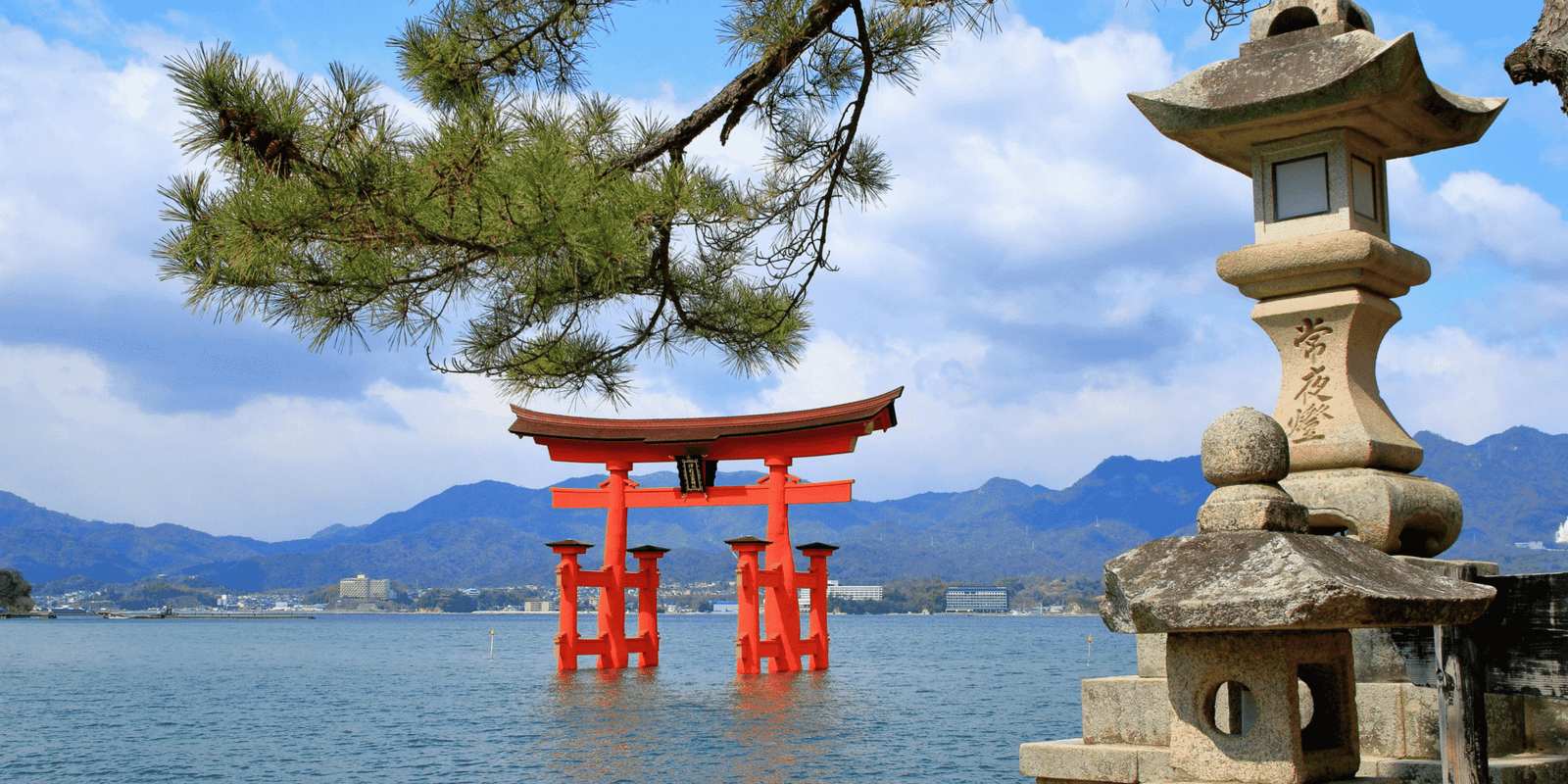
Miyajima from Hiroshima is one of the easiest and most rewarding day trips in western Japan. Famous for Itsukushima Shrine, its seemingly floating torii gate, Mount Misen, friendly deer, and excellent local food, the island can be reached from Hiroshima Station in roughly 45–55 minutes using a combination of JR train and ferry.
For most travelers, the simplest route is to take the JR Sanyo Main Line from Hiroshima Station to Miyajimaguchi Station, walk a few minutes to the ferry terminal, and then take the JR West Miyajima Ferry across to the island.
This guide explains the complete journey step by step, including JR Pass coverage, the Miyajima Visitor Tax, how much time to allow, what to see, and how to plan an easy day trip from Hiroshima.
Quick Answer: How Do You Get from Hiroshima to Miyajima?
The easiest route is:
Hiroshima Station → JR Sanyo Main Line → Miyajimaguchi Station →
5-minute walk → JR West Miyajima Ferry → Miyajima.
Allow approximately 45–55 minutes from Hiroshima Station to Miyajima Island, depending on your train and ferry connections.
Hiroshima to Miyajima at a Glance
| Stage | Route | Approx. Time | JR Pass |
|---|---|---|---|
| Train | Hiroshima → Miyajimaguchi | 25–30 min | Covered |
| Walk | Miyajimaguchi Station → Ferry Terminal | About 5 min | — |
| Ferry | Miyajimaguchi → Miyajima | About 10 min | JR ferry covered |
| Total | Hiroshima Station → Miyajima | About 45–55 min | Mostly covered |
JR Pass tip: The Japan Rail Pass covers the JR Sanyo Main Line and the JR West Miyajima Ferry. However, visitors entering Miyajima must normally pay the separate ¥100 Miyajima Visitor Tax, which is not included in the JR Pass.
How to Get from Hiroshima Station to Miyajima
The JR route via Miyajimaguchi is straightforward and usually the best option for travelers staying near Hiroshima Station or using a JR rail pass. Here is the journey step by step.
Step 1: Hiroshima Station to Miyajimaguchi Station
At Hiroshima Station, take the JR Sanyo Main Line toward Iwakuni and get off at Miyajimaguchi Station.
The train ride takes approximately 28 minutes. This is a regular JR train, so you do not need a seat reservation.
If you are using the Japan Rail Pass, this part of the journey is covered.
Step 2: Walk from Miyajimaguchi Station to the Ferry Terminal
After leaving the ticket gates at Miyajimaguchi Station, follow the signs for the Miyajima Ferry.
The ferry terminal is only a short walk from the station. Follow the pedestrian route through the underpass toward the Miyajimaguchi Passenger Terminal.
The route is well signposted, and there is also a barrier-free route with elevators between the JR station and ferry boarding area, which is useful for travelers with luggage, wheelchairs, or strollers.
Step 3: Take the JR West Miyajima Ferry
At the passenger terminal, follow the signs for the JR West Miyajima Ferry.
The ferry crossing takes approximately 10 minutes. Passengers with a valid Japan Rail Pass or eligible JR-West rail pass can use the JR ferry without paying the regular ferry fare separately.
Travelers paying normally can purchase a ticket at the terminal. Compatible transportation IC cards can also be used at the ferry gates.
Important: The nationwide Japan Rail Pass covers the JR train to Miyajimaguchi and the JR West Miyajima Ferry, but the separate ¥100 Miyajima Visitor Tax is not included.
Which Miyajima Ferry Should You Take?
Two ferry companies operate between Miyajimaguchi and Miyajima, but JR Pass holders should normally choose the JR West Miyajima Ferry because the ferry fare is included with the pass.
The JR ferry is also particularly enjoyable on services that travel closer to the famous offshore torii gate of Itsukushima Shrine, giving passengers a memorable view of the landmark from the water.
Train Travel Japan Tip: If possible, stand near an outside viewing area as the ferry approaches Miyajima. The first view of the giant torii gate from the water is one of the highlights of the journey.
Is Miyajima Covered by the Japan Rail Pass?
Yes. If you travel from Hiroshima using the JR route, the Japan Rail Pass covers both the JR Sanyo Main Line from Hiroshima to Miyajimaguchi and the JR West Miyajima Ferry.
However, the pass does not cover the ¥100 Miyajima Visitor Tax. This local tax is charged when entering Miyajima and must be paid separately even if your train and ferry fares are fully covered by a rail pass.
JR Pass holders: Your Hiroshima → Miyajimaguchi train and JR West Miyajima Ferry fare are covered. You only need to pay the ¥100 Miyajima Visitor Tax when entering the island.
How Much Does Hiroshima to Miyajima Cost Without a Rail Pass?
If you are paying regular fares, the journey is still inexpensive. Current adult fares are approximately:
| Journey | Adult Fare |
|---|---|
| JR Hiroshima → Miyajimaguchi | ¥420 one way |
| JR West Miyajima Ferry | ¥200 one way |
| Miyajima Visitor Tax | ¥100 per entry |
| Total to Miyajima | About ¥720 one way |
For a standard Hiroshima–Miyajima round trip without leaving and re-entering the island, expect to pay approximately ¥1,340 per adult in total: ¥840 for the round-trip JR train, ¥400 for the round-trip ferry, plus the ¥100 visitor tax.
Which JR Regional Passes Cover Miyajima?
Several JR-West regional passes that include Hiroshima also cover the JR train to Miyajimaguchi and the JR West Miyajima Ferry. Useful examples include:
- Kansai-Hiroshima Area Pass
- Sanyo-San’in Area Pass
- Setouchi Area Pass
- Hiroshima-Yamaguchi Area Pass
These can be particularly good value if Hiroshima and Miyajima are part of a longer trip through western Japan rather than your only JR journeys.
Important: Even when the JR West Miyajima Ferry is included in your regional rail pass, the ¥100 Miyajima Visitor Tax is generally not included.
If you are deciding between the nationwide JR Pass and a regional pass, compare your complete itinerary rather than buying a pass just for Hiroshima and Miyajima. For many western Japan itineraries, a regional JR-West pass can cost considerably less than the nationwide pass.
How Much Time Do You Need on Miyajima?
For most first-time visitors, I recommend allowing at least 4–6 hours on Miyajima itself. That gives you enough time to visit Itsukushima Shrine, see the famous torii gate, explore the main shopping streets, and enjoy lunch without rushing.
If you also want to visit Mount Misen, use the ropeway, explore Daishoin Temple, or spend more time walking around the island, Miyajima is better treated as a full-day trip from Hiroshima.
| Time Available | What You Can Do | Best For |
|---|---|---|
| 3–4 hours | Itsukushima Shrine, torii gate, Omotesando shopping street, quick lunch | Travelers combining Miyajima with Hiroshima |
| 5–6 hours | Shrine, torii, Daishoin Temple, shopping streets, relaxed lunch and sightseeing | Most first-time visitors |
| 7–8+ hours | Everything above plus Mount Misen and more time exploring the island | Travelers making Miyajima the main destination of the day |
Half-Day or Full-Day Miyajima Trip?
Half-Day: Best If You Also Want to Sightsee in Hiroshima
A half-day visit works well if your priorities are Itsukushima Shrine, the giant torii gate, and the central Miyajima sightseeing area.
For example, you could visit Hiroshima Peace Memorial Park and the Atomic Bomb Dome in the morning, then travel to Miyajima for the afternoon.
The trade-off is that you will probably need to skip Mount Misen or move fairly quickly through the island.
Full Day: Best for First-Time Visitors
If your itinerary allows it, I prefer giving Miyajima most of a day. The island is much more enjoyable when you are not constantly watching the clock.
A full day gives you time to visit Itsukushima Shrine, walk through Daishoin Temple, have a proper lunch, browse the shops, and add Mount Misen if the weather is good.
If you take the Miyajima Ropeway toward Mount Misen, remember that reaching the upper ropeway station does not put you at the summit. From Shishiiwa Station, allow roughly another 30 minutes of walking to reach the summit area.
Check the Miyajima Tide Before You Go
The appearance of Itsukushima Shrine and the famous torii gate changes dramatically with the tide, so it is worth checking the tide forecast when planning your visit.
High Tide
At high tide, water surrounds the shrine buildings and the torii gate, creating the famous impression that they are floating on the sea.
Low Tide
At sufficiently low tide, visitors may be able to walk out across the exposed seabed toward the giant torii gate. This gives you a completely different perspective on one of Japan’s most recognizable landmarks.
Train Travel Japan Tip: If your schedule is flexible, try to visit when you can experience both higher and lower tide levels. Staying several hours on the island often lets you see noticeably different views of Itsukushima Shrine and the torii gate.
What to See on Miyajima
Miyajima has much more to offer than its famous torii gate. Most of the major sights around the waterfront are easy to explore on foot, while Mount Misen requires considerably more time.
If this is your first visit, I recommend prioritizing Itsukushima Shrine, the O-torii, Daishoin Temple, and the traditional streets around the shrine. Add Mount Misen if you have most of the day available.
1. Itsukushima Shrine
Itsukushima Shrine is the landmark most closely associated with Miyajima. Its vermilion buildings extend over the shoreline, creating a dramatically different appearance depending on the tide.
At higher tide, the shrine appears to float above the water. At low tide, much more of the seabed around the shrine becomes visible.
From Miyajima Pier, allow roughly 10–15 minutes to walk to the shrine area at an easy pace.
2. The Great O-torii Gate
Standing offshore from Itsukushima Shrine, the enormous O-torii Gate is one of the most recognizable sights in Japan.
At high tide, the gate appears to rise directly from the sea. During sufficiently low tide, you may be able to walk across the exposed seabed and see it from close range.
Because the experience changes so much with the tide, it is worth checking the Miyajima tide times before deciding exactly when to visit the shrine.
3. Daishoin Temple
Just beyond Itsukushima Shrine, Daishoin Temple is one of my favorite places on Miyajima and is well worth adding even to a relatively short visit.
The temple complex is built into the lower slopes of Mount Misen and includes numerous halls, statues, stairways, and small Buddhist features spread across the hillside.
It generally feels quieter than the busiest waterfront areas, making it a good place to slow down before returning to the main shopping streets.
4. Mount Misen and the Miyajima Ropeway
If you have enough time and the weather is clear, Mount Misen is the best addition to a full-day Miyajima itinerary.
The easiest way up is to use the Miyajima Ropeway from Momijidani. The ropeway takes you high onto the mountain, but it does not go all the way to the summit.
From Shishiiwa Station, allow approximately 30 minutes each way on foot to reach the summit area. The trail includes uneven ground and steps, so wear suitable shoes and allow more time if you prefer a slower pace.
Important: Ropeway operations can be affected by weather, maintenance, and seasonal schedules. Check the current operating information before committing a large part of your day to Mount Misen.
5. Omotesando Shopping Street
On the way between Miyajima Pier and Itsukushima Shrine, spend some time exploring the lively streets around Omotesando Shopping Street.
This is the main area for restaurants, snacks, souvenir shops, and Miyajima specialties. It is an easy place to stop for lunch either before or after visiting the shrine.
The busiest section can become crowded around midday, so visiting earlier in the morning or later in the afternoon can make browsing more relaxed.
Also Worth Seeing: Senjokaku and the Five-Storied Pagoda
If you have extra time, take the short detour uphill to Senjokaku (Hokoku Shrine) and the nearby Five-Storied Pagoda.
These historic structures sit above the busiest waterfront streets and are easy to combine with Itsukushima Shrine without adding a major detour to your day.
Train Travel Japan Tip: Don’t try to squeeze Mount Misen into a short three-hour visit. If time is limited, enjoy Itsukushima Shrine, Daishoin, the O-torii, and the town properly and save Mount Misen for a longer visit.
What to Eat on Miyajima
Miyajima is one of those destinations where food is part of the experience. The island is especially known for oysters, anago-meshi, and momiji manju, all of which are easy to find around the main shopping streets.
1. Hiroshima Oysters
Hiroshima is one of Japan’s most famous oyster-producing regions, and Miyajima is an excellent place to try them.
You will see oysters served in several ways, including grilled, fried, steamed, and raw when available. Grilled oysters sold from shops along the main streets are especially convenient if you want a quick snack while sightseeing.
If you enjoy seafood, I recommend trying oysters here rather than treating them as just another lunch option in Hiroshima.
2. Anago-meshi
Anago-meshi is another signature dish of the Miyajima area. It consists of grilled conger eel served over rice, usually with a slightly sweet and savory sauce.
It makes a good sit-down lunch and is one of the most distinctive local dishes to look for around Miyajimaguchi and Miyajima.
Popular restaurants can develop queues around lunchtime, so eating a little earlier or later than the main lunch rush can save time.
3. Momiji Manju
Momiji manju are maple-leaf-shaped cakes and one of Miyajima’s best-known sweets.
The traditional version is filled with sweet red bean paste, but shops now offer many other fillings such as custard, chocolate, matcha, and seasonal flavors.
They are easy to eat while walking and also make a convenient souvenir to take back to Hiroshima or elsewhere in Japan.
Where to Eat on Miyajima
Most visitors will find plenty of restaurants and snack shops around Omotesando Shopping Street and the streets between Miyajima Pier and Itsukushima Shrine.
If you are visiting during a busy weekend, holiday period, or peak sightseeing season, consider having lunch before noon or after the main midday rush.
Train Travel Japan Tip: If you only have time for one proper meal on Miyajima, I would choose anago-meshi or an oyster dish, then pick up a freshly made momiji manju as a snack while exploring.
Sample Miyajima Day Trip Itinerary from Hiroshima
If you are giving Miyajima most of the day, this is a comfortable itinerary that includes the major sights without trying to rush through everything.
8:00 AM — Leave Hiroshima Station
Take the JR Sanyo Main Line from Hiroshima Station to Miyajimaguchi Station, walk to the ferry terminal, and take the JR West Miyajima Ferry across to the island.
Depending on your connections, you should arrive on Miyajima at around 9:00 AM.
9:00 AM — Walk to Itsukushima Shrine
From Miyajima Pier, walk toward the waterfront and enjoy your first views of the O-torii Gate.
Continue to Itsukushima Shrine and spend around 45–60 minutes exploring the shrine and surrounding waterfront.
10:15 AM — Visit Daishoin Temple
Walk from the shrine to Daishoin Temple. Allow roughly 45 minutes to explore the temple complex at a relaxed pace.
11:15 AM — Early Lunch
Head back toward the central streets and stop for lunch before the busiest midday period.
Try anago-meshi, Hiroshima oysters, or another local specialty.
12:15 PM — Head Toward Mount Misen
Walk toward Momijidani Park and the Miyajima Ropeway. Take the ropeway toward Shishiiwa Station.
If you want to reach the actual summit of Mount Misen, remember that there is still approximately a 30-minute walk each way between Shishiiwa Station and the summit.
1:00–3:00 PM — Explore Mount Misen
Enjoy the viewpoints and summit area before returning by ropeway. Allow extra time for walking, waiting for the ropeway, and taking breaks.
Weather tip: If the weather is poor or the ropeway is not operating, skip Mount Misen and spend more time exploring Miyajima’s temples, streets, shops, and waterfront instead.
3:15 PM — Omotesando Shopping Street
Return toward the ferry pier via Omotesando Shopping Street. This is a good time for souvenir shopping and a freshly made momiji manju.
4:00–4:30 PM — Ferry Back to Miyajimaguchi
Walk back to Miyajima Pier and take the ferry to Miyajimaguchi, then continue by JR train to Hiroshima Station.
You will typically be back in central Hiroshima by the late afternoon or early evening.
Shorter Miyajima Itinerary Without Mount Misen
If you only have half a day, skip Mount Misen and focus on:
- Itsukushima Shrine and the O-torii Gate
- Daishoin Temple
- Lunch on Miyajima
- Omotesando Shopping Street
- Senjokaku and the Five-Storied Pagoda if time allows
This shorter version works particularly well if you want to combine Miyajima with Hiroshima Peace Memorial Park and the Atomic Bomb Dome on the same day.
Train Travel Japan Tip: Do not build your itinerary around exact ferry or ropeway departure times too far in advance. Check the current schedules shortly before your trip and leave some flexibility, especially if Mount Misen is important to you.
Can You Visit Hiroshima and Miyajima in One Day?
Yes. If you have only one full day in Hiroshima, it is realistic to visit both Miyajima and Hiroshima Peace Memorial Park.
You will not have enough time to see everything in depth, but you can comfortably visit Miyajima’s main waterfront sights and still spend several hours exploring Hiroshima’s most important peace-related sites.
My preferred order: Visit Miyajima in the morning, return to Hiroshima in the early afternoon, and spend the rest of the day around Peace Memorial Park and the Atomic Bomb Dome.
Suggested Hiroshima and Miyajima One-Day Plan
| Time | Plan |
|---|---|
| Early morning | Travel from Hiroshima to Miyajima |
| Morning | Itsukushima Shrine, O-torii Gate and Daishoin Temple |
| Late morning | Lunch and Omotesando Shopping Street |
| Early afternoon | Return toward central Hiroshima |
| Afternoon | Peace Memorial Museum, Peace Memorial Park and Atomic Bomb Dome |
| Evening | Dinner in central Hiroshima |
For this combined itinerary, I recommend skipping Mount Misen. The ropeway, summit walk, and return journey can easily take several hours and would leave too little time for Hiroshima.
Which Should You Visit First?
Miyajima First — Best for Most Travelers
Starting with Miyajima lets you reach the island before the busiest part of the day and gives you plenty of flexibility if trains, ferries, or sightseeing take slightly longer than expected.
After lunch, return toward Hiroshima and spend the afternoon around Peace Memorial Park.
Hiroshima First — Better in Some Situations
Consider visiting Hiroshima first if you have a timed entry for the Hiroshima Peace Memorial Museum, or if the Miyajima tide schedule is much better later in the day.
The appearance of Itsukushima Shrine and the O-torii changes considerably between high and low tide, so tide timing can be more important than following a fixed sightseeing order.
A Faster Alternative: Direct Ferry Between Peace Park and Miyajima
There is also a direct high-speed boat between Peace Memorial Park and Miyajima. The journey takes approximately 45 minutes and avoids returning through Miyajimaguchi and changing to local transport in Hiroshima.
This can be a very convenient option when combining the two destinations in one day.
JR Pass note: The direct Peace Park–Miyajima boat is privately operated and is not covered by the Japan Rail Pass. If minimizing cost is your priority and you already have a JR Pass, use the JR train and JR West Miyajima Ferry route instead.
When Is It Better to Stay Overnight on Miyajima?
If your itinerary has enough flexibility, staying overnight on Miyajima offers a very different experience from a day trip.
After many day-trippers leave, the area around Itsukushima Shrine becomes much quieter. An overnight stay also gives you more flexibility to see the torii at different tide levels and makes it easier to include Mount Misen without rushing.
Consider staying overnight if you want to:
- Explore Mount Misen as well as the waterfront sights
- Experience Miyajima early in the morning or after day-trippers leave
- See both high and low tide around Itsukushima Shrine
- Stay in a traditional ryokan and enjoy a slower pace
Train Travel Japan Tip: If Hiroshima and Miyajima are both important parts of your trip, two days is ideal. Use one day for Hiroshima and one for Miyajima. If you only have one day, skip Mount Misen and concentrate on the highlights.
Practical Tips for Visiting Miyajima
Miyajima is easy to visit independently, but a few practical details can make the day much smoother, especially if you are carrying luggage, traveling with children, or visiting during a busy season.
Be Careful Around the Deer
Deer roam freely around the central sightseeing area and are one of Miyajima’s most memorable sights.
However, they are wild animals. Keep a little distance, avoid teasing or cornering them, and watch your belongings carefully.
Miyajima’s official visitor information specifically warns that deer may try to eat paper and cloth, including tickets, maps, shopping bags, and souvenirs.
Leave Large Luggage at Miyajimaguchi or the Ferry Terminal
Miyajima is much easier to explore without a large suitcase. If you are visiting between hotel stays, consider storing your luggage before boarding the ferry.
Coin lockers are available around JR Miyajimaguchi Station, the Miyajimaguchi Ferry Terminal, and inside the Miyajima Ferry Terminal.
JR Miyajimaguchi Station also has a luggage storage facility, which can be useful if the lockers you need are full.
Train Travel Japan Tip: If you are traveling onward between Hiroshima and another city, leave your large bags in Hiroshima or Miyajimaguchi and visit Miyajima with only a small day bag.
Is Miyajima Suitable for Strollers and Wheelchairs?
The main route from the ferry terminal toward Omotesando and Itsukushima Shrine is relatively easy to navigate, and the access route between JR Miyajimaguchi Station and the ferry terminal includes elevators.
Travelers using a stroller or wheelchair should be prepared for uneven surfaces, slopes, and steps around some temples and historic areas.
Daishoin Temple and Mount Misen are much less convenient for strollers because of their hillside setting, stairs, and walking trails.
Wear Comfortable Shoes
Even if you skip Mount Misen, you will probably do a considerable amount of walking between the ferry terminal, shrine, temples, shops, and waterfront.
Comfortable walking shoes are strongly recommended. If you plan to hike on Mount Misen, choose footwear suitable for uneven trails and steps.
Expect the Busiest Period Around Midday
The area around Itsukushima Shrine and Omotesando can become very busy, particularly on weekends, public holidays, and during the cherry blossom and autumn foliage seasons.
Arriving earlier in the morning gives you a better chance to experience the waterfront before the largest day-trip crowds arrive.
Check the Weather and Tide Before You Leave
Weather matters most if you plan to visit Mount Misen, since poor visibility can reduce the value of going up the mountain and strong weather conditions can affect ropeway operations.
Tide timing is also important because it completely changes the appearance of Itsukushima Shrine and the O-torii Gate.
Check both the weather forecast and Miyajima tide information shortly before your visit rather than planning around a timetable months in advance.
When Is the Best Time to Visit Miyajima?
Miyajima is worth visiting throughout the year, but spring and autumn are especially popular because of the comfortable sightseeing weather and seasonal scenery.
Spring
Cherry blossom season brings beautiful scenery but also larger crowds. Arrive early if you are visiting during peak bloom.
Summer
Summer can be hot and humid. Carry water, take breaks, and avoid underestimating the effort required for Mount Misen.
Autumn
Autumn is one of the most attractive times to visit, particularly around Momijidani Park and Mount Misen when the leaves change color. It is also one of the busier periods.
Winter
Winter is generally quieter and can be an excellent time for sightseeing if you prefer fewer crowds. Dress warmly, especially if you plan to spend time near the waterfront or on Mount Misen.
Train Travel Japan Tip: For most first-time visitors, the best strategy is simple: arrive early, travel light, check the tide, and avoid scheduling too many attractions into the same day.
Miyajima FAQ
Is Miyajima worth visiting from Hiroshima?
Yes. Miyajima is one of the easiest and most rewarding day trips from Hiroshima. Itsukushima Shrine, the famous O-torii Gate, Daishoin Temple, local food, and Mount Misen make it worthwhile even if you only have half a day.
How long does it take to get from Hiroshima Station to Miyajima?
Allow approximately 45–55 minutes from Hiroshima Station to Miyajima using the JR Sanyo Main Line to Miyajimaguchi followed by the JR West Miyajima Ferry.
Is the ferry to Miyajima covered by the JR Pass?
Yes. The JR West Miyajima Ferry is covered by the nationwide Japan Rail Pass. The JR train between Hiroshima and Miyajimaguchi is also covered.
However, the separate ¥100 Miyajima Visitor Tax is not included and must normally be paid separately.
Can you visit Hiroshima and Miyajima in one day?
Yes. A full day is enough to see Miyajima’s main waterfront attractions and visit Hiroshima Peace Memorial Park and the Atomic Bomb Dome.
If combining both in one day, I recommend skipping Mount Misen and concentrating on Itsukushima Shrine, the O-torii Gate, Daishoin Temple, and central Miyajima.
How many hours do you need on Miyajima?
Most first-time visitors should allow around 4–6 hours on the island. If you also want to explore Mount Misen, plan closer to a full day.
Should I visit Miyajima at high tide or low tide?
Both are worthwhile. At high tide, Itsukushima Shrine and the O-torii appear to float above the sea. At sufficiently low tide, you may be able to walk across the exposed seabed toward the torii gate.
If you stay on the island for several hours, you may be able to experience noticeably different tide levels during the same visit.
Do you need to book the Miyajima ferry in advance?
For normal sightseeing trips on the JR West Miyajima Ferry, advance reservations are generally unnecessary. Travelers normally arrive at Miyajimaguchi and take the next suitable ferry.
Can you take luggage to Miyajima?
Yes, but sightseeing is much easier without large suitcases. Coin lockers and luggage storage options are available around Miyajimaguchi and the Miyajima ferry terminals, so consider leaving large bags behind before exploring the island.
Is Miyajima suitable for children?
Yes. The ferry ride, waterfront, deer, shrine, shops, and snacks make Miyajima enjoyable for families. The main central sightseeing area is relatively easy to explore, although Mount Misen and some temple areas involve hills, stairs, and longer walks.
What food is Miyajima famous for?
Miyajima is especially known for Hiroshima oysters, anago-meshi (grilled conger eel over rice), and momiji manju, the maple-leaf-shaped cakes sold throughout the island.
Related Guides
7-Day Western Japan Itinerary Using the JR Kansai-Hiroshima Area Pass
Planning a longer trip through western Japan? See how to combine Hiroshima and Miyajima with Osaka, Kyoto, and other destinations while making the most of the JR Kansai-Hiroshima Area Pass.
JR Regional Passes Guide
Compare JR regional rail passes for different parts of Japan, including options that cover Hiroshima, Miyajima, and travel throughout western Japan.
Japan Rail Pass Guide
Learn how the nationwide Japan Rail Pass works, what it covers, and whether it makes sense for a longer Japan train itinerary that includes Hiroshima and Miyajima.
Before You Buy a JR Pass
Compare the cost of your planned train journeys with the current JR Pass price. Depending on your route, individual tickets or a regional pass may offer better value.
Check Current JR Pass PricesAbout Train Travel Japan
Train Travel Japan is written from firsthand experience traveling throughout Japan by rail. I am a Japanese native based in Canada and have traveled to all 47 prefectures of Japan over more than 30 years.
My goal is to make Japan train travel easier to understand, especially for international visitors planning JR Pass trips, regional rail journeys and independent itineraries.