
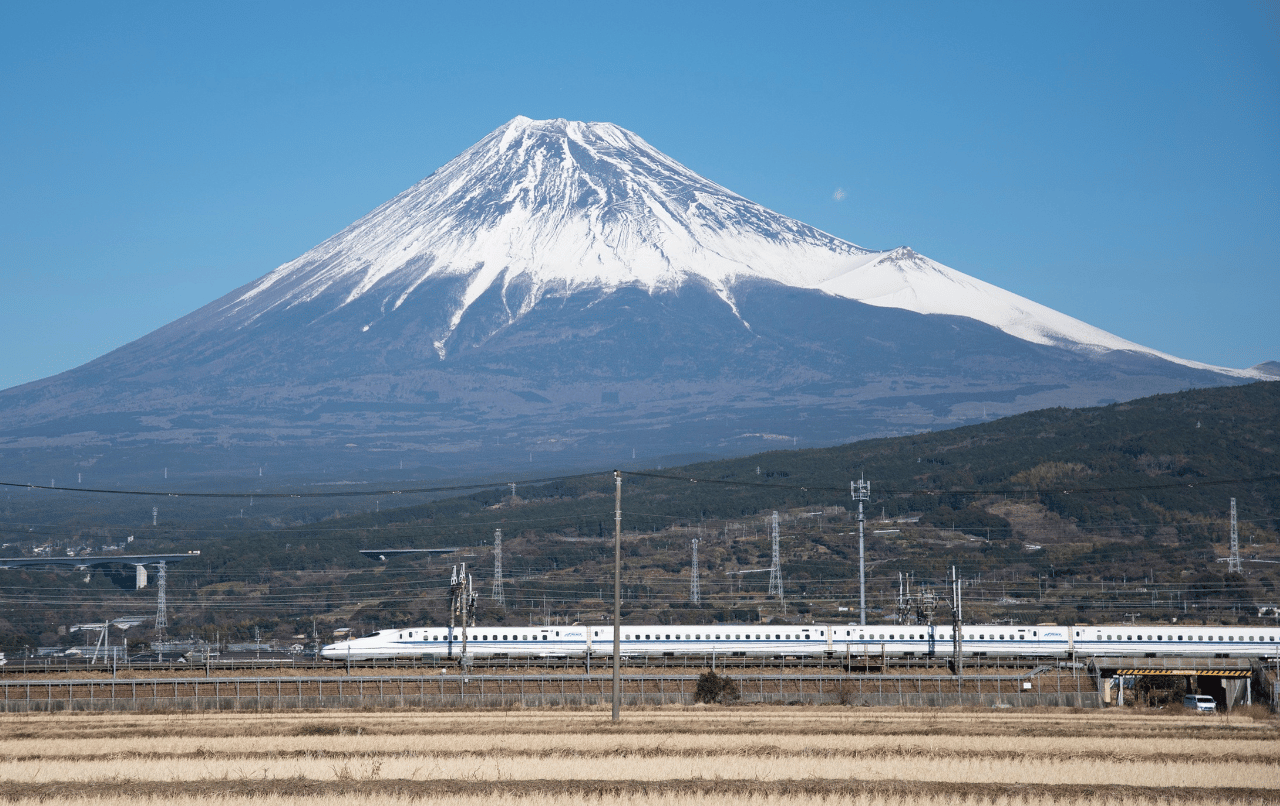
Traveling from Tokyo to Osaka by train is one of Japan’s most popular long-distance journeys, and the Tokaido Shinkansen makes the trip fast and straightforward.
Shinkansen trains run directly from Tokyo Station and Shinagawa Station to Shin-Osaka Station, with the fastest Nozomi services completing the journey in about 2 hours 20 minutes.
For most travelers, the main choice is between the faster and more frequent Nozomi, the slightly slower Hikari, or the all-stations Kodama.
Tokyo to Osaka by Train at a Glance
| Train | Typical Travel Time | Stops | Japan Rail Pass |
|---|---|---|---|
| Nozomi | About 2 hr 20–30 min | Fewest | Extra Nozomi ticket required |
| Hikari | About 2 hr 50–55 min | More than Nozomi | Covered |
| Kodama | About 4 hr | Stops at every station | Covered |
All three services travel on the Tokaido Shinkansen. From Tokyo, Nozomi and Hikari provide direct service to Shin-Osaka without requiring a transfer.
Once you arrive at Shin-Osaka, transfer to a local JR train or the Osaka Metro depending on where you are staying.
Nozomi, Hikari or Kodama: Which Train Should You Take?
Nozomi: Best for Most Travelers Buying Individual Tickets
Nozomi is the fastest Tokaido Shinkansen service between Tokyo and Shin-Osaka.
The fastest trains complete the journey in about 2 hours 20 minutes, and Nozomi services operate very frequently throughout the day.
If you are buying regular Shinkansen tickets rather than using a nationwide Japan Rail Pass, Nozomi is usually the simplest choice.
Hikari: Best for Japan Rail Pass Holders
Hikari trains make more stops and typically take around 2 hours 50 minutes from Tokyo to Shin-Osaka.
The major advantage is that Hikari is covered under the normal conditions of the nationwide Japan Rail Pass without requiring the additional Nozomi ticket.
For most JR Pass holders traveling between Tokyo and Osaka, Hikari offers the best balance between speed and avoiding an additional charge.
Kodama: Usually Too Slow for the Full Tokyo–Osaka Journey
Kodama stops at every Tokaido Shinkansen station and takes roughly four hours between Tokyo and Shin-Osaka.
It is covered by the Japan Rail Pass, but there is normally little reason to use Kodama for the entire Tokyo-to-Osaka trip unless a special discounted ticket or your particular schedule makes it worthwhile.
Where to Board the Shinkansen in Tokyo
You can board the Tokaido Shinkansen for Osaka at either Tokyo Station or Shinagawa Station.
Tokyo Station
Tokyo Station is usually the most convenient choice if you are staying around Marunouchi, Ginza, Ueno, Asakusa or other parts of central and eastern Tokyo.
It is the starting station for Tokaido Shinkansen services, which also gives you a little more time to find your platform, board and settle into your seat before departure.
Shinagawa Station
Shinagawa can be much more convenient if you are staying in southern or western Tokyo, including areas such as Shinagawa, Shibuya or parts of Shinjuku.
Nozomi, Hikari and Kodama services stop at Shinagawa, so there is normally no need to travel across Tokyo just to board at Tokyo Station.
Tokyo to Osaka Shinkansen Ticket Prices
A regular one-way adult ticket from Tokyo to Shin-Osaka costs roughly ¥14,000–¥15,000, depending on the train, seat type, booking method and travel date.
| Ticket Type | Regular-Season One-Way Fare |
|---|---|
| Nozomi Ordinary Reserved Seat | About ¥14,720 |
| Hikari / Kodama Ordinary Reserved Seat | About ¥14,400 |
| Ordinary Non-Reserved Seat | About ¥13,870 |
Reserved-seat fares can change slightly during off-peak, peak and especially busy travel periods, so check the final price when you book.
How to Buy Shinkansen Tickets
You have several straightforward options:
- SmartEX: The official online reservation service for the Tokaido, Sanyo and Kyushu Shinkansen.
- JR ticket machines: Available at Tokyo, Shinagawa and other major JR stations.
- JR ticket offices: Useful if you prefer assistance from station staff.
SmartEX is particularly useful if you want to choose your train and seat before travel. It also offers several advance-purchase fares, although availability and conditions vary.
Can You Use the Japan Rail Pass from Tokyo to Osaka?
Yes. The nationwide Japan Rail Pass can be used between Tokyo and Shin-Osaka on Hikari and Kodama Shinkansen services.
For most JR Pass holders, Hikari is the better option because it is considerably faster than Kodama while still being covered under the normal pass conditions.
What About Nozomi?
Nozomi is not included for unlimited travel under the standard Japan Rail Pass conditions.
However, JR Pass holders can use Nozomi by purchasing a separate [ONLY WITH JAPAN RAIL PASS] NOZOMI MIZUHO Ticket.
For Tokyo or Shinagawa to Shin-Osaka, the current adult supplement is ¥4,960 one way.
If Tokyo–Osaka is your main long-distance round trip, do not assume that buying a nationwide JR Pass will save money. Compare the cost of your complete itinerary first.
See our complete Japan Rail Pass guide for current prices, coverage and advice on deciding whether the pass makes sense for your trip.
Should You Reserve a Seat from Tokyo to Osaka?
You can travel between Tokyo and Shin-Osaka using either reserved or non-reserved seating on many Tokaido Shinkansen services, but I generally recommend reserving a seat for this journey.
A reservation is especially useful if you are traveling as a couple or family, carrying large luggage, traveling during a busy period, or hoping to sit on the Mt. Fuji side of the train.
During designated peak travel periods, Nozomi services may operate with all seats reserved, so booking ahead becomes particularly important.
Which Side of the Shinkansen Has the Best Mt. Fuji View?
When traveling from Tokyo toward Osaka, Mt. Fuji is on the right-hand side of the train.
- Ordinary Car: Choose Seat E for the Mt. Fuji-side window.
- Green Car: Choose Seat D for the Mt. Fuji-side window.
On a clear day, you may get an excellent view as the Shinkansen travels through Shizuoka Prefecture.
Traveling from Tokyo to Osaka With Large Luggage
The Tokaido Shinkansen has special rules for oversized baggage, so measure very large suitcases before traveling.
If the total of your suitcase’s length + width + height is 160 cm or less, you normally do not need a special baggage reservation.
If the total dimensions are 161–250 cm, you must reserve a seat with an oversized baggage area or another designated oversized-baggage space.
| Baggage Size | Reservation Required? |
|---|---|
| 160 cm or less total dimensions | No, normally not |
| 161–250 cm total dimensions | Yes |
| Over 250 cm total dimensions | Cannot be brought onboard |
There is no extra charge when you correctly reserve an oversized-baggage space. If you bring oversized baggage onboard without the required reservation, JR may charge a ¥1,000 baggage fee and direct you to another storage location.
Arriving at Shin-Osaka Station
Tokaido Shinkansen trains from Tokyo arrive at Shin-Osaka Station, not Osaka Station.
Shin-Osaka is Osaka’s main Shinkansen station and a major transfer point for JR conventional trains, the Osaka Metro Midosuji Line and onward Shinkansen services toward western Japan.
After leaving the Shinkansen area, your best connection depends on where you are staying.
| Destination | From Shin-Osaka | Approx. Travel Time |
|---|---|---|
| Osaka Station / Umeda | JR Kyoto Line | About 5 min |
| Namba | Osaka Metro Midosuji Line | About 20 min |
| Dotonbori | Midosuji Line to Namba + walk | About 25–30 min |
Getting From Shin-Osaka to Umeda, Namba and Dotonbori
Shin-Osaka to Umeda
If you are staying around Umeda or Osaka Station, transfer from the Shinkansen to a JR conventional train toward Osaka Station.
The ride itself takes only around five minutes, making Umeda one of the easiest areas to reach after arriving from Tokyo.
Shin-Osaka to Namba
For Namba, take the Osaka Metro Midosuji Line directly from Shin-Osaka Station.
No transfer is required, and the journey takes about 20 minutes.
Shin-Osaka to Dotonbori
Dotonbori is easiest to reach by taking the Midosuji Line from Shin-Osaka to Namba and then walking.
Popular parts of Dotonbori are roughly five minutes on foot from Namba Station, depending on the exit you use and your exact destination.
See our Dotonbori guide for access, sightseeing and food recommendations.
Shinkansen vs Flying or Taking a Bus from Tokyo to Osaka
There are several ways to travel between Tokyo and Osaka, but for most visitors the Shinkansen offers the best combination of speed, frequency and city-center convenience.
Shinkansen
The fastest Nozomi trains take about 2 hours 20–30 minutes from Tokyo to Shin-Osaka.
You can board in central Tokyo at Tokyo or Shinagawa Station and arrive directly at Osaka’s main Shinkansen gateway without airport check-in or security procedures.
Flying
Flights operate frequently between Tokyo and Osaka, particularly between Haneda Airport and Osaka International Airport (Itami).
The flight itself is much shorter than the train journey, but you also need to allow time to reach the airport, check in, clear security and travel from the Osaka airport into the city.
Flying can make sense if you are already connecting through an airport, find a particularly attractive airfare, or your origin and destination make the airports convenient.
Highway and Overnight Bus
Highway buses are usually the budget alternative to the Shinkansen.
Many Tokyo–Osaka services operate overnight, allowing you to leave Tokyo in the evening and arrive in Osaka the following morning.
An overnight bus can potentially save the cost of one night’s accommodation, but the journey is much longer and comfort varies considerably depending on the type of seat and bus.
Example Tokyo to Osaka Shinkansen Journey
A typical Tokyo-to-Osaka journey is very straightforward.
- Arrive at Tokyo Station or Shinagawa Station with enough time to find the Tokaido Shinkansen platforms.
- Board a Nozomi, Hikari or Kodama train bound toward Shin-Osaka or farther west.
- Store smaller luggage on the overhead rack or use your reserved oversized-baggage space if required.
- Look for Mt. Fuji on the right-hand side of the train as you travel through Shizuoka Prefecture.
- Arrive at Shin-Osaka Station.
- Transfer to a local JR train for Osaka/Umeda or the Osaka Metro Midosuji Line for Namba and Dotonbori.
If you take a Nozomi, the Shinkansen portion typically takes about 2 hours 20–30 minutes. Hikari takes a little longer but is usually the most practical choice for nationwide Japan Rail Pass holders.
Where to Travel After Osaka by Train
Osaka is one of the best bases in Japan for continuing your trip by rail. Kyoto, Nara and Himeji are all easy day trips, while Hiroshima and western Japan are natural onward destinations.
Osaka to Kyoto
Kyoto is very easy to reach from central Osaka by JR conventional trains. It works well as either a day trip or the next overnight stop on a wider Japan itinerary.
Osaka to Nara
Nara is less than an hour from Osaka and is one of the easiest cultural day trips from the city.
If you are staying around Namba or Dotonbori, Kintetsu trains to Kintetsu-Nara are particularly convenient. From the Osaka Station/Umeda area, direct JR Yamatoji Rapid services are usually easier.
Read our Nara day trip by train guide.
Osaka to Himeji
Himeji is an excellent day trip for travelers interested in Japanese castles. From Shin-Osaka, the Sanyo Shinkansen can reach Himeji in about 30 minutes, while JR conventional trains from Osaka Station take longer but can be useful with certain regional passes.
Read our Himeji Castle by train guide.
Osaka to Hiroshima
If you are continuing west, Hiroshima is a natural next stop. The Sanyo Shinkansen runs directly from Shin-Osaka to Hiroshima, making the journey easy to combine with Himeji, Okayama or Miyajima.
See our Kansai-Hiroshima Area Pass guide if Hiroshima and Miyajima are major parts of your itinerary.
Tokyo to Osaka by Train FAQ
How long does the Shinkansen take from Tokyo to Osaka?
The fastest Nozomi services take about 2 hours 20–30 minutes from Tokyo to Shin-Osaka. Hikari usually takes around 2 hours 50–55 minutes, while Kodama takes roughly four hours.
Is there a direct train from Tokyo to Osaka?
Yes. Nozomi and Hikari Shinkansen services run directly from Tokyo and Shinagawa to Shin-Osaka without requiring a transfer.
Does the Shinkansen arrive at Osaka Station?
No. The Shinkansen arrives at Shin-Osaka Station. From there, transfer to a local JR train for Osaka Station/Umeda or the Osaka Metro Midosuji Line for Namba and Dotonbori.
Can I use the Japan Rail Pass from Tokyo to Osaka?
Yes. Hikari and Kodama are covered under the normal nationwide Japan Rail Pass conditions. Nozomi requires a separate JR Pass-holder Nozomi ticket.
Which side should I sit on to see Mt. Fuji?
When traveling from Tokyo toward Osaka, choose the right-hand side. In an Ordinary Car, Seat E is the usual Mt. Fuji-side window seat.
Should I reserve a seat?
I recommend reserving a seat if your departure time is fixed, you are traveling with family or large luggage, or you want a particular Mt. Fuji-side window seat.
Is Tokyo to Osaka possible as a day trip?
It is technically possible, but I would not normally recommend it. Even by Nozomi, you will spend close to five hours on long-distance trains before adding local travel within Osaka.
Is the Shinkansen better than flying?
For most visitors traveling between central Tokyo and central Osaka, the Shinkansen is usually more convenient because there is no airport check-in or airport transfer at either end. Flying can still make sense when your wider itinerary already involves airport travel.
Related Train Travel Japan Guides
Final Thoughts: Tokyo to Osaka by Shinkansen
For most travelers, the Shinkansen is the easiest way to travel from Tokyo to Osaka. It combines frequent departures, fast journey times and convenient city-center stations without the extra airport procedures required when flying.
If you are buying individual tickets, Nozomi is usually the most convenient option. If you already have a nationwide Japan Rail Pass and do not want to pay the additional Nozomi fee, Hikari is generally the better choice.
The main thing to remember is that Shinkansen trains arrive at Shin-Osaka Station, not Osaka Station. From Shin-Osaka, allow a little extra time to continue to Umeda, Namba, Dotonbori or your hotel.
Once you reach Osaka, the city also makes an excellent rail base for exploring Kyoto, Nara, Himeji and destinations farther west.
Before You Buy a JR Pass
Compare the cost of your planned train journeys with the current JR Pass price. Depending on your route, individual tickets or a regional pass may offer better value.
Check Current JR Pass PricesAbout Train Travel Japan
Train Travel Japan is written from firsthand experience traveling throughout Japan by rail. I am a Japanese native based in Canada and have traveled to all 47 prefectures of Japan over more than 30 years.
My goal is to make Japan train travel easier to understand, especially for international visitors planning JR Pass trips, regional rail journeys and independent itineraries.