
Yamadera Temple is one of northern Japan’s most memorable temple experiences and an easy train trip from either Yamagata or Sendai.
Its official name is Risshakuji Temple, but almost everyone knows it simply as Yamadera, meaning “mountain temple.” The temple buildings rise through a forested mountainside above the small town of Yamadera in Yamagata Prefecture.
The experience is unlike visiting a temple in central Kyoto or Tokyo. To reach the upper temple precincts, you climb a long stone staircase through cedar forest, passing small halls, statues, gates, and historic monuments along the way.
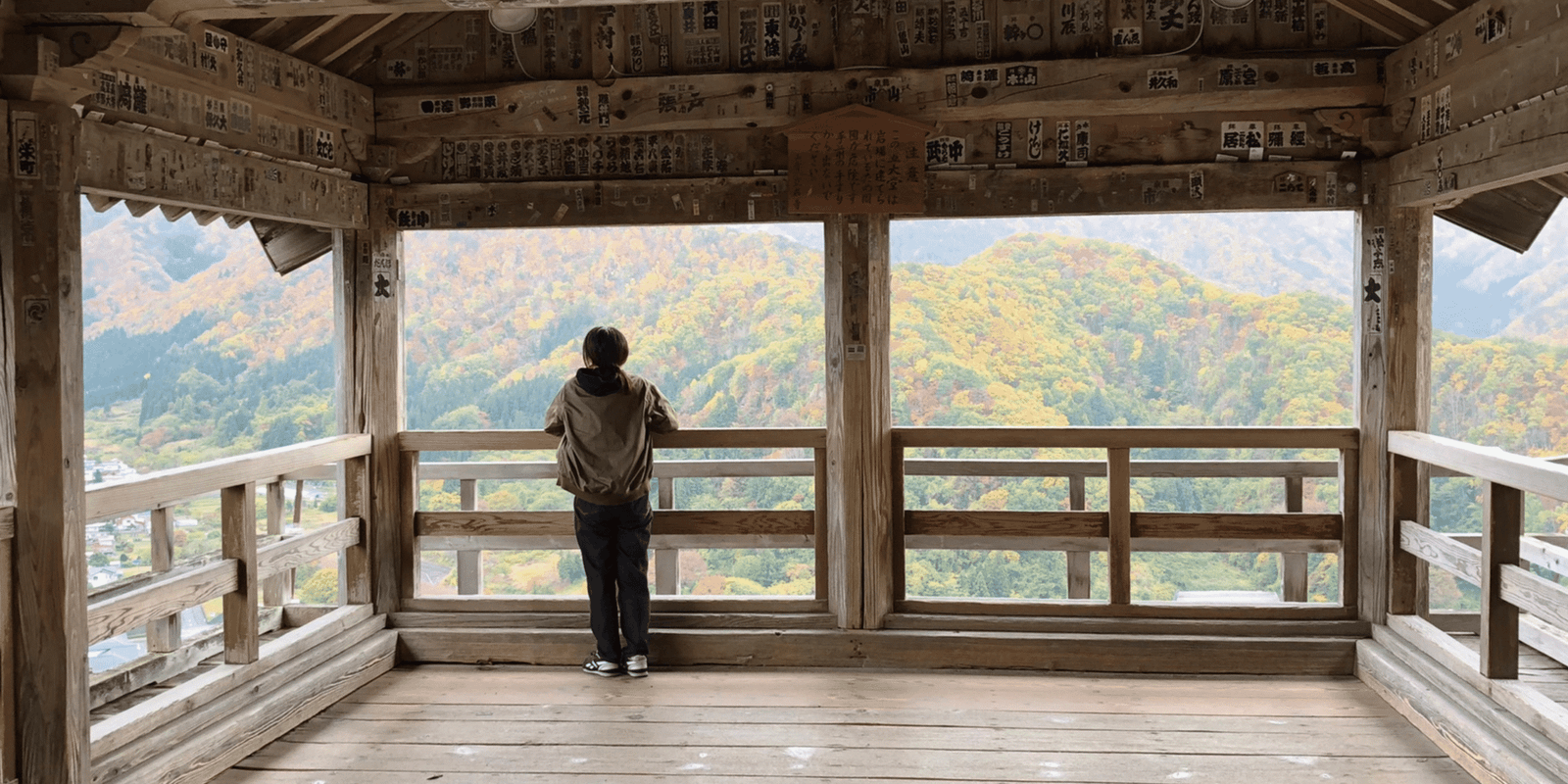
At the top, the famous Godaido observation hall looks out across the Tachiya River valley and surrounding mountains, providing one of the most memorable temple views in the Tohoku region.
Why Is Yamadera Worth Visiting?
A Temple Built Into the Mountainside
Yamadera is not a single temple building. The complex spreads across the slopes of Mount Hoju, with halls, gates, monuments, and viewpoints appearing gradually as you climb.
The journey up the mountain is as important as the destination itself, especially through the atmospheric cedar forest.
1,015 Stone Steps to Okunoin
The full route to Okunoin, the inner sanctuary near the top of the complex, involves approximately 1,015 stone steps.
The climb is physically demanding enough to feel rewarding, but most reasonably fit visitors can complete it by taking their time and stopping along the way.
Spectacular Views from Godaido
The highlight for many visitors is Godaido Hall, a wooden observation pavilion projecting from the mountainside.
From here, you can look across the valley, railway, village, forests, and surrounding mountains. The scenery changes dramatically with the seasons.
More Than 1,100 Years of History
Risshakuji was founded in 860 and has been an important center of Tendai Buddhism for more than a millennium.
At the foot of the mountain, Konponchudo Hall is associated with an “eternal light” traditionally said to have burned since the temple’s founding.
Connected with the Poet Matsuo Basho
Yamadera is also closely associated with Matsuo Basho, one of Japan’s most famous haiku poets.
Basho visited Yamadera during his journey through northern Japan and composed one of his best-known haiku here, inspired by the extraordinary stillness of the mountain temple.
Easy to Reach by Train
Despite its dramatic mountain setting, Yamadera is surprisingly convenient for train travelers.
JR Yamadera Station is only about a 7-minute walk from the lower temple area. This makes Yamadera an excellent half-day excursion from Yamagata or a day trip from Sendai.
Yamadera at a Glance
| Planning Detail | What to Know |
|---|---|
| Official Name | Risshakuji Temple |
| Prefecture | Yamagata |
| Nearest Station | JR Yamadera Station |
| Station to Temple | About 7 minutes on foot |
| Steps to Okunoin | About 1,015 |
| Typical Uphill Climb | About 30–40 minutes |
| Recommended Visit | About 2–3 hours |
Train Travel Japan Tip: Don’t think of Yamadera as simply a viewpoint at the top of a staircase. The cedar forest, stone steps, temple buildings, and changing views along the climb are what make the experience special. Give yourself enough time to stop and enjoy the route rather than racing to the summit.
How to Get to Yamadera by Train
Yamadera is served by JR Yamadera Station on the JR Senzan Line, which connects Sendai and Yamagata.
This makes the temple easy to visit without a car. From the station, it is only about a 7-minute walk to the lower temple area.
| Starting Point | Recommended Route | Approx. Time |
|---|---|---|
| Yamagata | JR Senzan Line | About 20 min |
| Sendai | JR Senzan Line | About 50 min |
| Tokyo via Sendai | Tohoku Shinkansen + JR Senzan Line | About 3 hrs total |
| Tokyo via Yamagata | Yamagata Shinkansen + JR Senzan Line | About 3 hrs total |
From Yamagata to Yamadera
From Yamagata Station, take the JR Senzan Line toward Sendai and get off at Yamadera Station.
The journey takes approximately 20 minutes, making Yamadera one of the easiest half-day trips from Yamagata City.
From Sendai to Yamadera
From Sendai Station, take the JR Senzan Line toward Yamagata and get off at Yamadera Station.
The journey takes approximately 50 minutes. No Shinkansen is required between Sendai and Yamadera.
This makes Yamadera very practical as a day trip even if you are staying in Sendai rather than Yamagata.
Important: JR Senzan Line trains are much less frequent than trains in Tokyo, Osaka, or Kyoto. Check both your outbound and return train times before starting the temple climb, especially if you have an onward connection later in the day.
From Tokyo to Yamadera
There are two useful rail approaches from Tokyo: via Sendai or via Yamagata.
Option 1: Tokyo → Sendai → Yamadera
- Take the Tohoku Shinkansen from Tokyo to Sendai.
- Transfer at Sendai Station to the JR Senzan Line.
- Take the train directly to Yamadera Station.
This is often the most convenient option if Sendai is already part of your Tohoku itinerary.
Option 2: Tokyo → Yamagata → Yamadera
- Take the Yamagata Shinkansen from Tokyo to Yamagata Station.
- Transfer to the JR Senzan Line toward Sendai.
- Get off at Yamadera Station.
This route makes sense if you are staying overnight in Yamagata or combining Yamadera with other destinations in Yamagata Prefecture.
Train Travel Japan Tip: If you are already traveling through Tohoku, do not think of Yamadera as requiring a separate overnight stay. It fits naturally between Sendai and Yamagata because the Senzan Line connects all three directly.
Does the Japan Rail Pass Cover Yamadera?
Yes. The Japan Rail Pass covers the JR Senzan Line to Yamadera as well as eligible JR Shinkansen services used to reach Sendai or Yamagata.
Several JR East regional passes may also cover the journey, depending on your itinerary and the pass you are using.
JR Pass tip: You do not need a rail pass just for Yamadera. If you are paying regular fares, the short Senzan Line trip from Yamagata or Sendai is straightforward. A pass becomes more useful when Yamadera is part of a longer Tohoku rail itinerary.
From Yamadera Station to the Temple
After leaving JR Yamadera Station, walk toward the temple district across the small town.
The lower temple area is approximately 7 minutes on foot from the station. The route is straightforward, and the mountain temple is visible above the town as you approach.
Before you start climbing: Check your return train time at Yamadera Station. After descending the mountain, it is much nicer to have time for a drink, snack, or rest rather than having to rush straight to the platform.
Yamadera Admission and Opening Hours
The lower temple area around Konponchudo can be visited before entering the main mountain path, but access through the Sanmon Gate and up toward the upper temple precincts requires an admission fee.
| Visitor | Current Admission |
|---|---|
| Adult / Junior High School Age and Older | ¥500 |
| Child Age 4 and Older | ¥200 |
Payment tip: The official temple currently asks visitors to pay the mountain-entry fee in cash, so carry some Japanese yen rather than relying entirely on cards or IC payment.
Yamadera Opening Hours
Access to the mountainside changes between the warmer and colder parts of the year.
| Season | Gate Opens | Last Entry | Exit Mountainside By |
|---|---|---|---|
| April–November | 8:00 AM | Before 4:00 PM | 5:00 PM |
| December–March | 8:30 AM | Before 3:00 PM | 4:00 PM |
Opening and access conditions can change because of snow, ice, severe weather, or safety concerns, particularly during winter.
Train Travel Japan Tip: Do not plan to arrive close to the final entry time. Yamadera is much more enjoyable when you can climb slowly, stop at the temple buildings and viewpoints, and descend without worrying about the gate closing.
How Long Does It Take to Climb Yamadera?
The climb from the lower temple area toward the upper precincts usually takes approximately 30–40 minutes for visitors walking at a steady pace.
However, that is only the uphill walking time. You will almost certainly want to stop for photographs, temple buildings, the cedar forest, Godaido, and views across the valley.
| Time Available | What to Expect |
|---|---|
| About 1.5 hours | Fast climb and descent with limited stops |
| About 2 hours | Comfortable climb, major temple sights, Godaido, and descent |
| 2.5–3 hours | Relaxed visit with photos, breaks, lower temples, and time in town |
My recommendation: Allow around 2–3 hours from arrival at Yamadera to returning to the station. This gives you enough time to enjoy the mountain rather than treating the 1,015 steps simply as a physical challenge.
Is There a Ropeway or Easier Way Up?
No. There is no ropeway, cable car, elevator, or escalator to the upper temple precincts.
Visitors who want to reach Godaido and Okunoin must climb the stone staircase on foot.
Handrails are available along the route, but the path still involves more than 1,000 steps and can become slippery in rain, snow, or ice.
Winter warning: Yamadera remains accessible in winter when conditions permit, but the stone steps can become extremely slippery. Wear proper winter footwear with strong grip and consider snow spikes when conditions require them.
What to See on the Yamadera Climb
Yamadera is best experienced as a journey rather than a race to the top. Important temple buildings and historical sites appear gradually as you climb through the forest.
Take your time, especially around the upper precincts. Godaido has the most famous view, but several other stops are an important part of understanding Yamadera’s history.
1. Konponchudo — The Main Hall
Begin with Konponchudo, the main hall near the foot of the mountain.
The hall is designated an Important Cultural Property and is especially known for its historic wooden construction and the eternal Buddhist flame associated with the temple’s long religious history.
Do not rush past this lower area simply because the famous viewpoint is farther up the mountain.
2. Matsuo Basho and Yamadera
Near the lower temple area you will find statues of Matsuo Basho and his traveling companion Sora.
Basho visited Yamadera during his famous journey through northern Japan and wrote one of his best-known haiku here, inspired by the profound stillness of the mountain.
Farther up the stone path, look for Semizuka, a monument connected with that poem.
3. Sanmon Gate — Where the Main Climb Begins
The Sanmon Gate marks the entrance to the main mountainside route toward the upper temple precincts.
After passing through the gate, the atmosphere changes quickly as the stone staircase climbs into the cedar forest.
From here, the route is almost entirely steps, so settle into a comfortable pace rather than trying to climb too quickly.
Train Travel Japan Tip: The first part of the climb is a good place to find your pace. The 1,015 steps sound intimidating, but the route is broken naturally by temple buildings, monuments, and places to stop.
4. Semizuka — Basho’s Haiku Monument
About halfway between Sanmon and Niomon Gate, you will encounter Semizuka.
The monument commemorates the famous haiku Basho composed at Yamadera and is one of the most historically meaningful stops on the climb.
The surrounding forest also helps explain why silence and the sound of cicadas became such an enduring part of Yamadera’s identity.
5. Niomon Gate
Continue climbing until you reach the elegant Niomon Gate.
The present gate was rebuilt in 1848 and marks your arrival near the upper temple precincts.
Passing through Niomon is one of the most atmospheric moments of the climb as the temple buildings begin to appear among the cliffs and trees.
6. Kaizando and Nokyodo
Near the upper section of Yamadera, look for Kaizando, a hall dedicated to Jikaku Daishi Ennin, the monk traditionally credited with founding Risshakuji.
Beside it, the small red Nokyodo sits dramatically on the rock face and is one of Yamadera’s most recognizable buildings.
Nokyodo is used to store copied Buddhist sutras and is one of the oldest structures within the temple complex.
7. Godaido — Yamadera’s Famous Viewpoint
Godaido is the sightseeing highlight for many visitors. The wooden hall projects outward from the cliff and overlooks the Yamadera valley.
From the open pavilion, you can see the town, railway, Tachiya River valley, fields, forests, and surrounding mountains below.
The view is particularly beautiful during autumn foliage and winter, but every season gives Yamadera a different character.
Photo tip: Spend a few minutes at Godaido rather than taking one photograph and immediately leaving. Trains occasionally pass through the valley below, creating a particularly fitting view for rail travelers.
8. Okunoin — The Inner Sanctuary
Continue to Okunoin, the inner sanctuary in the upper part of the temple complex.
Okunoin represents the spiritual destination of the traditional Yamadera climb and is associated with Jikaku Daishi Ennin.
Reaching this area means you have completed essentially the full 1,015-step ascent.
Don’t Rush Straight Back Down
After reaching the upper precincts, take a short break before beginning the descent.
Walking downhill is physically easier, but stone steps can be harder on your knees and may become slippery when wet.
My recommendation: Make sure you visit both Godaido and Okunoin. Godaido provides the famous panoramic view, while Okunoin completes the spiritual journey through the temple complex.
How Difficult Is the Yamadera Climb?
The famous 1,015 stone steps make Yamadera sound intimidating, but you do not need to be an experienced hiker to visit.
For most visitors with normal mobility, the climb is manageable if you take your time. The bigger challenge is the continuous staircase, particularly in hot weather, rain, snow, or icy winter conditions.
How Steep Are the Steps?
The route climbs steadily through the mountain, but it is not one uninterrupted flight of stairs.
Temple buildings, monuments, gates, and viewpoints naturally divide the climb into shorter sections, giving you plenty of opportunities to stop and rest.
Handrails are available along the stone path, which are particularly useful when descending.
What Shoes Should You Wear?
Wear comfortable walking shoes or sneakers with good grip. Hiking boots are not essential in normal dry conditions, but sandals, heels, and slippery footwear are poor choices for more than 1,000 stone steps.
After rain, the stone surfaces can become slippery, so footwear with a secure sole becomes even more important.
Train Travel Japan Tip: The descent is often harder on your legs than the climb. Walk slowly, use the handrails where helpful, and do not rush downhill simply because you have a train to catch.
Can Children Climb Yamadera?
Many school-age children can manage Yamadera, but the experience depends on how comfortable they are with long staircases and sustained walking.
Build in plenty of breaks and carry water, particularly during warmer months. Turning the climb into a series of short goals — the next gate, temple building, or viewpoint — can make it much easier than focusing on the total number of steps.
What About Babies and Strollers?
A stroller is not practical on the mountain path because the route consists almost entirely of stone steps.
Strollers can be used around the lower Yamadera shopping and town area, but not for the climb toward Godaido and Okunoin.
Families carrying a baby should also remember that the climb and descent involve more than 1,000 uneven steps, so allow considerably more time and travel as lightly as possible.
What About Older Travelers?
Age alone does not determine whether you can climb Yamadera. The important question is whether you are comfortable walking up and down a long series of stone steps.
If you normally manage stairs comfortably, taking frequent breaks and climbing at a relaxed pace can make the route much easier.
There is no requirement to reach the very top if the climb becomes uncomfortable. The lower temple area and forest approach are still worthwhile even if you decide not to complete all 1,015 steps.
Accessibility note: There is no elevator, ropeway, escalator, or barrier-free route to the upper temple precincts. The historic stone staircase must be climbed on foot.
Climbing Yamadera in Summer
Summer can be hot and humid, even though Yamadera is in northern Japan. Climbing more than 1,000 steps generates plenty of heat, so carry water and take regular breaks.
If you are visiting on a hot day, starting earlier in the morning is generally more comfortable than beginning the climb around midday.
Bring Water
Do not assume that you can buy a drink whenever you want on the mountainside. Bring enough water with you before entering the main climbing route.
Climbing Yamadera in Rain
Yamadera can still be atmospheric in light rain, but wet stone steps require extra care.
Wear shoes with good grip, use the handrails, and allow more time for the descent. A lightweight rain jacket is generally easier than trying to manage a large umbrella while climbing narrow sections of the staircase.
Climbing Yamadera in Winter
Winter is one of the most beautiful times to see Yamadera, but it is also the most demanding season for the climb.
Snow and ice can cover the stone staircase, making the route significantly more slippery than during the rest of the year.
For a winter visit:
- Wear waterproof winter footwear with strong grip.
- Consider snow spikes when conditions require them.
- Wear warm layers suitable for mountain conditions.
- Allow considerably more time for both the ascent and descent.
- Check current weather and temple access conditions before leaving.
Important: Winter opening hours are shorter, and severe snow or weather conditions can affect access to the mountainside. Do not assume that the full climb will always be available simply because the temple is normally open year-round.
Are There Restrooms on the Mountain?
Restroom availability changes by season. During warmer months, facilities are available at several points around the lower and upper temple areas.
In winter, fewer restrooms operate on the mountainside, so it is a good idea to use the facilities near the lower temple area before beginning the climb.
How to Pace the 1,015 Steps
- Start slowly rather than using too much energy on the first section.
- Pause at the temple buildings and monuments along the way.
- Drink water before you feel especially thirsty.
- Spend time at Godaido and the upper precincts before descending.
- Walk downhill carefully instead of rushing for your return train.
My recommendation: Forget about the number 1,015 once you start climbing. Treat Yamadera as a sequence of short walks between temples, gates, forest scenery, and viewpoints. The experience feels much easier — and much more rewarding — that way.
Best Time to Visit Yamadera
Yamadera can be visited throughout the year, but each season creates a very different experience on the mountain.
For most first-time visitors, I recommend autumn for the combination of comfortable climbing weather and beautiful mountain scenery.
Spring — Fresh Greenery and Comfortable Walking
Spring is an excellent time to climb Yamadera. As the snow disappears, the cedar forest and surrounding mountains gradually return to vivid green.
Temperatures are generally more comfortable for climbing than in midsummer, although mornings can still be cool.
Spring is a good choice if you prefer green mountain scenery and want to avoid the larger autumn foliage crowds.
Summer — Deep Green Forest and Basho’s Cicadas
Summer brings dense green forest to Yamadera and creates the atmosphere most closely associated with Matsuo Basho’s famous visit to the mountain.
Cicadas fill the forest with sound, making summer an especially atmospheric season for visitors interested in Yamadera’s connection with Basho.
The main disadvantage is the heat and humidity. Climbing more than 1,000 steps can feel considerably harder on a hot summer day.
Summer tip: Start earlier in the morning, carry water, and take regular breaks rather than attempting the climb quickly during the hottest part of the day.
Autumn — Best Overall for a First Visit
Autumn is arguably Yamadera’s most beautiful season. The mountains surrounding the temple turn shades of red, orange, and yellow, creating spectacular views from Godaido.
The best autumn colors are generally seen from late October to mid-November, although the exact timing varies each year depending on temperatures and weather.
Cooler temperatures also make the 1,015-step climb much more comfortable than during midsummer.
Expect crowds: Autumn foliage weekends can be particularly busy. If possible, visit on a weekday and arrive earlier in the morning.
Winter — Beautiful but More Challenging
Snow transforms Yamadera into one of the most atmospheric winter landscapes in northern Japan.
The dark temple buildings, cedar forest, cliffs, and snow-covered mountains can create scenery that looks almost like a traditional Japanese ink painting.
However, winter is also the most difficult season for the climb. Snow and ice can cover the stone staircase, daylight hours are shorter, and mountainside opening hours are reduced.
Wear proper winter footwear with excellent grip and allow considerably more time for both the ascent and descent.
Winter warning: Weather conditions can affect mountainside access and closing times. Check current conditions shortly before traveling rather than relying only on your original plan.
Which Season Should You Choose?
| Season | Best For | Main Consideration |
|---|---|---|
| Spring | Fresh greenery and comfortable climbing | Cool mornings and variable weather |
| Summer | Deep green forest and Basho atmosphere | Heat and humidity |
| Autumn | Foliage and comfortable temperatures | Peak-season crowds |
| Winter | Snow scenery and quiet atmosphere | Ice, snow, shorter hours, and harder climbing |
My Favorite Time for Yamadera
If your travel dates are flexible, I would choose late October or early November.
The cooler weather makes the climb comfortable, and autumn colors across the valley make the view from Godaido especially impressive.
If avoiding crowds matters more than autumn foliage, spring is an excellent alternative.
Train Travel Japan Tip: Whatever season you choose, check the weather before leaving Sendai or Yamagata. Yamadera is an outdoor mountain experience, so conditions matter much more here than they do for a typical city temple visit.
Yamadera as a Half-Day Trip or Rail Stopover
Yamadera works particularly well as a half-day trip from Yamagata or Sendai.
Even better, because JR Yamadera Station lies directly on the Senzan Line between the two cities, you can visit the temple while traveling from Sendai to Yamagata or vice versa.
Half-Day Trip from Yamagata
Yamagata is the easiest base for Yamadera because the train journey takes only about 20–25 minutes.
Allow roughly half a day including transportation, the temple climb, sightseeing, and a little time around Yamadera Station.
Half-Day Trip from Sendai
Yamadera is also an easy excursion from Sendai. Depending on the Senzan Line service, the journey generally takes around 50–70 minutes.
Leave Sendai in the morning, spend around 2–3 hours at Yamadera, then return during the afternoon.
Important: Senzan Line trains do not run as frequently as urban commuter trains. Check your outbound and return departures before starting the 1,015-step climb.
Best Option: Stop at Yamadera Between Sendai and Yamagata
If both Sendai and Yamagata are part of your itinerary, visiting Yamadera while traveling between them is often the most efficient option.
- Check out of your hotel in Sendai or Yamagata.
- Take the JR Senzan Line to Yamadera Station.
- Store or manage your luggage near the station if necessary.
- Walk about 7 minutes to the lower temple area.
- Spend around 2–3 hours exploring Yamadera.
- Return to Yamadera Station.
- Continue on the Senzan Line to your next city.
This saves backtracking and fits Yamadera naturally into a broader Tohoku rail journey.
Train Travel Japan Tip: If you are moving between Sendai and Yamagata anyway, I would normally choose the stopover option rather than making a separate return trip on another day.
Sample Morning Trip from Yamagata
-
8:00–9:00 AM — Leave Yamagata
Take a morning JR Senzan Line train to Yamadera. -
Morning — Walk to Risshakuji
Allow about 7 minutes from the station. -
Morning — Climb Yamadera
Visit Konponchudo, Niomon, Godaido, and Okunoin. -
Late Morning — Descend
Return carefully down the stone staircase. -
Before Leaving — Take a Break
Stop for a drink, snack, or lunch near the station if time allows. -
Early Afternoon — Return to Yamagata
Take the Senzan Line back to Yamagata Station.
Sample Day Trip from Sendai
- Leave Sendai in the morning on the JR Senzan Line.
- Arrive at Yamadera Station and walk to the temple.
- Allow 2–3 hours for the climb and sightseeing.
- Have lunch or a snack near the station.
- Take an afternoon Senzan Line train back to Sendai.
Can You Combine Yamadera and Yamagata City in One Day?
Yes. This is very easy because Yamadera is so close to Yamagata Station.
Visit Yamadera during the morning, return to Yamagata around lunchtime, and spend the afternoon exploring the city or continuing to another destination.
Can You Visit Yamadera from Tokyo as a Day Trip?
Technically yes, but I would not usually recommend making Yamadera your only destination on a same-day return trip from Tokyo.
The total journey is long enough that Yamadera makes much more sense as part of a wider Sendai, Yamagata, or Tohoku itinerary.
My recommendation: Stay in Sendai or Yamagata, or use Yamadera as a stop between them. That gives you much more time to enjoy the mountain temple without spending most of the day on long-distance trains.
Yamadera FAQ
Is Yamadera worth visiting?
Yes. Yamadera is one of the most memorable temple experiences in northern Japan, combining a historic mountain temple, cedar forest, more than 1,000 stone steps, and panoramic views from Godaido.
How many steps are there at Yamadera?
There are approximately 1,015 stone steps from the lower temple area to Okunoin near the top of the complex.
How long does it take to climb Yamadera?
The uphill climb usually takes around 30–40 minutes at a steady pace. For the complete visit, including sightseeing, breaks, Godaido, Okunoin, and the descent, allow around 2–3 hours.
Is Yamadera difficult to climb?
Most visitors with normal mobility can manage the climb by taking their time. The route is almost entirely stone steps, however, so comfortable shoes and a reasonable level of fitness are helpful.
Is there a ropeway at Yamadera?
No. There is no ropeway, cable car, elevator, or escalator to the upper temple precincts. Visitors must climb the historic stone staircase on foot.
Can children climb Yamadera?
Many school-age children can manage the climb, especially with regular breaks. Strollers cannot practically be used on the mountainside because of the continuous stone steps.
How far is Yamadera from the train station?
The lower temple area is approximately a 7-minute walk from JR Yamadera Station.
How long does it take from Yamagata to Yamadera?
The JR Senzan Line generally takes about 20–25 minutes from Yamagata Station to Yamadera.
How long does it take from Sendai to Yamadera?
Depending on the JR Senzan Line service, the journey usually takes around 50–70 minutes.
Is Yamadera covered by the Japan Rail Pass?
Yes. The Japan Rail Pass covers the JR Senzan Line to Yamadera as well as eligible JR Shinkansen services used to reach Sendai or Yamagata.
Can you visit Yamadera in winter?
Yes, when conditions permit. Winter scenery can be beautiful, but snow and ice make the stone staircase much more slippery. Wear proper winter footwear and check current access conditions before traveling.
What is the best time of year to visit Yamadera?
Autumn is especially popular for the foliage, generally from late October into early or mid-November. Spring is a quieter alternative, while winter offers dramatic snow scenery but more difficult climbing conditions.
Is Yamadera better from Sendai or Yamagata?
Yamagata is the easier base because the train ride is much shorter. However, Yamadera is also a very practical day trip from Sendai and works particularly well as a stop while traveling between the two cities.
Related Guides
Tokyo to Sapporo by Train: The Ultimate 9-Day Northern Japan Itinerary
See how to include Yamadera in a longer rail journey through northern Japan, connecting Tokyo, Sendai, Yamagata, Hakodate, and Sapporo.
JR Regional Passes Guide
Compare JR regional rail passes for different parts of Japan, including options that can be useful when exploring Tohoku and northern Japan by train.
Japan Rail Pass Guide
Learn what the nationwide Japan Rail Pass covers, how it works, and whether it makes sense for a longer itinerary through Sendai, Yamagata, Tohoku, and Hokkaido.
Before You Buy a JR Pass
Compare the cost of your planned train journeys with the current JR Pass price. Depending on your route, individual tickets or a regional pass may offer better value.
Check Current JR Pass PricesAbout Train Travel Japan
Train Travel Japan is written from firsthand experience traveling throughout Japan by rail. I am a Japanese native based in Canada and have traveled to all 47 prefectures of Japan over more than 30 years.
My goal is to make Japan train travel easier to understand, especially for international visitors planning JR Pass trips, regional rail journeys and independent itineraries.