
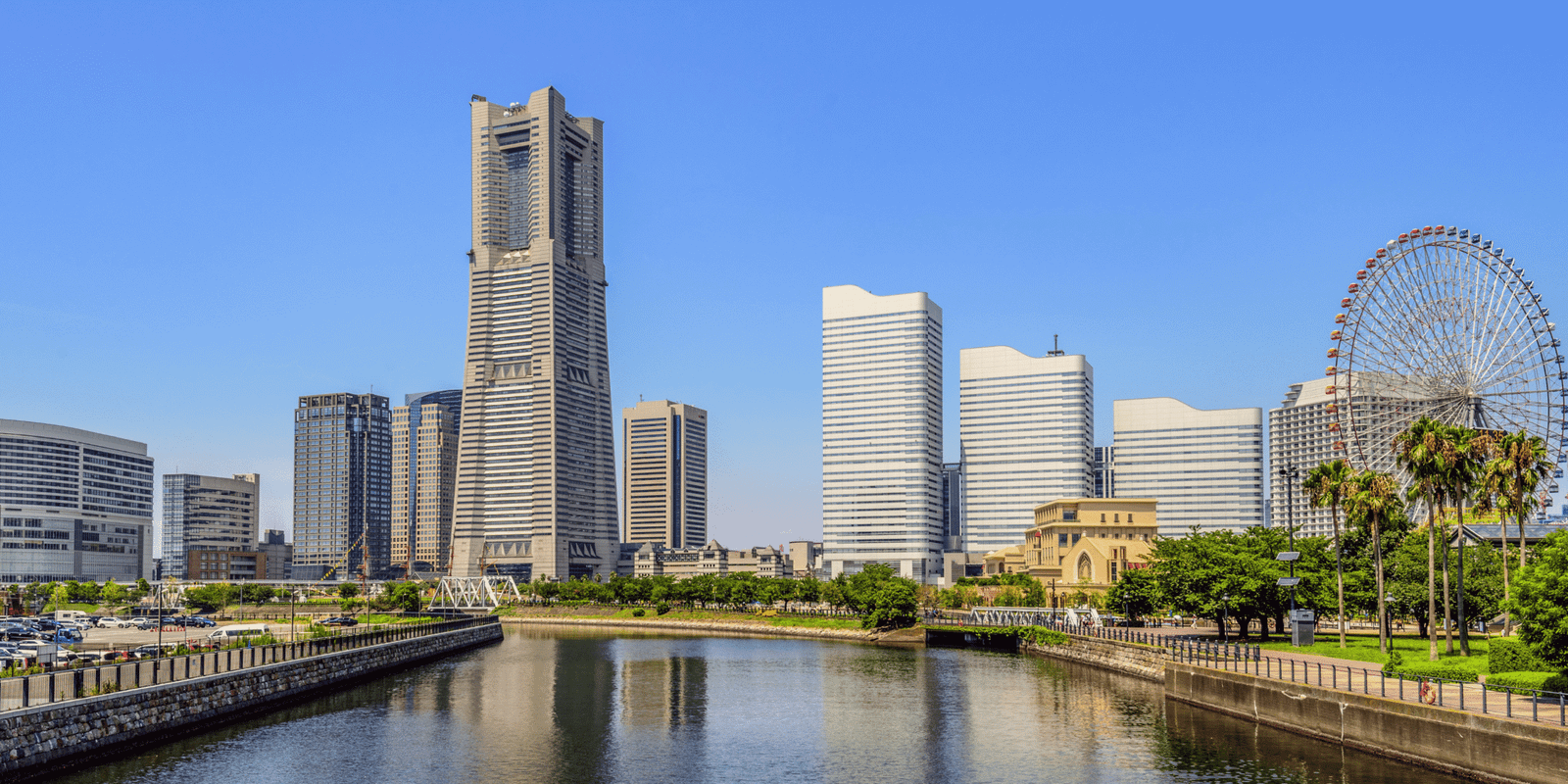
Yokohama Minato Mirai is one of the easiest waterfront escapes from Tokyo. Modern architecture, harbour views, shopping, museums, family attractions, and illuminated city scenery are packed into a compact area that is easy to explore largely on foot.
Yokohama is less than 30 minutes from central Tokyo by train, making Minato Mirai practical as either a day trip or an overnight stop. The two most useful stations for sightseeing are JR Sakuragicho Station and Minatomirai Station on the Minatomirai Line.
Why Visit Minato Mirai?
Minato Mirai works especially well for travellers who want an easy break from central Tokyo without spending hours in transit. You can walk along the waterfront, visit the historic Yokohama Red Brick Warehouse area, enjoy shopping and dining, and stay until after sunset for some of the best urban night views in the Tokyo region.
This guide will show you how to reach Minato Mirai by train, which station to use, the best things to do, where to eat, how long to stay, and how to combine the area with other Yokohama sightseeing.
2026 update: Yokohama Landmark Tower remains one of Minato Mirai’s defining landmarks, but its Sky Garden observation deck is currently closed for major renovation. It closed on December 31, 2025 and is scheduled to reopen sometime in or after 2028.
How to Get to Yokohama Minato Mirai by Train
From Tokyo Station
One of the easiest routes is to take the JR Tokaido Line from Tokyo Station to Yokohama Station, then transfer to the JR Keihin-Tohoku/Negishi Line for one stop to Sakuragicho Station.
Alternatively, you can take a JR Keihin-Tohoku Line train that continues onto the Negishi Line directly to Sakuragicho, although this usually takes longer because it makes more stops.
Best station for JR Pass users: Sakuragicho Station. The JR journey from Tokyo is covered by the Japan Rail Pass, making this one of the easiest Yokohama sightseeing areas to visit without paying for additional rail travel.
From Shibuya
From Shibuya, the Tokyu Toyoko Line provides an especially convenient route. Many trains continue directly onto the Minatomirai Line, allowing you to travel to Minatomirai Station without changing trains.
This is often the easiest option if you are staying around Shibuya, Shinjuku, or western Tokyo and do not need to use a JR Pass.
Sakuragicho Station or Minatomirai Station?
Both stations are useful, but they suit slightly different itineraries.
- JR Sakuragicho Station: Best for JR Pass holders and for starting a waterfront walk from the southern side of Minato Mirai.
- Minatomirai Station: Best for direct access to MARK IS Minatomirai, Queen’s Square, Pacifico Yokohama, and the central Minato Mirai district.
- Bashamichi Station: Convenient for the Red Brick Warehouse and historic waterfront area.
- Motomachi-Chukagai Station: Best if you plan to continue to Yokohama Chinatown, Yamashita Park, and the Motomachi area.
Simple sightseeing strategy: Arrive at Sakuragicho Station, explore Minato Mirai and the waterfront on foot, then continue toward the Red Brick Warehouse and Chinatown. You can return to Tokyo from Motomachi-Chukagai Station or walk back toward a JR station.
Using the Minatomirai Line
The Minatomirai Line runs from Yokohama Station to Motomachi-Chukagai and serves several of Yokohama’s major sightseeing areas.
As of 2026, the adult fare between Yokohama and Minatomirai is ¥200 with a paper ticket or ¥193 using an IC card.
The Minatomirai Line is not operated by JR, so nationwide Japan Rail Passes do not cover it.
Best Things to Do in Yokohama Minato Mirai
1. Ride the Yokohama Air Cabin
The Yokohama Air Cabin is an urban ropeway connecting the Sakuragicho area with the Shinko waterfront district. It is a fun way to get an elevated view of Minato Mirai without needing to visit an observation deck.
The ride is short, but the views over the harbour, Cosmo Clock 21, and the surrounding skyline make it especially enjoyable around sunset.
2026 fare: ¥1,000 one way / ¥1,800 round trip for adults
Children age 3–11: ¥500 one way / ¥900 round trip
2. Visit Yokohama Cosmo World
Yokohama Cosmo World is the waterfront amusement park best known for Cosmo Clock 21, the enormous Ferris wheel that dominates Minato Mirai’s skyline.
Even if you do not ride anything, the illuminated Ferris wheel is one of the defining views of Yokohama after dark.
3. Explore the Cup Noodles Museum Yokohama
The Cup Noodles Museum Yokohama tells the story of instant ramen and its inventor, Momofuku Ando. It is particularly popular with families because you can design your own package and create a personalized cup of instant noodles at the My CUPNOODLES Factory.
Museum hours: 10:00–18:00, last admission 17:00
Admission: ¥500 for adults; high-school-age visitors and younger are free
My CUPNOODLES Factory: ¥500 per cup
Regular closing day: Tuesday, or the following day when Tuesday is a national holiday
The museum is about an 8-minute walk from Minatomirai or Bashamichi Station and about a 12-minute walk from Sakuragicho Station.
4. Walk Around the Yokohama Red Brick Warehouse
The Yokohama Red Brick Warehouse is one of the best places to experience the contrast between Yokohama’s historic port architecture and the modern Minato Mirai skyline.
The restored brick buildings now contain shops, restaurants, cafés, and event spaces. The surrounding waterfront plaza also hosts seasonal events throughout the year.
5. Walk the Waterfront at Night
Minato Mirai is particularly impressive after sunset. The Ferris wheel, Landmark Tower, hotels, bridges, and waterfront buildings create one of Japan’s most recognizable modern cityscapes.
A simple evening walk from the Red Brick Warehouse toward the Cosmo World and Sakuragicho areas is free and can easily become one of the highlights of a Yokohama visit.
Important 2026 note: The observation deck at Yokohama Landmark Tower is currently closed for renovation, so I would prioritize the Air Cabin, Ferris wheel, and waterfront itself for elevated or nighttime views.
Easy Half-Day Minato Mirai Walking Route
Start: Sakuragicho Station
Start at JR Sakuragicho Station. This is the most convenient arrival point if you are travelling from Tokyo using JR.
From the station, you immediately get a good view of the Minato Mirai skyline and can either walk toward the waterfront or take the Yokohama Air Cabin.
Stop 1: Yokohama Air Cabin
Ride the ropeway from Sakuragicho to the Shinko district if you want an aerial introduction to the waterfront.
If you prefer to save money, simply walk across the pedestrian route instead. The distances in Minato Mirai are relatively short.
Stop 2: Cup Noodles Museum or Cosmo World
Choose one attraction depending on your interests. Families often enjoy the Cup Noodles Museum, while Cosmo World is better if you want rides and skyline views from the Ferris wheel.
Stop 3: Yokohama Red Brick Warehouse
Continue along the waterfront to the Yokohama Red Brick Warehouse. Stop for shopping, coffee, lunch, or simply enjoy the harbour views from the open plaza.
Stop 4: Yamashita Park
From the Red Brick Warehouse, continue toward Yamashita Park. This waterfront park is a pleasant place to slow down and enjoy views across Yokohama Port.
Finish: Yokohama Chinatown
Finish the walk in Yokohama Chinatown, one of the largest Chinatowns in Japan and an excellent place for dinner, snacks, and street food.
From Chinatown, Motomachi-Chukagai Station provides a convenient return route toward Yokohama Station and Tokyo.
Suggested time: Allow around 4–6 hours for this route if you visit one major attraction and stop for food. If you want to visit several museums or spend time shopping, make Minato Mirai a full-day trip.
Where to Eat in and Around Minato Mirai
Yokohama Chinatown
If food is a priority, the best place to finish your Minato Mirai visit is Yokohama Chinatown. It is one of the world’s largest Chinatowns and has everything from sit-down restaurants to casual snacks and street food.
Popular choices include steamed buns, dumplings, shumai, sesame balls, roast meats, and Chinese sweets. Chinatown is especially convenient if you follow the waterfront walking route from Minato Mirai through Yamashita Park.
Yokohama Red Brick Warehouse
The Yokohama Red Brick Warehouse is a good choice if you want lunch or coffee without leaving the waterfront sightseeing route. The restored warehouses contain cafés, restaurants, and shops, and seasonal food events are often held in the outdoor plaza.
Yokohama World Porters
Yokohama World Porters is useful for families and groups who want plenty of choices in one place. The shopping complex sits between Cosmo World and the Red Brick Warehouse area and includes casual restaurants, cafés, and food options at different price levels.
MARK IS Minatomirai and Queen’s Square
For an easy meal close to Minatomirai Station, both MARK IS Minatomirai and Queen’s Square offer a wide selection of restaurants. These are particularly useful on rainy or very hot days because you can eat, shop, and move around largely indoors.
Try a Yokohama Local Dish
If you want something associated with Yokohama itself, look for sanma-men, a local ramen dish topped with stir-fried vegetables in a thickened sauce. Yokohama also has a long history of Western-influenced food, Chinese cuisine, and port-city dining.
Easy food strategy: Have lunch around Minato Mirai or the Red Brick Warehouse, then continue walking to Yokohama Chinatown for dinner. This lets you combine sightseeing and food without unnecessary train trips.
Best Time to Visit Yokohama Minato Mirai
Late Afternoon Into Evening
If you only have a few hours, I recommend arriving in late afternoon. You can explore the waterfront in daylight, have dinner, and then stay for the illuminated skyline after sunset.
Minato Mirai is attractive during the day, but the combination of the Ferris wheel, harbour, bridges, hotels, and high-rise buildings makes the area especially impressive at night.
Spring
Spring brings mild temperatures and comfortable walking weather. Cherry blossoms can also be enjoyed around parts of the waterfront and nearby parks, although Minato Mirai is better known for its harbour scenery than for large-scale hanami.
Summer
Summer can be hot and humid, so plan indoor stops such as the Cup Noodles Museum, MARK IS Minatomirai, or shopping centres between outdoor walks.
Evening is particularly pleasant in summer, when temperatures begin to drop and the waterfront lights come on.
Autumn
Autumn is one of the most comfortable seasons for exploring Yokohama on foot. Cooler temperatures make it easy to walk from Sakuragicho through Minato Mirai, the Red Brick Warehouse, Yamashita Park, and Chinatown.
Winter
Winter days are often clear, which can provide excellent harbour and skyline views. Minato Mirai also becomes especially atmospheric during the year-end illumination season.
My favourite timing: Arrive around mid-afternoon, visit one attraction, walk the waterfront before sunset, have dinner in Chinatown, and enjoy the illuminated skyline on the way back.
FAQ: Visiting Yokohama Minato Mirai
Is Minato Mirai worth visiting from Tokyo?
Yes. Minato Mirai is one of the easiest day trips from Tokyo because it is close, walkable, and offers a very different atmosphere from central Tokyo. The waterfront, skyline, Red Brick Warehouse, Chinatown, and harbour views make it easy to fill half a day or more.
How long should I spend in Minato Mirai?
Allow around 4–6 hours for a relaxed half-day visit. A full day is better if you want to visit museums, ride the Air Cabin or Ferris wheel, shop, and continue to Yamashita Park and Chinatown.
Which station is best for Minato Mirai?
Sakuragicho Station is usually the best choice for JR travellers and Japan Rail Pass users. Minatomirai Station is more convenient for the central shopping and convention district.
Can I use the Japan Rail Pass to visit Minato Mirai?
Yes, you can use eligible JR services from Tokyo to Yokohama and Sakuragicho. However, the Minatomirai Line is not covered by the nationwide Japan Rail Pass.
Can I walk from Minato Mirai to Yokohama Chinatown?
Yes. Walking is one of the best ways to explore Yokohama. You can follow the waterfront from Minato Mirai past the Red Brick Warehouse and Yamashita Park before continuing into Chinatown.
Is Minato Mirai good for families?
Yes. Families can combine open waterfront spaces with attractions such as Cosmo World, the Cup Noodles Museum, shopping centres, and the Yokohama Air Cabin.
Is Minato Mirai better during the day or at night?
Both are worthwhile, but the area is particularly impressive after dark. If possible, arrive before sunset so you can experience the waterfront in daylight and then stay for the illuminated skyline.
Related Guides
6 Best Day Trips from Tokyo by Train
Looking for more easy escapes from Tokyo? Compare six rewarding train-accessible day trips and see which destinations fit your itinerary best.
Japan Rail Pass Guide
Planning a longer rail journey around Japan? See current JR Pass coverage, pricing, and when the nationwide pass may or may not save you money.
5 Best Sakura Spots in Tokyo Near Train Stations
Visiting the Tokyo and Yokohama area during cherry blossom season? These five easy-to-reach Tokyo sakura spots work well alongside a Yokohama day trip.
Before You Buy a JR Pass
Compare the cost of your planned train journeys with the current JR Pass price. Depending on your route, individual tickets or a regional pass may offer better value.
Check Current JR Pass PricesAbout Train Travel Japan
Train Travel Japan is written from firsthand experience traveling throughout Japan by rail. I am a Japanese native based in Canada and have traveled to all 47 prefectures of Japan over more than 30 years.
My goal is to make Japan train travel easier to understand, especially for international visitors planning JR Pass trips, regional rail journeys and independent itineraries.